
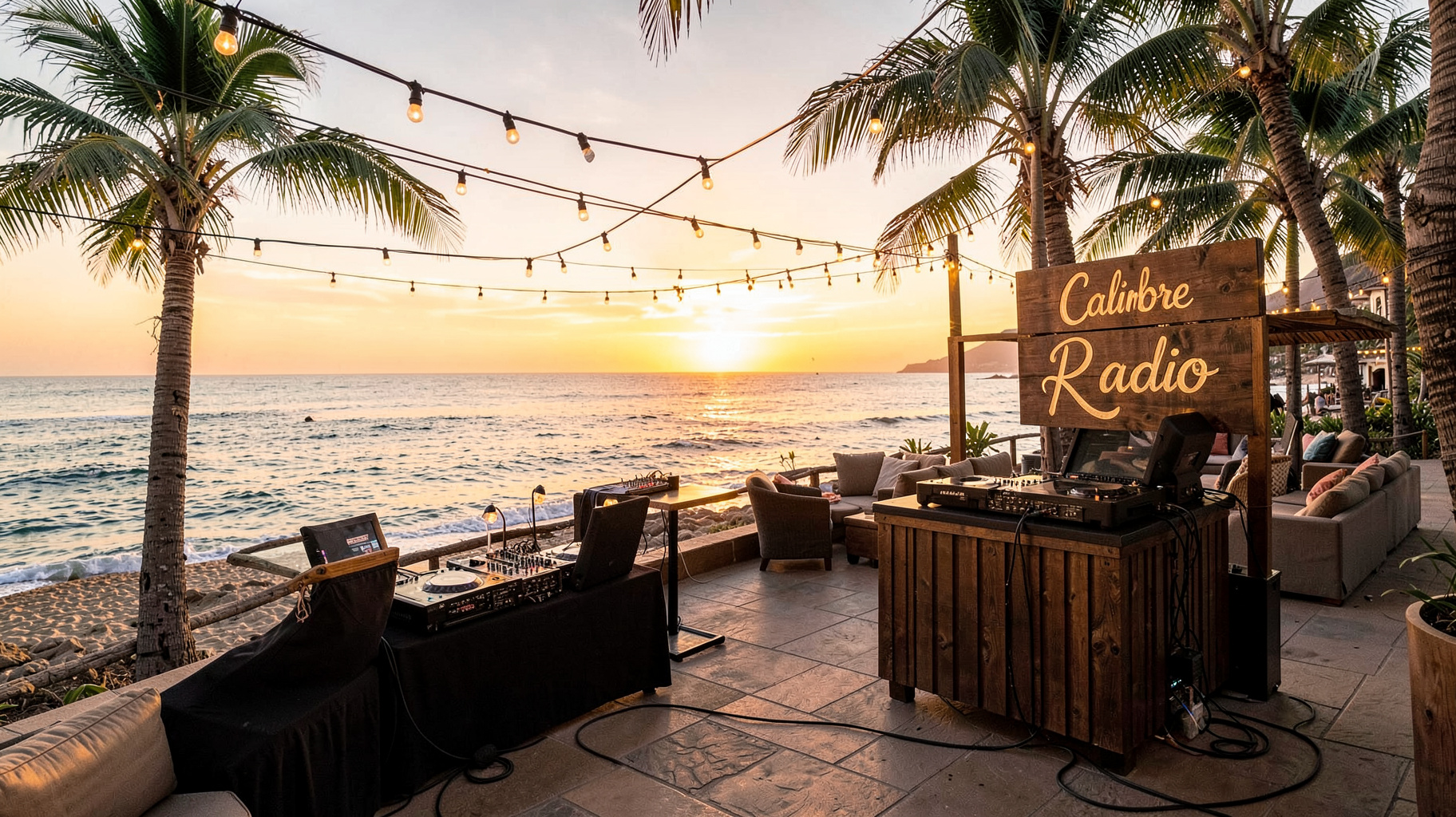
Calimbre Radio plays the kind of eclectic, low-tempo mix, chillout, deep house, nu-disco, afro, that could come from almost any city with a coastline. What sets it apart is who the station insists on playing alongside the international names: producers and DJs from the Canary Islands who, without a station like this, would have almost nowhere else on the dial to be heard.
A Decade on FM Before Going Digital
Calimbre Radio did not start as a station. It started as a program, running on FM outlets across the Canary Islands for close to ten years before the team behind it decided the format deserved a home of its own. In March 2016 that home arrived as a 24-hour streaming station, and by June of the same year, Calimbre had also secured a spot on the FM dial in Las Palmas, broadcasting uninterrupted around the clock.
A Host Who Came Up Through National Radio
The station is directed and presented by Santy Alonso, a Canarian broadcaster whose career ran through some of Spain's biggest national outlets, including Los40, Cadena Dial and M80, before he returned home to build something smaller and more local. That background shows in how the station is run: professional enough to sound national, but pointed entirely at a regional audience and a regional sound.
Built for Producers With No Other Platform
The station's stated mission is direct: to support productions from Canarian musicians, producers and DJs, along with local labels, that get released but struggle to find any unified promotion. On an island chain a thousand kilometers from the Spanish mainland, that gap is real, and Calimbre fills it by treating local house and nu-disco cuts as programming worth the same rotation as anything coming out of Madrid or Berlin.
More Than a Playlist
Beyond the stream, Calimbre runs a TOP16 countdown spotlighting the island's biggest tracks of the moment and operates Alambique Estudios, a production facility that lets it record sessions in-house rather than simply spinning finished tracks. It is a small piece of infrastructure, but on an archipelago where getting a record heard beyond your own island can be the hardest part of making music, that kind of dedicated platform matters more than its size suggests.