
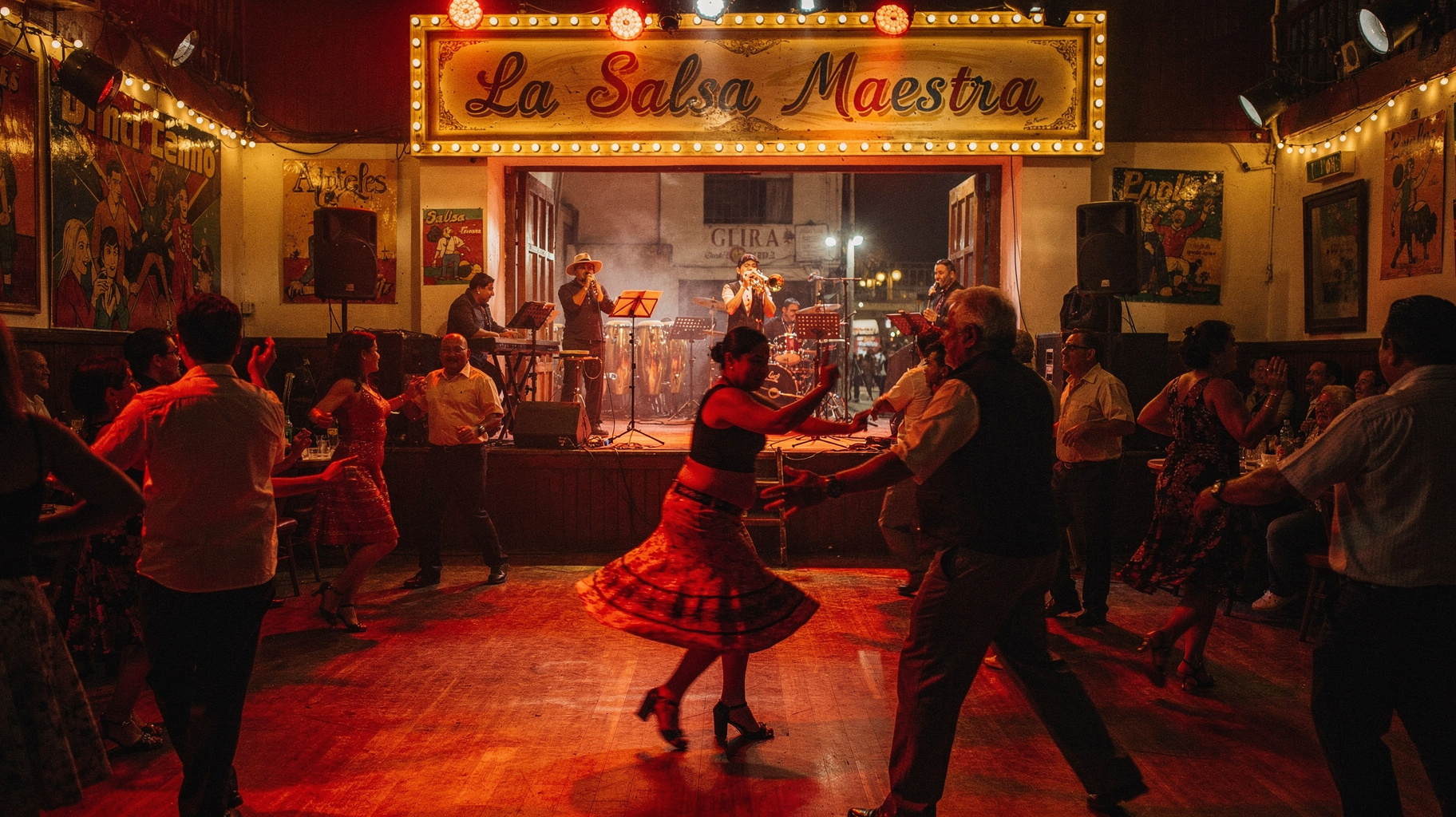
La Salsa Maestra runs on a simple promise, summed up in its own Spanish tagline, "la salsa que enseña," the salsa that teaches. It streams out of Lima, Peru with no FM tower behind it, just a Zeno.fm stream and a Facebook page, but the idea it is built on runs back decades into how Peru actually learned to love salsa in the first place.
A Port City's Import
Salsa reached Peru through the port of Callao in the 1950s, arriving on ships before it ever reached a Peruvian radio dial, and took root first in nighttime dance competitions among dockworkers and their neighborhoods, according to a history of the genre's spread published by Radio Panamericana. That coastal entry point set the stage for a genre that would spend the next three decades working its way from port neighborhoods into the national mainstream.
When Radio Made Salsa Peru's Sound
The 1980s were the decade salsa broke through nationally, driven largely by radio. Better recording technology let stations broadcast with far higher fidelity than before, and the Feria del Hogar, Lima's home fair, brought Celia Cruz, Tito Puente, Héctor Lavoe and Rubén Blades to Peruvian stages, legitimizing the genre for audiences who had only heard it on cassette. Dance venues in Callao, Surquillo, La Victoria, Cercado de Lima, Breña and Chorrillos turned that radio exposure into a full nightlife scene, as detailed in an account of the era from Salserísimo Perú.
Hard Salsa Versus the Sensual Wave
As the decade wore on, a split emerged between "salsa dura," the hard, brass-heavy sound of the genre's roots, and "salsa sensual," a romantic subgenre popularized by artists like Frankie Ruiz that leaned closer to ballad territory to win over younger listeners. Radio stations that stuck with the harder, more traditional sound during that shift became known specifically for keeping the genre's original character alive rather than chasing the softer trend, a role La Salsa Maestra's teaching-focused branding echoes today.
Small, Independent, and Still Teaching
Unlike the FM giants that carried salsa through its 1980s boom, La Salsa Maestra operates as a lean, internet-only outfit, no terrestrial frequency, no legacy broadcast license, just a stream and a social media presence built for listeners who already know what they are looking for. That format mirrors a broader shift in how genre-specific music now finds its audience in Lima, moving from citywide FM signals to smaller, more targeted streams that can serve a niche without needing to win a mass audience.
A Tradition Carried Forward, Not Just Repeated
La Salsa Maestra is not trying to recreate the Feria del Hogar or bring back cassette-era radio. It is doing something closer to the opposite, taking the specific idea that salsa on the radio should educate as much as entertain, and carrying that mission into a format built for however people listen to Peruvian salsa now.