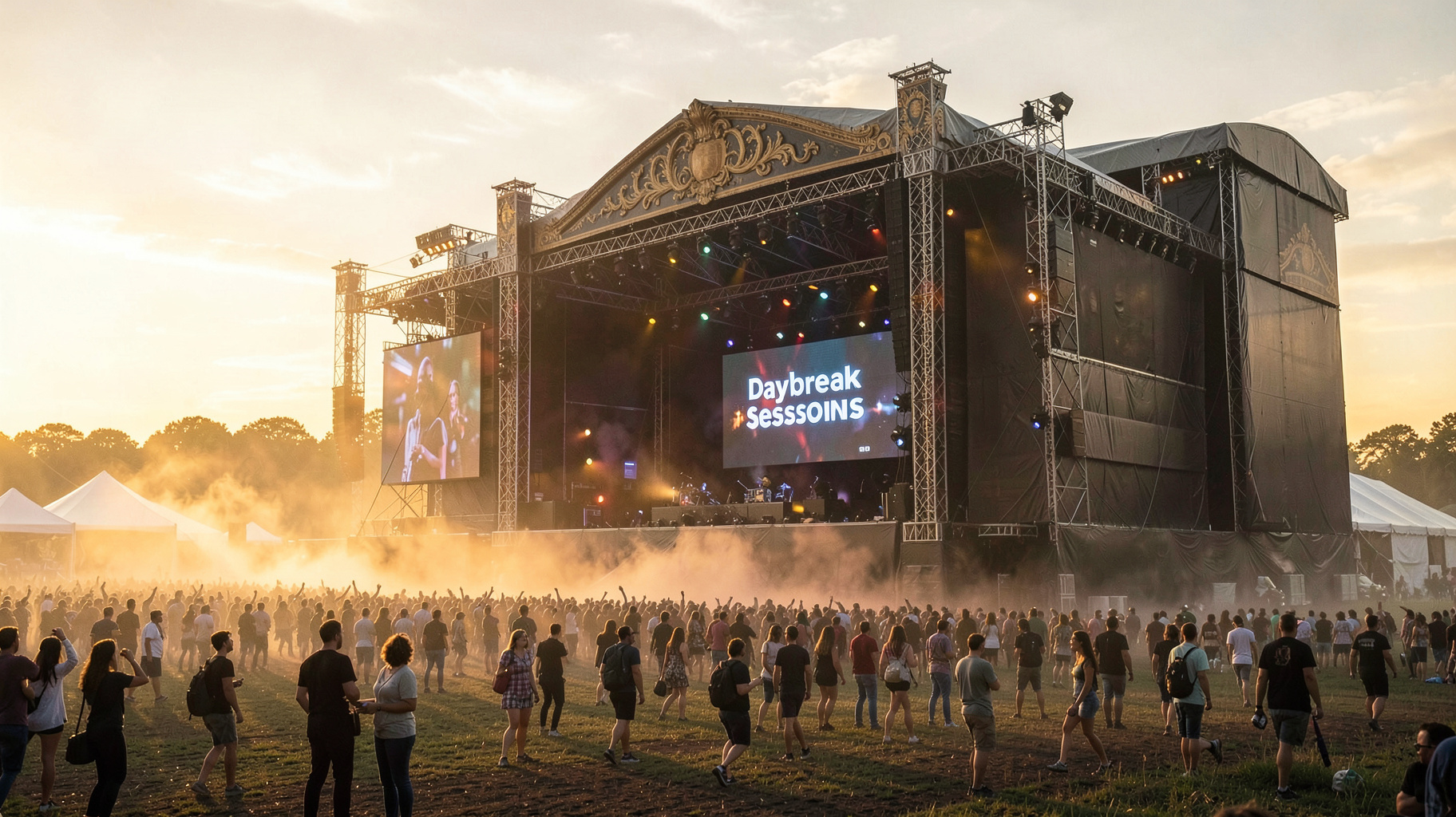
One World Radio's Daybreak Sessions channel exists because a festival that normally fills a Belgian park with hundreds of thousands of people could not happen at all in 2020. Rather than go dark for a year, Tomorrowland's organizers turned the festival into a full-time radio station, and Daybreak Sessions is the channel built around the one moment the live event is most famous for.
A Festival Built by Two Brothers in Antwerp
Tomorrowland was conceived in 2004 by brothers Manu and Michiel Beers, who staged its first edition in 2005 at De Schorre park in Boom, Belgium. What started as a single event has grown into WEAREONE.world, a company with more than 400 employees running out of Antwerp along with satellite offices in Brazil, France and Thailand, built entirely around extending the festival's identity beyond its one weekend a year.
When the Festival Couldn't Happen, the Radio Did
That extension became urgent in 2020, when the pandemic cancelled the physical event and Tomorrowland pivoted to Tomorrowland Around the World, a virtual festival weekend built around digital versions of its signature stages. One World Radio launched out of that same moment, a 24-hour station designed to keep the festival's sound running continuously rather than confined to a single livestreamed weekend.
Naming a Channel After the Festival's Most Iconic Moment
Tomorrowland's mainstage sunrise, the hour when an all-night crowd thins out and the lighting rigs go quiet against a brightening sky, has become one of the festival's most photographed and talked-about moments. Daybreak Sessions takes that specific atmosphere and turns it into a standing format: softer tempos, tranquil melodies and a deliberately unhurried pace built for the morning rather than the peak-hour drops the festival is better known for.
A Chill Channel Inside a High-Energy Brand
That makes Daybreak Sessions something of an outlier inside the Tomorrowland ecosystem, a brand built on pyrotechnics and headline DJ sets now running a channel explicitly designed to wind listeners down instead of up. It is a small piece of programming, but it reflects how thoroughly a single festival weekend in Belgium has been rebuilt into a year-round, mood-specific listening experience.