
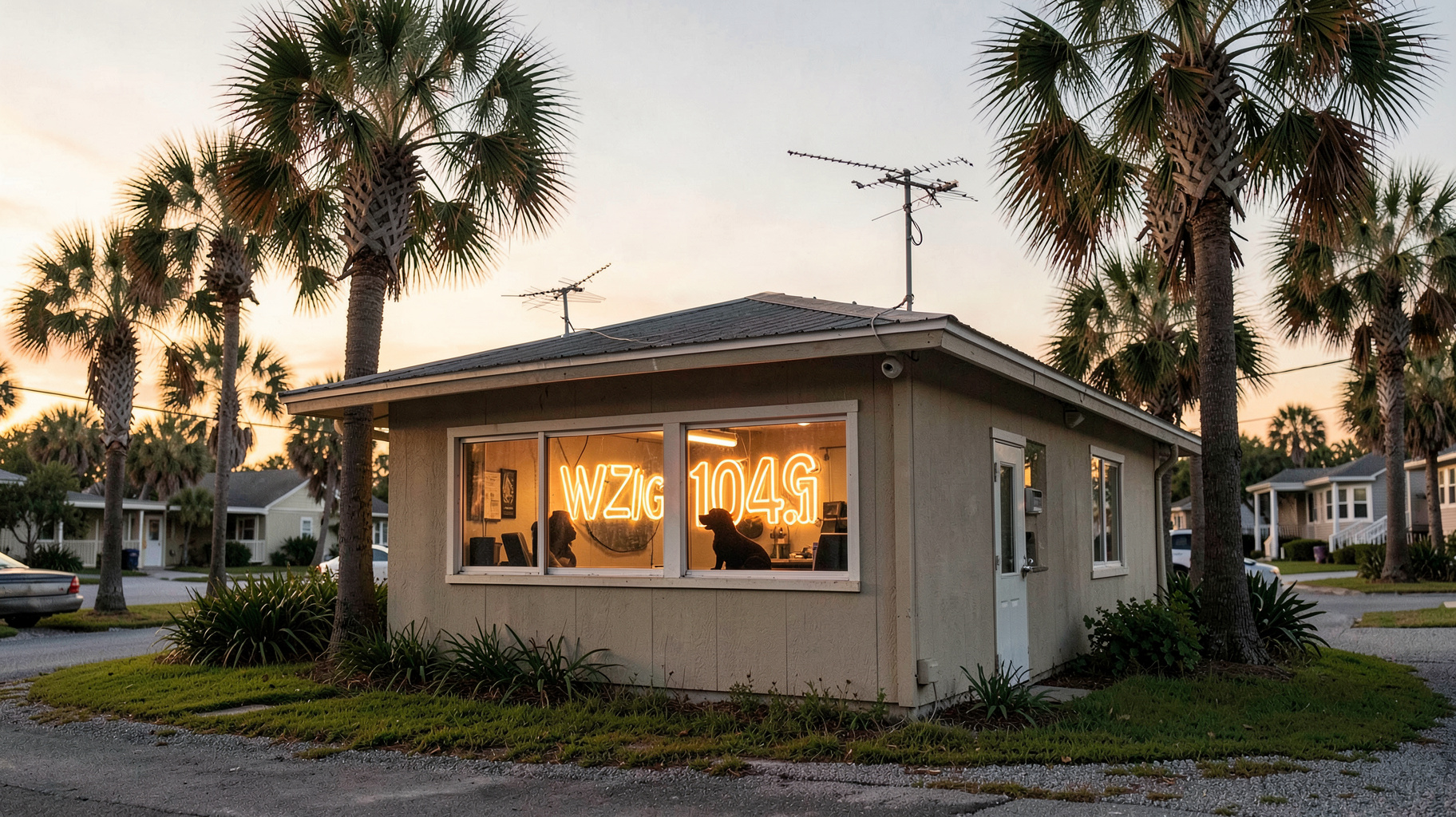
WZIG 104.1 FM covers Palm Harbor, East Lake, Tarpon Springs and Holiday on Florida's Gulf Coast with a format the station itself calls Extreme Variety, the kind of lineup where Led Zeppelin, Carrie Underwood, Frank Sinatra, Lady Gaga and Beethoven can all show up back to back. It exists at all because of a federal fight over who gets to own a radio signal in the first place.
Built on a License That Almost Never Existed
WZIG broadcasts as a low-power FM station, a category the FCC created on January 27, 2000 specifically to push back against decades of radio consolidation that had squeezed independent voices off the dial, according to documented LPFM history. That consolidation had accelerated after the Telecommunications Act of 1996, and the FCC's answer was a service reserved for nonprofits, schools, churches and local community groups rather than commercial broadcasters.
Congress Had to Step In to Make Room for More
The category expanded further when President Obama signed the Local Community Radio Act into law on January 4, 2011, a bill that eliminated restrictive distance-separation rules between LPFM stations and full-power broadcasters that had blocked new stations for a decade. That legislative change opened space on the dial in markets that had previously been considered too crowded for another low-power signal, part of what eventually made room for stations like WZIG to get licensed at all.
A Nonprofit Built for the Gulf Coast, Not a Network
WZIG operates under Palm Harbor Radio Inc, a registered IRS 501(c) nonprofit charity that runs the station as a locally owned, locally operated outlet rather than part of a larger corporate group. That structure is standard for LPFM, stations broadcasting at 100 watts or less, run specifically by nonprofit organizations rather than commercial ownership, and it is exactly the ownership model the FCC built the whole LPFM category to protect.
A Format Built Around Refusing to Pick a Lane
The station describes its own sound as the scrambled eggs of music, deliberately jumping between genres and decades rather than settling into one format the way most commercial stations do. Specialty programming rounds out the schedule with Greek music, upbeat blues, true alternative, bizarre and British and Canadian sounds, along with weekend party shows, local musicians and local sports coverage that a station this size can cover in a way a regional commercial broadcaster usually cannot.
WZIG only exists because a federal rule change created room for it, and a Gulf Coast nonprofit decided the best use of that room was a format too eclectic for any commercial programmer to greenlight. Twenty-plus years after the FCC opened the door for stations like this, Palm Harbor still has one playing whatever it wants, one hour at a time.