
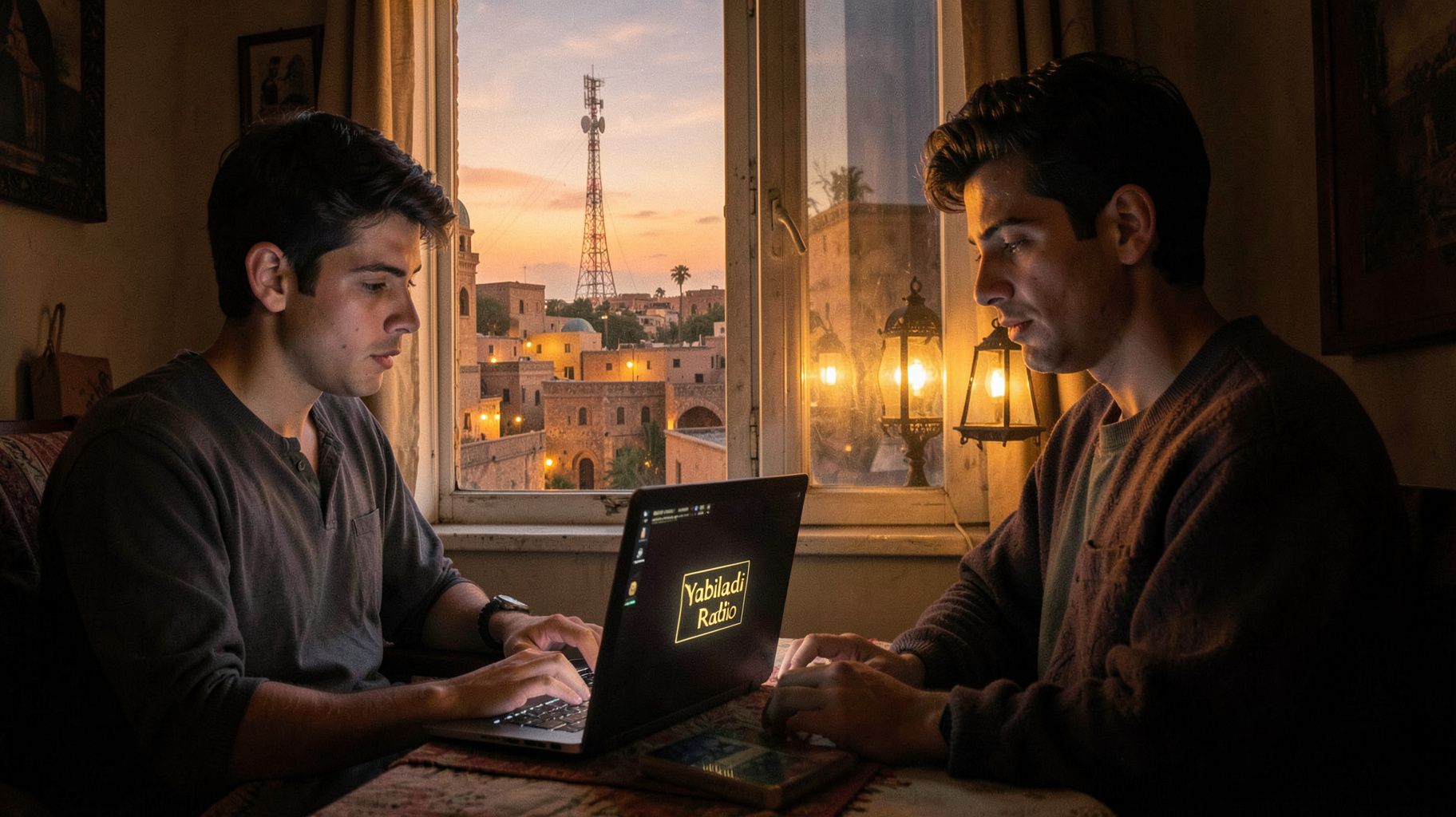
Yabiladi Radio streams chaabi, raï, Nass el Ghiwane and a wide sweep of traditional and contemporary Moroccan music, but the station only makes full sense alongside the platform that carries its name. Yabiladi means "O my country" in Darija, and the site it belongs to was built by someone who had spent his entire life outside that country.
An Emigrant Since Age Two
Mohamed Ezzouak was born in 1977 in Taounate, in Morocco's Rif region, and left for France at age two, following his father to Oyonnax, a factory town where his father worked in plastics manufacturing. He grew up French-Moroccan in a town where the far-right National Front held real support, and by his own account, part of what drove him later was pushing back against that climate as much as reconnecting with a country he barely remembered living in.
A Side Project That Became a Newsroom
Ezzouak launched Yabiladi.com in 2002 while working toward a postgraduate diploma in decision support computing, building it as a side hobby rather than a business plan. The idea was straightforward: give Moroccans scattered across France and beyond a shared space, part news outlet, part forum, in French, Arabic and English, where diaspora members could exchange with each other and with the country they had left. It worked faster than a hobby project usually does. By 2008, Yabiladi was drawing a million visitors a month, enough that Ezzouak formalized the operation as Web Stratégie to manage its growth.
Radio as the Missing Piece
Music followed naturally once the news and forum sides were established. Yabiladi Radio rounded out the platform with a dedicated stream of Moroccan music, covering everything from chaabi's wedding-and-street-party energy to raï's Algerian-Moroccan crossover sound to the politically charged folk of Nass el Ghiwane, giving the diaspora audience a way to keep the sound of home running in the background, not just the news.
Built by Distance, Not Despite It
What makes Yabiladi's story distinct from a typical diaspora broadcaster is how directly personal its origin was. This was not a media company identifying an underserved market. It was one specific person, two years old when he left, building the platform he wished had existed, and naming the whole project after the country itself.
Still Calling It Home
More than two decades after Ezzouak first put the site online, Yabiladi Radio keeps playing to that same audience, Moroccans abroad who want the music of a country some of them, like their founder, have spent more of their lives away from than in.