
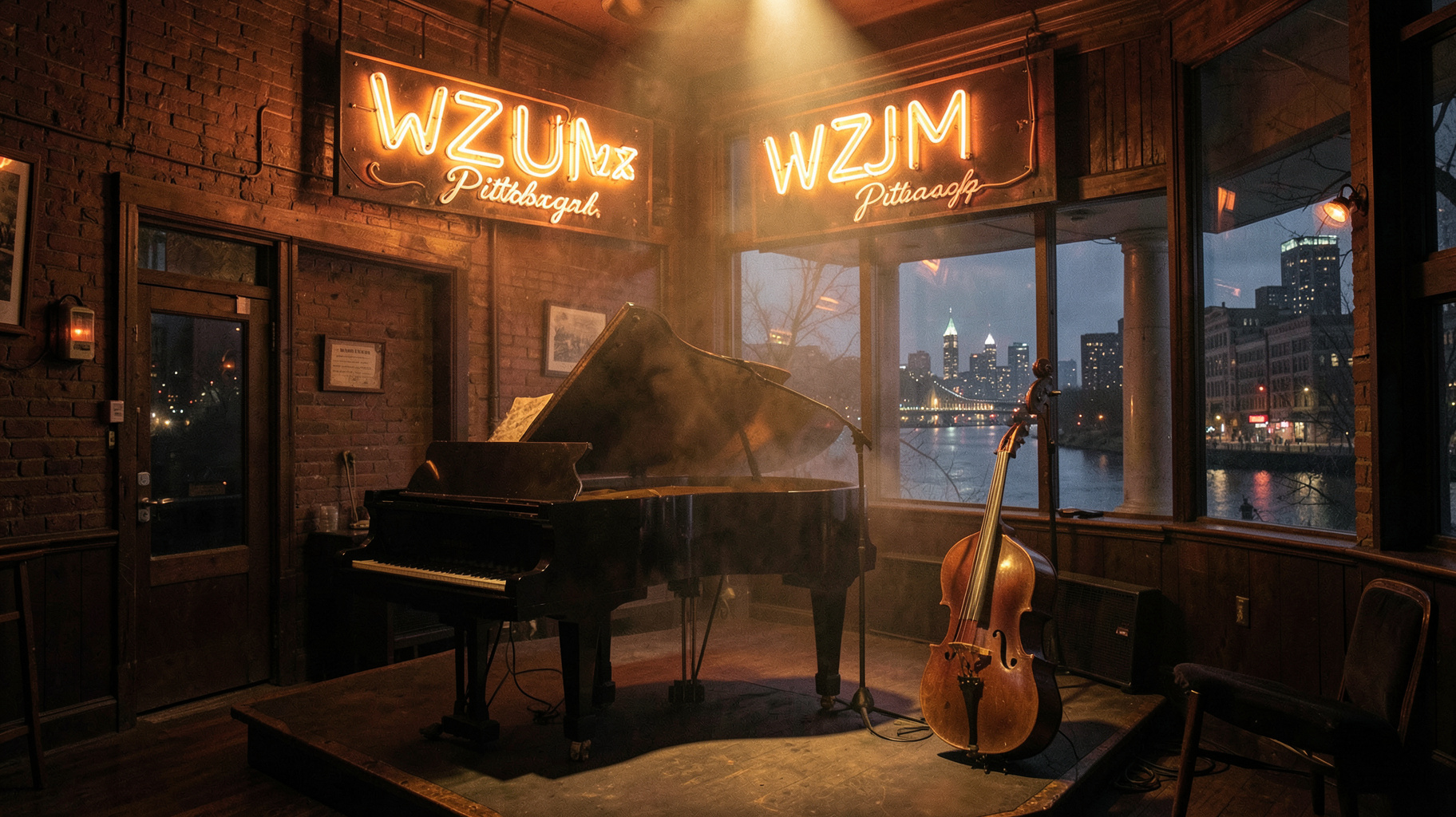
WZUM exists because a group of former public radio staffers refused to accept that Pittsburgh had lost its jazz station for good. When WDUQ, the city's longtime jazz and community outlet, changed hands and dropped its format, the people who had run it didn't move on to other jobs, they started over from nothing.
From Broken Dreams to an Internet Stream
After WDUQ's sale ended its run as Pittsburgh's jazz station, former staffers launched the Pittsburgh Jazz Channel in 2011 as an internet-only service, working, in the words of station volunteer Chuck Leavens's own account of the effort, from "broken dreams and strong belief" in what the format meant to the city, according to WZUM's own history. It would take five more years of incremental moves before that internet stream became an actual broadcast signal again.
Buying Back a Frequency, One Deal at a Time
The team's break came in 2016, when they discovered that WZUM-AM 1550 was for sale just as the FCC was preparing to let AM stations acquire FM licenses, letting them acquire the AM signal and pursue an FM upgrade in the same stretch. Getting an actual FM frequency turned into a fundraising slog, complicated by facility costs that had climbed past $100,000 for a license once priced closer to $10,000. A broadcaster partner eventually stepped in with an FM license deal at $50,000, dramatically below any other option on the table, and the campaign ran from September 2016 through an FCC-approved extension into March 2017 to close the gap. The station's call sign changed to WZUM-FM on May 12, 2016, and today its parent nonprofit, Pittsburgh Public Media, runs stations at AM 1550 in Braddock, 101.1 FM in Pittsburgh, and 88.5 FM in Bethany, West Virginia.
A City That Produced Jazz Giants, Not Just Fans
Pittsburgh's connection to jazz runs far deeper than any single station. The city's East End neighborhoods produced an outsized share of the genre's most important figures, including pianist Ahmad Jamal, raised in East Liberty, composer and arranger Billy Strayhorn, who grew up in Homewood and attended Westinghouse High School, and drummer Art Blakey, pianist Erroll Garner and pianist Mary Lou Williams, all shaped by the same tight-knit ecosystem of schools, churches and neighborhood clubs. That density of talent from a handful of city blocks is part of why losing a dedicated jazz outlet felt like such a loss worth fighting to reverse.
Rebuilt by the People Who Missed It Most
What makes WZUM's story distinct isn't just that Pittsburgh got its jazz station back, it's who rebuilt it. Rather than a commercial buyer stepping in to fill a format gap, it was the original WDUQ team, working as volunteers through a nonprofit, spending years and reduced budgets to bring the format back to the city that produced Strayhorn, Jamal and Blakey in the first place. Every hour WZUM broadcasts today is the direct result of that six-year rebuild.