
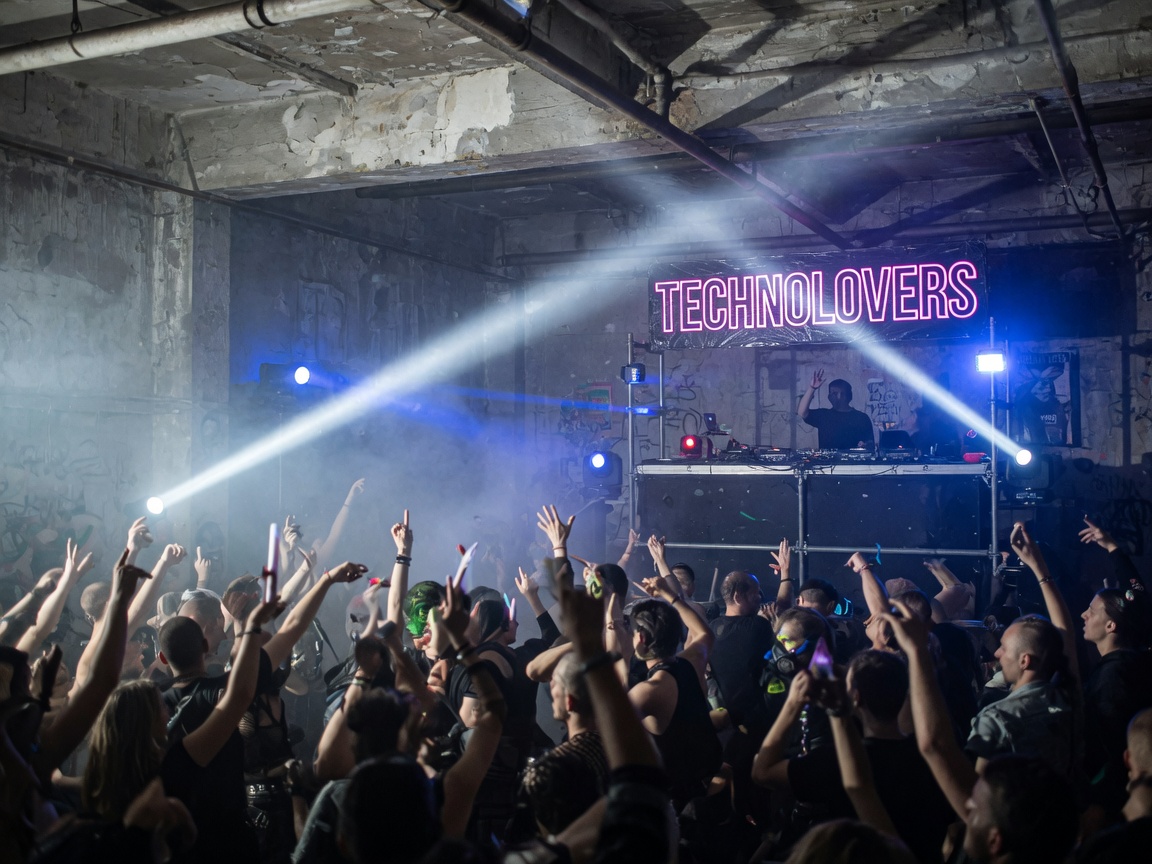
Technolovers - TECHNO is the channel the entire Technolovers.fm network is named after, the flagship stream inside a German platform that splits electronic music into more than twenty genre-specific feeds, from Afro house to drum and bass. But the genre this particular channel is built around has a history worth knowing on its own, one that runs from a Detroit suburb to a bombed-out Berlin bank vault.
Three teenagers in Belleville, Michigan
Techno did not start in a club. It started in the early 1980s in Belleville, a Detroit suburb, where three friends, Juan Atkins, Kevin Saunderson, and Derrick May, later nicknamed the Belleville Three, began fusing funk, electro, and synth-pop with an explicitly futuristic outlook, drawing heavily on the robotic precision of Kraftwerk, according to a history of the genre from Red Bull. Detroit at the time was a city hollowed out by industrial decline, and Black and queer communities were central to building a sound and scene out of that environment, one built as much around imagining a different future as around any particular production technique.
A bank vault becomes the genre's second capital
Techno found an unlikely second home after the Berlin Wall fell in 1989. Abandoned buildings across the newly reunified city became makeshift venues, and in March 1991 a club called Tresor opened inside the actual vault of the former Wertheim department store, one of the only structures in the area still standing after wartime bombing. Tresor quickly became the meeting point of what is now called the Detroit-Berlin Axis, a direct exchange between Detroit's founding producers and the new wave of German DJs and promoters, cementing Berlin as techno's second capital almost overnight.
The parade that took the genre to the street
Berlin's techno culture did not stay confined to clubs for long. In July 1989, months before the Wall came down, Dr. Motte and Danielle de Picciotto organized the first Love Parade in West Berlin, a street parade built entirely around the same sound. It grew into one of the largest music events in the world, drawing an estimated 1.5 million people through Berlin's streets at its 1999 peak, according to accounts of the festival compiled by Indiana University researchers. Between Tresor's underground vault and the Love Parade's open-air crowds, Berlin gave techno both the sacred and the public version of itself within the space of a decade.
One stream inside a much larger German network
Technolovers - TECHNO runs on infrastructure built by RauteMusik, a Cologne-based internet radio operator live since 2003 that now licenses its platform to sister brands including Technolovers itself. That network background explains how a single-genre stream like this one can exist at all, but the music it plays traces back to something much older than any streaming platform: a sound three teenagers in suburban Michigan built out of not much, that a divided city later rebuilt inside its own rubble.