
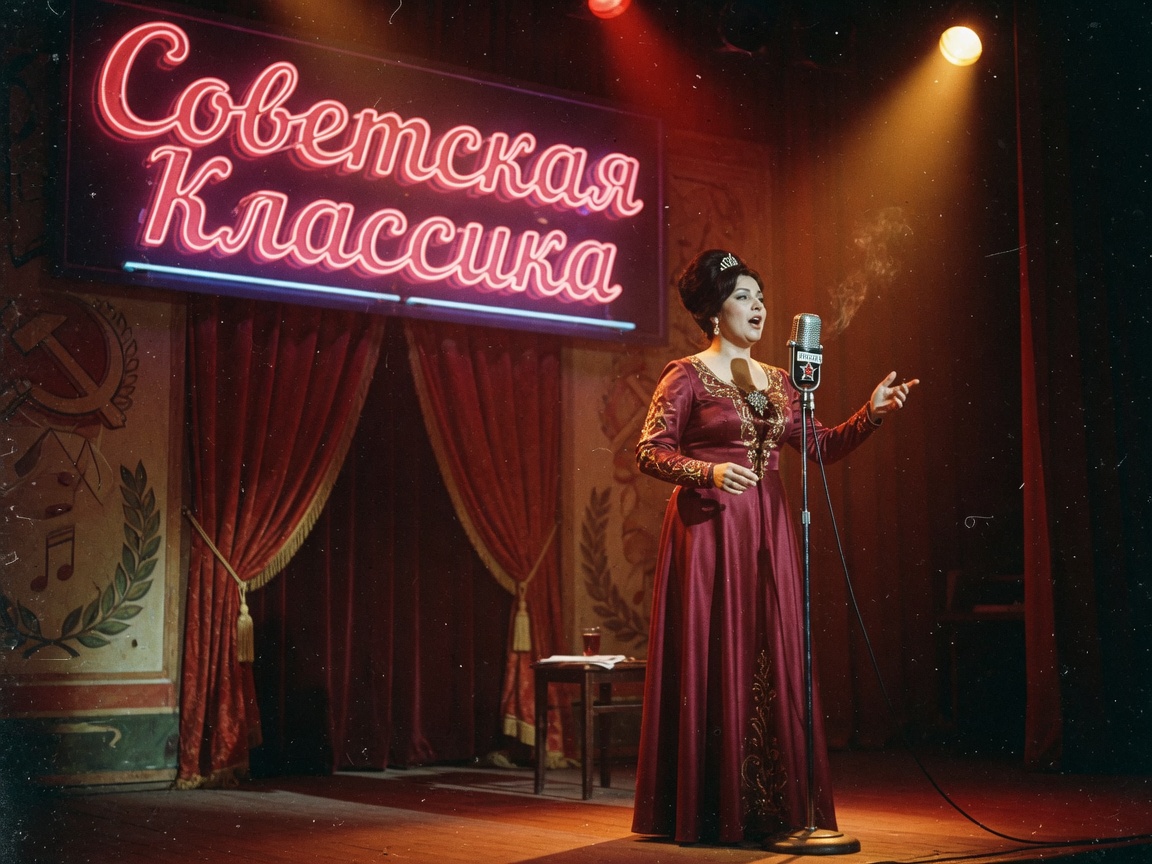
Soviet Classics Radio streams nothing but retro Russian-language music from the Soviet era, describing its playlist simply as "only authentic Soviet classics." Listeners tuning in on Radio Shuffle recently identified "Наш сосед" by Edita Piekha playing on the stream, a fitting pick, since Piekha's own story captures almost everything unusual about how this genre actually came together.
Born in a French coal town, not the USSR
Edita Piekha, the singer behind "Наш сосед," was not born in the Soviet Union at all. She was born in Noeux-les-Mines, a mining town in northern France roughly 200 kilometres from Paris, to Polish parents, according to her Russian Wikipedia biography. Her father worked more than 20 years in the mines and died of silicosis when she was four years old. Piekha's career only began in 1955, after she moved to Leningrad and started performing with a student ensemble at the Leningrad Conservatory, invited into a group called "Lipka" by Alexander Bronevitsky. That group was later renamed "Druzhba," and it is the name most associated with Piekha's rise.
Accused of promoting jazz, then declared the future of Soviet pop
Piekha's early career was not smooth. In 1959, following a critical article in Leningradskaya Pravda, the regional Communist Party committee accused "Druzhba" of anti-Soviet sentiment and of spreading bourgeois culture and jazz influence, a serious charge in that political climate. The group survived the accusation after a review by the USSR Ministry of Culture, whose own arts council concluded the opposite: that Druzhba represented a genuinely new direction in Soviet popular music. Piekha's foreign origin and noticeable accent, rather than working against her, became part of what made her, by most accounts, the most stylish performer of the entire Soviet estrada scene.
A catalogue of 500 songs still getting discovered
Over her career, Piekha built a repertoire of more than 500 songs, including several in foreign languages, with "Наш сосед," "Город детства," "Манжерок," and "Ничего не вижу" among her best known. She retired from live performing in 2021. That someone can still stumble onto "Наш сосед" today on a niche internet radio stream, decades after a Leningrad party committee tried to shut the whole project down for sounding too foreign, is its own small argument for why stations like this one keep this catalogue in rotation.