
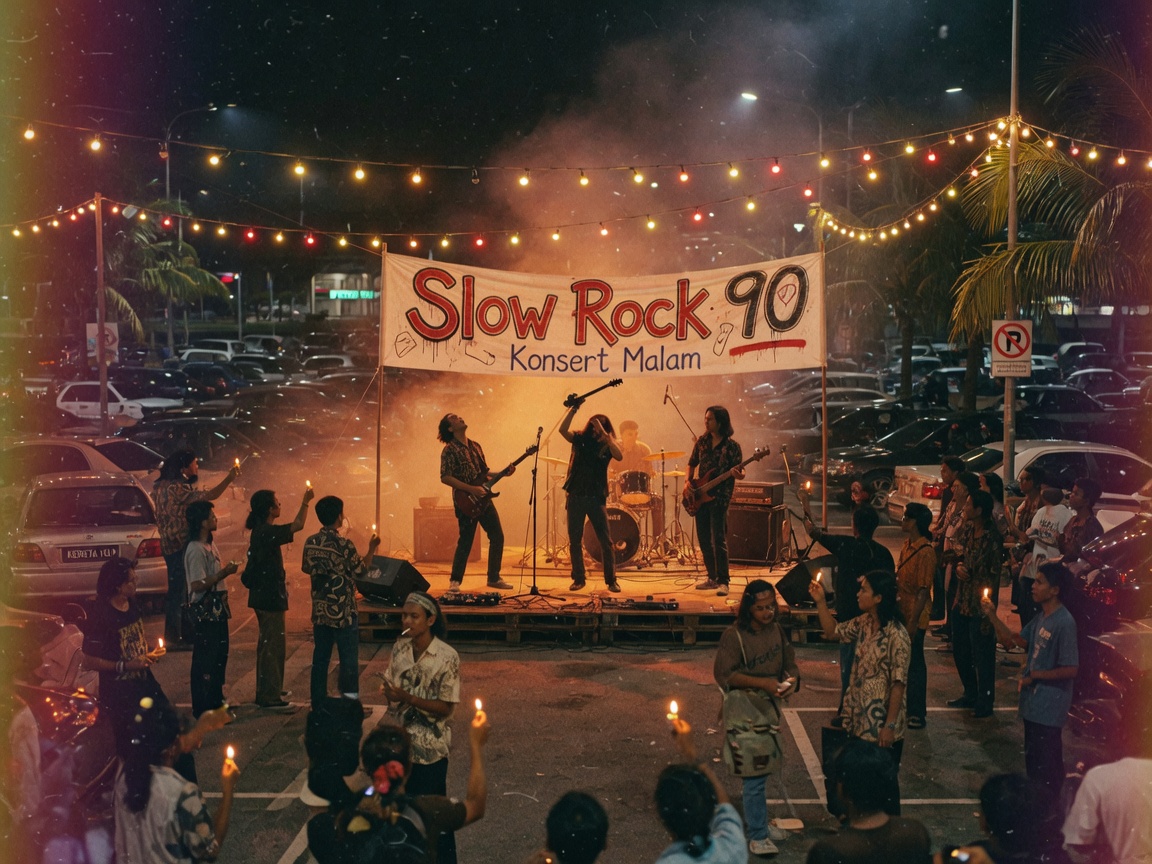
Slow Rock 90' streams a genre with one of the more unlikely origin stories in Southeast Asian pop music. The Malaysian station is built around rock kapak, and the name itself has nothing to do with axes, it comes from the humble car park.
Born in Parking Lots, Not Concert Halls
According to Wikipedia's account of the genre, "kapak" is Malay for axe, but as a genre label it is actually a corruption of the English term "car park," a nod to how early Malaysian rock bands in the 1980s staged informal fun fairs and shows in urban parking spaces, cheap venues that were often the only stage available to them. Out of those makeshift shows grew a movement that would dominate Malaysian pop for the next decade and a half.
From Pop Yeh-Yeh Roots to Chart Domination
Rock kapak built on the legacy of 1960s pop yeh-yeh, the Malay rock and roll style shaped by the British Invasion, and by the late 1980s it had become the dominant force in the country's recorded music. By 1989, roughly 12 of the 15 monthly album releases from local labels were rock kapak records, a level of market saturation few genres anywhere achieve. Television programs like Muzik-Muzik and Anugerah Juara Lagu pushed the sound further into the mainstream, turning car-park bands into national stars.
When Rock Turned Romantic: The Rise of Jiwang
As the genre matured, a softer subset took over: jiwang, Malay slang for an excessive, soppy kind of romanticism, roughly the local equivalent of "schmaltzy." Slow, emotionally heavy ballads sung entirely in Malay became rock kapak's defining mode through the 1990s, partly because government restrictions on artistic themes narrowed what bands could sing about, pushing the genre toward heartbreak and longing rather than rebellion.
Wings, Search and the Bands That Defined the Sound
Search's 1989 album Fenomena sold 250,000 copies domestically, while Wings, formed in Kuala Lumpur in 1985, built a catalogue of enduring singles including "Sejati," still remembered for its soaring vocals and devotional lyrics. Iklim, formed in 1990 in Kuala Terengganu by singer Saleem Abdul Majeed, took the sound across the region and reportedly sold a million copies of one album in Indonesia alone, proof that rock kapak's emotional register translated well beyond Malaysia's borders.
A Radio Station Preserving a Car-Park Legacy
Slow Rock 90' exists to keep that specific sound alive: the ballads, the soaring guitar solos, the deliberately melodramatic vocals that defined an era when a genre named after parking lots became the biggest thing on Malaysian radio. For listeners who grew up on Wings and Search, it is less a nostalgia trip than a reminder that some of the most commercially dominant music in Malaysian history started in the cheapest venues available.