
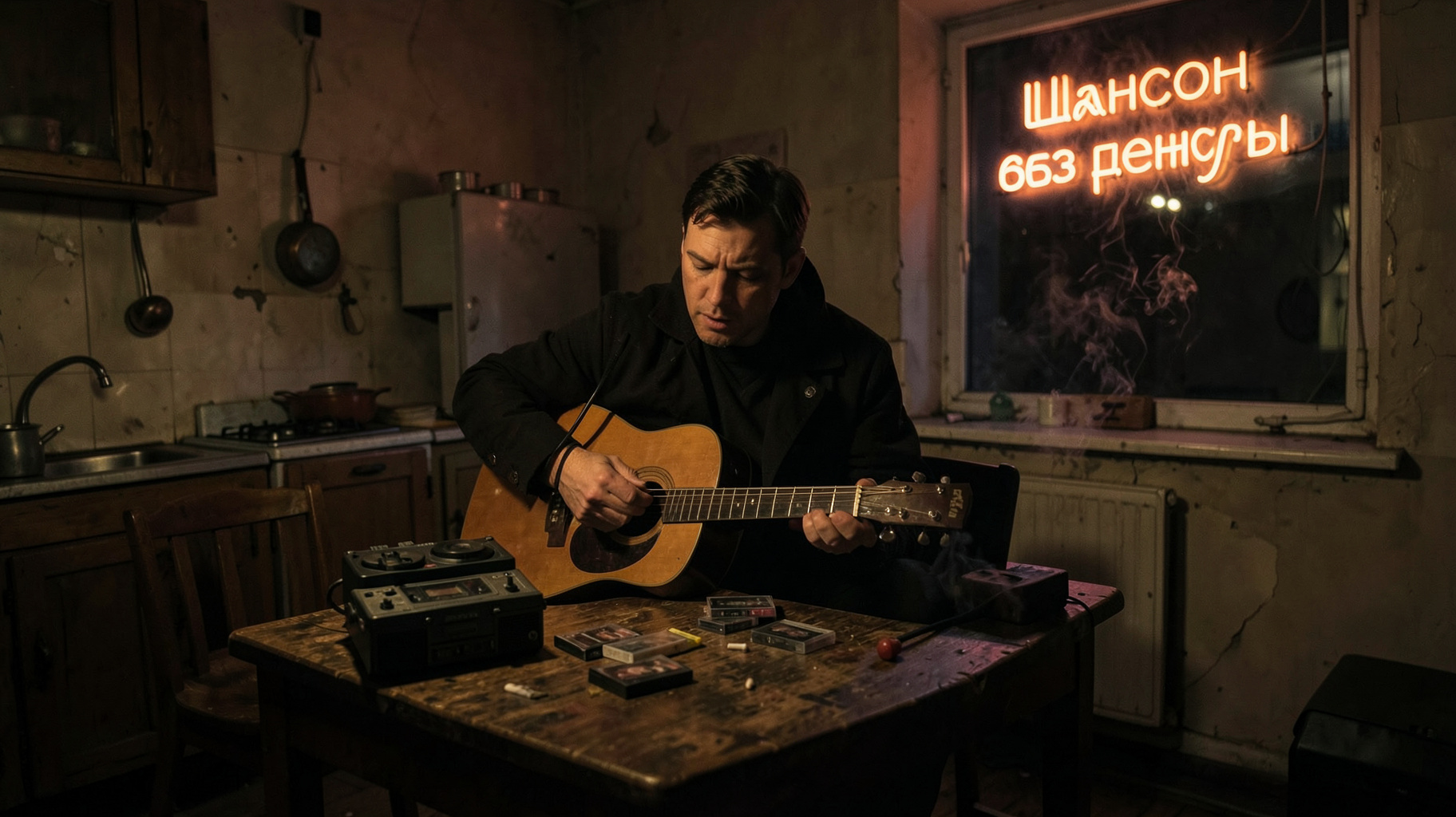
Шансон без цензуры streams Russian chanson without the edits a mainstream station might make, playing prison ballads, street songs and emotional storytelling that trace back further than most listeners realize. The genre it broadcasts has a name that was, quite literally, a marketing decision made by one man three decades ago.
A Producer Renamed a Genre to Make It Sellable
Before 1993, the songs now known as russky shanson went by a much blunter name, blatnyak, street or prison music with roots that music historians trace to 19th-century convict songs and roving folk ballads. According to Russian-language sources, producer Yuri Sevostyanov proposed swapping that off-putting label for "russky shanson" in 1993, borrowing the more respectable French word for the genre, and a few years later he registered it as his own trademark. It was a rebrand built entirely on the idea that a stigmatized style of music sells easier under a name audiences already associate with something legitimate.
Built in Kitchens and Basements, Not Studios
During the Soviet period, this music existed almost entirely outside official channels, passed around through underground cassette culture in kitchens, basements and prison cells rather than pressed on state-approved vinyl. Sevostyanov himself was one of the central figures in that 1980s cassette underground, running duplication operations for performers whose work could not be released through legitimate labels, before going on to lead the Master Sound division that formalized the genre commercially once Russia's first legal record companies appeared in the early 1990s.
What "Without Censorship" Actually Signals
Once shanson became commercially viable, it also became more polished, with mainstream stations trimming lyrics and smoothing over the genre's rougher prison and street origins for broader radio audiences. A station branding itself Шансон без цензуры is making a specific promise against that trend, that it plays the genre closer to its blatnyak roots rather than the sanded-down version that dominates commercial playlists.
A Sound Older Than the Name Suggests
The genre's actual musical roots reach back to 19th-century convict and roving songs, later shaped by Gypsy lyrical traditions and urban romance ballads, decades before anyone called it shanson at all. What listeners hear on a station like this one is that older lineage, still audible underneath a marketing term that only exists because one producer decided the old name was bad for business.
A Trademark That Became a Genre
Three decades after Sevostyanov's rename, russky shanson is common enough that most listeners have no idea the term was ever a deliberate rebrand rather than an organic label. Шансон без цензуры keeps a piece of that older, blunter version of the genre in circulation, a reminder that the polished commercial name and the raw music underneath it were never quite the same thing.