
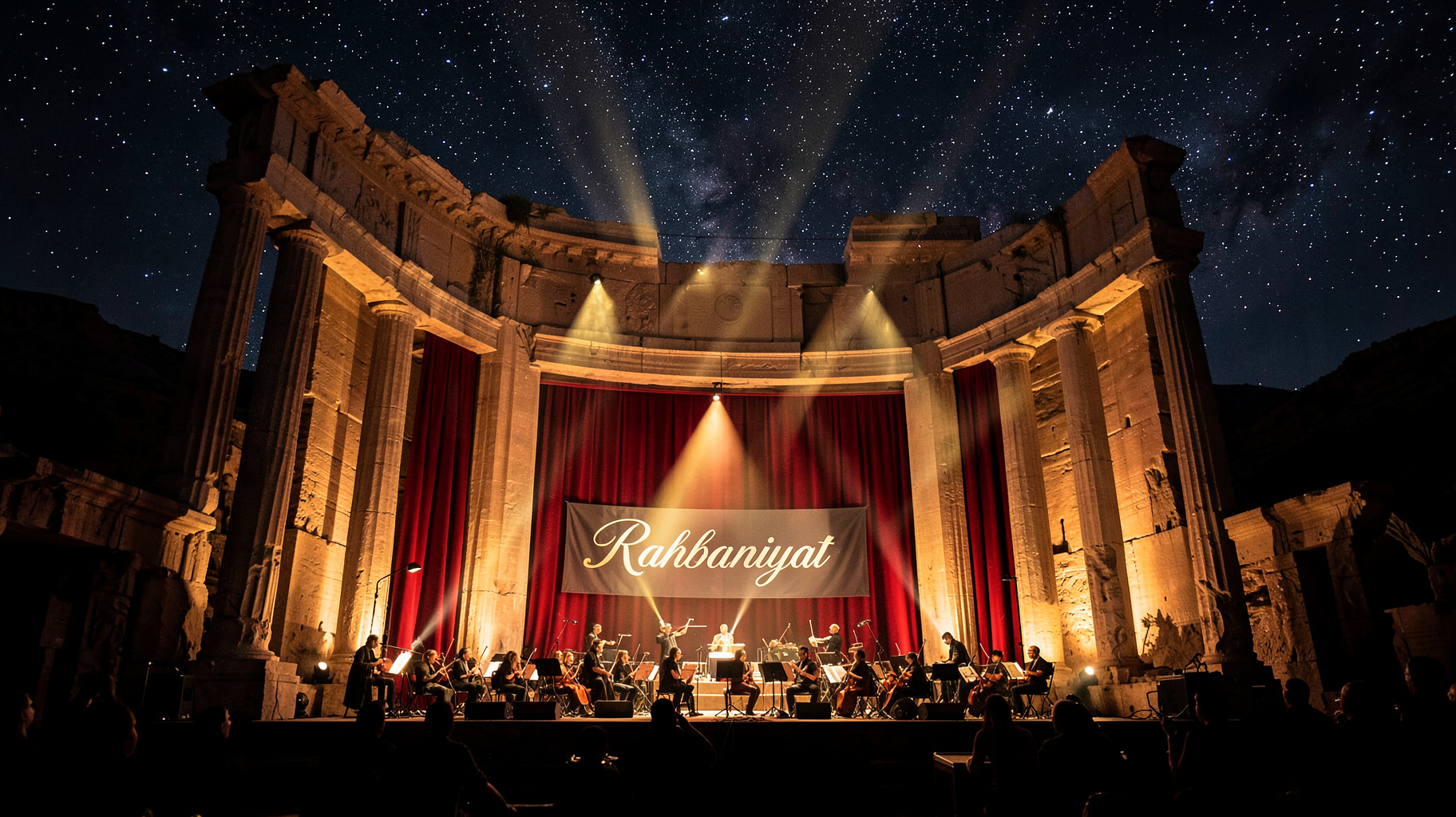
Most stations pick a genre. Rahbaniyat picked a family. Launched in Lebanon on 12 May 2022, the station plays nothing but music, theater and comedy created by the Rahbani family across three generations, treating one household's catalog as a genre unto itself.
A National Project, Not a Playlist
Rahbaniyat describes itself as "a major national project" that requires the cooperation of Lebanese cultural institutions and artists to sustain, according to the station's own profile. That framing sets it apart from a typical themed stream. The station isn't just replaying old hits, it positions itself as a custodian of a body of work considered part of Lebanon's cultural record, broadcasting the musical compositions, vocal performances, theatrical works, concerts and comedic sketches the Rahbani family produced across multiple generations.
A Café in Antelias Started All of It
The Rahbani name traces back to the northern Lebanese village of Rahba, but the family's musical story really begins in Antelias, a town north of Beirut where the family settled after leaving Rahba, according to an account of the family's history. Assi Rahbani, born there in 1923, and his brother Mansour, born two years later in the same town, grew up around a café their father founded, one that became a local meeting point built around music. Their younger brother Elias, born in Antelias in 1938, would go on to become a composer and conductor in his own right, meaning three brothers who shaped the sound Rahbaniyat now broadcasts all grew up around the same small-town café.
The Meeting That Became a Marriage
Assi and Mansour began writing songs together, and in the early 1950s a singer named Nouhad Haddad, who performed under the stage name Fairuz, was paired with them after catching the attention of composer Halim El Roumi, according to a profile of the Rahbani brothers' career. Fairuz married Assi in 1954, and the collaboration that followed, blending traditional Arabic music with Western orchestration, produced a catalog that carried Lebanese musical theater to Carnegie Hall for a sold-out show in 1971, part of album sales that eventually passed 30 million copies.
The Catalog Keeps Growing Across Generations
Ziad Rahbani, Assi and Fairuz's son, extended the family's work into jazz-inflected Lebanese theater and satire before his death in July 2025, an event Fairuz marked with a rare public appearance to mourn him, according to reporting on his funeral. Other family members, including Oussama and Ghassan Rahbani, have continued composing and producing under the same name, which is exactly why a single-family station makes sense in a way a single-artist station usually wouldn't. There is enough material, across enough decades and enough Rahbani names, to fill a schedule without repeating a generation.
Rahbaniyat isn't chasing new hits or a broad Arabic pop rotation. It exists because one family from a small café in Antelias produced enough musical theater, orchestration and satire to justify a station of its own, and Lebanon still treats that catalog as worth protecting on its own frequency.