
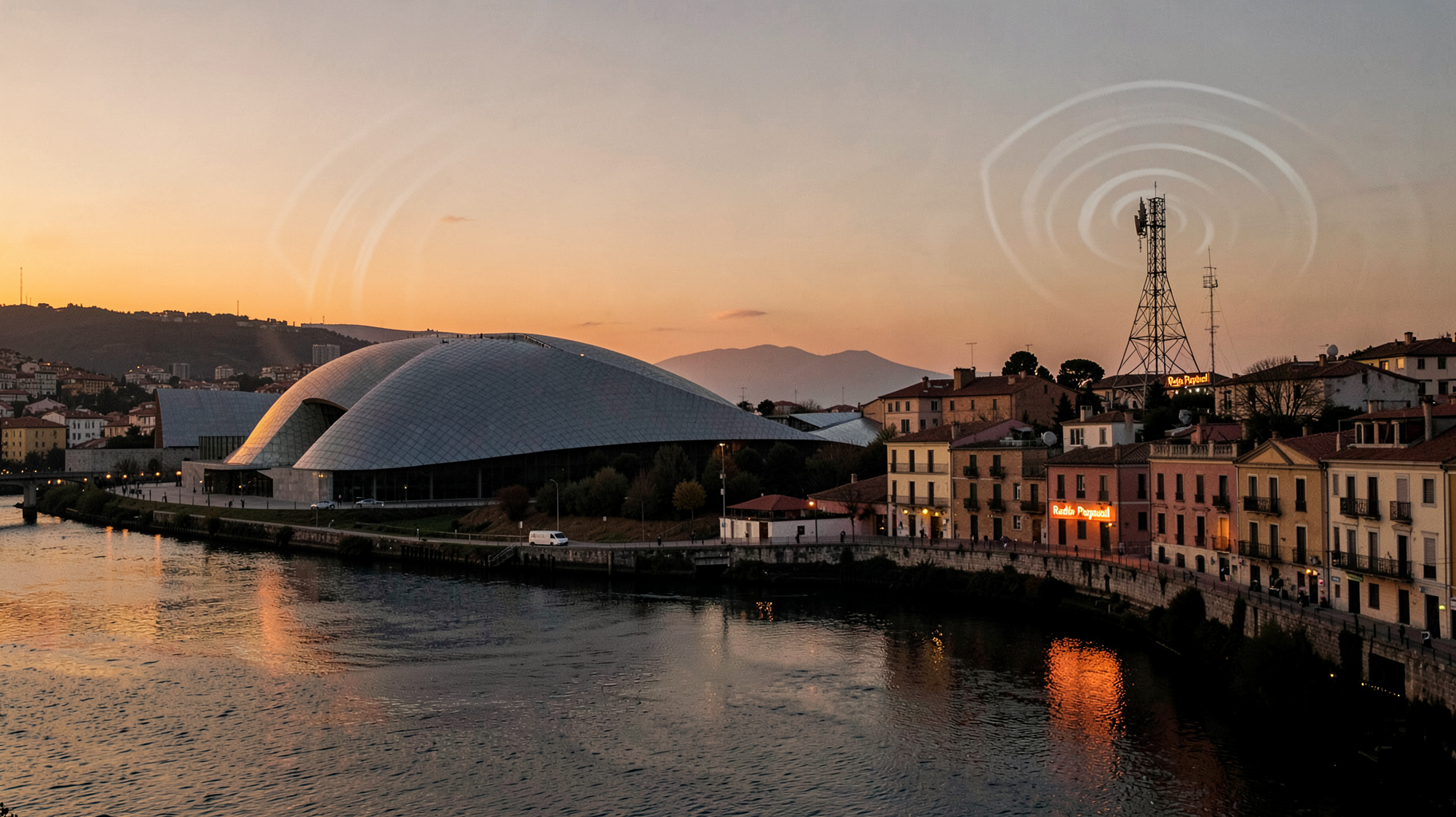
Radio Popular de Bilbao, also known by its Basque name Herri Irratia, has been on the air since 1960, owned throughout by the Diocese of Bilbao. That Church ownership turned out to matter far beyond religious programming. During the hardest years of the Franco dictatorship, when public use of the Basque language faced heavy restriction, Radio Popular became the first station to broadcast in Euskera, a distinction it holds because Catholic Church-affiliated broadcasters carried a degree of institutional protection that independent or state stations did not.
A Freedom Built Into Its Ownership
Church-run stations across Spain occupied an unusual legal position during the late Franco years and the Transition that followed, shielded in part by their religious affiliation from the same restrictions placed on secular broadcasters. Radio Popular used that opening to become a reference point for radio freedom of expression in the Basque Country, airing Euskera-language content at a time when the language was pushed to the margins of public life. It is a rare case of an institution built for one purpose, serving the Diocese of Bilbao's pastoral mission, becoming a meaningful vehicle for linguistic and cultural preservation almost as a side effect of its protected status.
"La Radio Sin Cadenas"
The station's own slogan, "la radio sin cadenas," the radio without chains, plays directly on its historical independence from the editorial pressures that shaped so much of Spanish broadcasting during and after the dictatorship. That identity carried into its later relationship with COPE, the national Catholic radio network that many diocese-owned stations across Spain affiliated with, while Radio Popular maintained a distinct editorial voice rooted specifically in Bizkaia rather than folding into a centralized national format.
Serving All of Bizkaia
Today the station broadcasts across multiple FM frequencies, 100.4, 107.1 and 98.6, along with AM at 900, covering Gran Bilbao, Durangaldea and the Bizkaia coastline with a reach the station puts at more than fifty thousand listeners. Programming stays close to the audience it has served for over sixty years: news bulletins, interviews, cultural segments and religious programming sit alongside heavy local sports coverage, most notably the station's Athletic Club Bilbao commentary under the segment "La Emoción del Bacalao," a nod to the club's fanbase.
Six Decades of Staying Local
What stands out about Radio Popular is how consistently it has stayed rooted in Bizkaia rather than expanding into a national brand. A station founded to serve one diocese ended up shaping the history of Basque-language broadcasting, and it continues to run largely the same way it always has, close to its listeners, close to Athletic Bilbao, and close to the territory it was built to serve.