
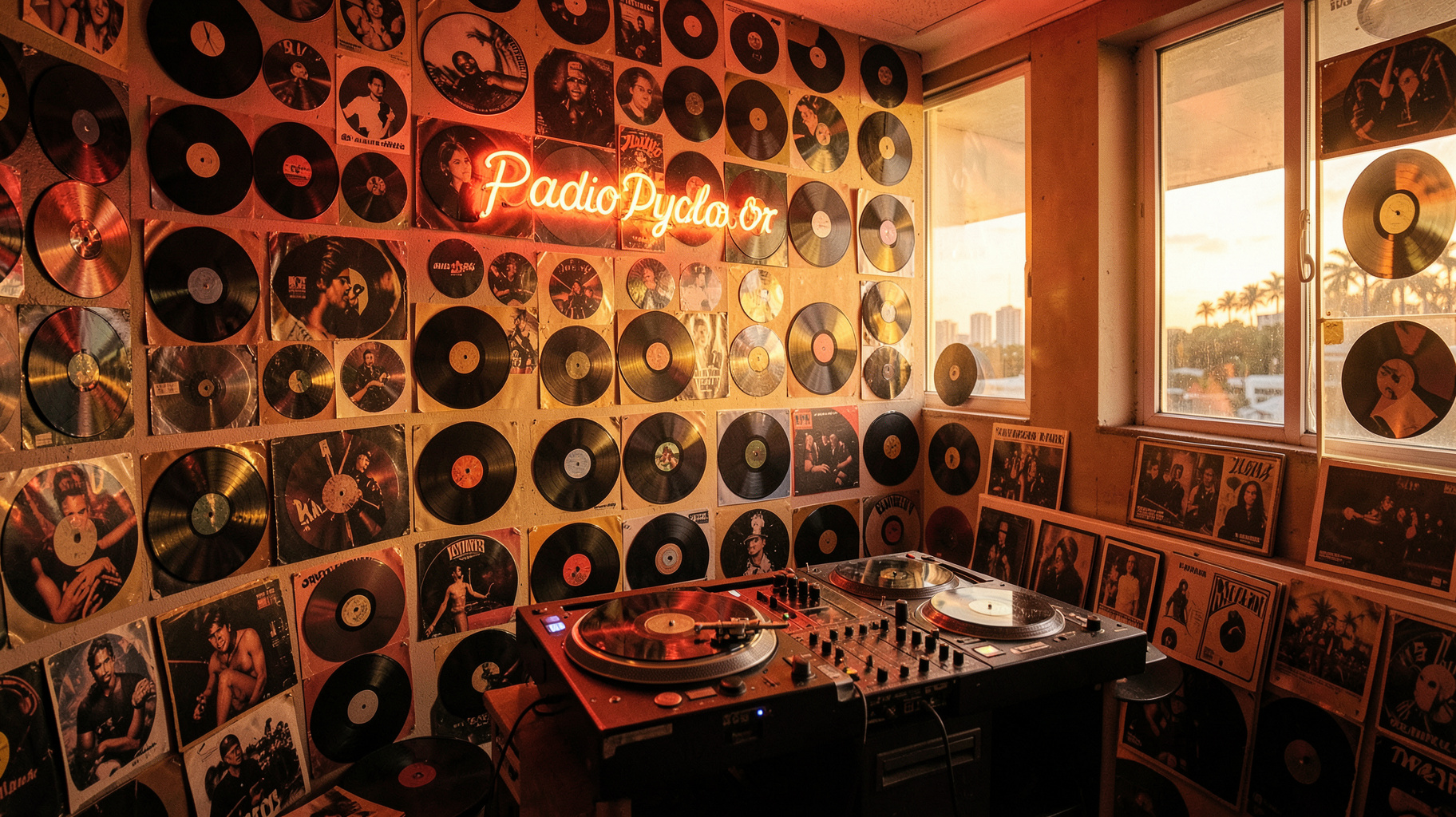
Most disco stations play a genre. Radio Polydor plays a record label. Broadcasting out of Miami under the wider "Disco Paradise" umbrella, the station sticks to a single, specific promise: every track comes from Polydor Records or one of its sublabels, pulled from the label's actual 12 inch disco releases between 1974 and 1983.
A German Label That Became a Disco Powerhouse
Polydor barely registered in the American record industry when it opened a US branch in 1969. That changed fast: the label signed James Brown's recording contract and back catalog in 1971, then absorbed MGM Records in 1972 after parent company PolyGram bought the label, according to a history of Polydor Records. By the middle of the decade, Polydor had gone from a minor overseas import to a label with real muscle in American soul, funk and, soon, disco.
The Bee Gees Connection That Changed Everything
Polydor's disco breakthrough came largely through Robert Stigwood, the Australian manager who had already built the Bee Gees into stars before launching his own RSO Records in 1973 as a Polydor-distributed venture. When Stigwood needed songs for a disco film starring a young John Travolta, he turned to the group he already managed, and the resulting Saturday Night Fever soundtrack spent six months at number one and sold more than 50 million copies worldwide. Three of its chart-topping singles, "How Deep Is Your Love," "Stayin' Alive" and "Night Fever," ran through RSO and, by extension, through Polydor's distribution machine.
Five Labels, One Playlist
Radio Polydor doesn't limit itself to RSO. The station draws from five sublabels under the same corporate umbrella, Event, MGM, Posse, RSO and Spring, each of which pressed its own run of 12 inch disco singles during the format's peak years. Spring Records in particular carried real weight of its own, distributed and marketed through the Polydor group while building a catalog widely regarded as one of the more important soul imprints of the decade. Pulling from all five at once gives the station a catalog with real range, glossy Bee Gees-style production sitting next to grittier soul and funk sides from labels most casual disco fans have never heard of by name.
Playing Records the Way DJs Actually Mixed Them
What separates Radio Polydor from a generic disco stream is how specifically it treats its source material. The station identifies the label and catalog number behind each track it plays and credits the DJ responsible for the mix, treating the 12 inch single not as a nostalgia format but as the actual physical object it was built as. That single-label focus is a narrow lane by design. There's no shortage of general disco stations online; there's exactly one built around Polydor's back catalog specifically, and Radio Polydor is it.