
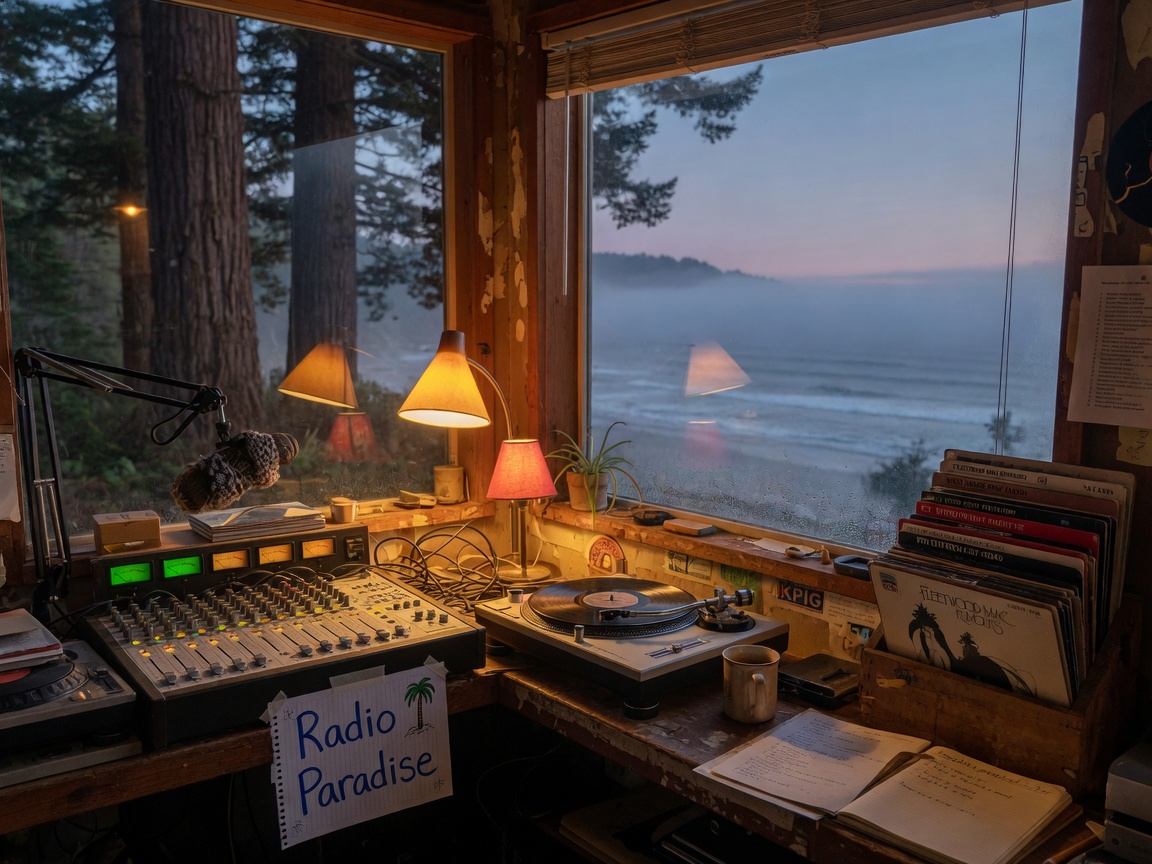
Most internet radio stations exist because streaming made radio easy. Radio Paradise exists because one DJ got tired of everything commercial radio made hard, and decided to build something else from his living room.
A DJ Who Was Streaming Before Streaming Was a Word
Bill Goldsmith had worked in radio since 1971, moving through stations from Honolulu's KPOI to WCAS in Cambridge before landing at the freeform California station KPIG. According to Alta Online's profile of Goldsmith, he became convinced in 1995, when most people online were still fighting dial-up modems for a phone line, that radio could be sent over the internet instead of the air. He launched what is widely credited as the world's first full-time internet radio broadcast from KPIG that same year.
Built From a House Called Paradise
Radio Paradise itself launched in February 2000, created by Goldsmith and his wife Rebecca after he grew frustrated with the rotation rules and format restrictions that came with commercial programming, according to the station's own history. They ran it out of their home in the town of Paradise, California, which is where the name comes from. The station later relocated to Borrego Valley in 2016, two years before the Camp Fire destroyed much of the town of Paradise, and moved again to Eureka, California in 2022 after Rebecca's retirement, when the couple's daughter Alanna stepped into her role.
Human Curation Instead of an Algorithm
The Main Mix threads modern and classic rock, electronic, world music, and more into what the station calls, on its own homepage, "an eclectic musical adventure." Every track is hand-picked by the Goldsmiths and their small DJ team rather than sorted by a recommendation engine, and the station streams in lossless FLAC alongside standard formats. It has since grown into a small family of channels, including Mellow Mix, Rock Mix, and Global Mix, each built around a different corner of the same eclectic instinct rather than a single fixed playlist.
A Station That Answered to Its Listeners, Not Advertisers
Radio Paradise has never carried ads, running instead on listener donations, a model that also meant surviving a real financial threat. In 2007, the Copyright Royalty Board raised streaming royalty rates roughly tenfold overnight, a change that briefly put stations like Radio Paradise at risk of shutting down before negotiated rates brought the numbers back to something an independent station could sustain. The station was profiled by TIME magazine in April 2004 as part of its coverage of the shift toward internet radio, years before streaming became the default way most people listen to music.
Why Listeners Stick Around
Part of what keeps people on Radio Paradise is what happens on screen while a track plays. Each song comes with artist background pulled from sources like Wikipedia, album art, lyrics, and a running thread of listener comments, turning the stream into something closer to a shared listening room than a passive broadcast. Since 2006 the station has also run a listener world map, letting its audience see just how far Bill and Rebecca's home-built project ended up traveling.
Tune in to Radio Paradise on Radio Shuffle for hand-picked rock, electronic, and world music from the station that helped prove internet radio could work in the first place.