
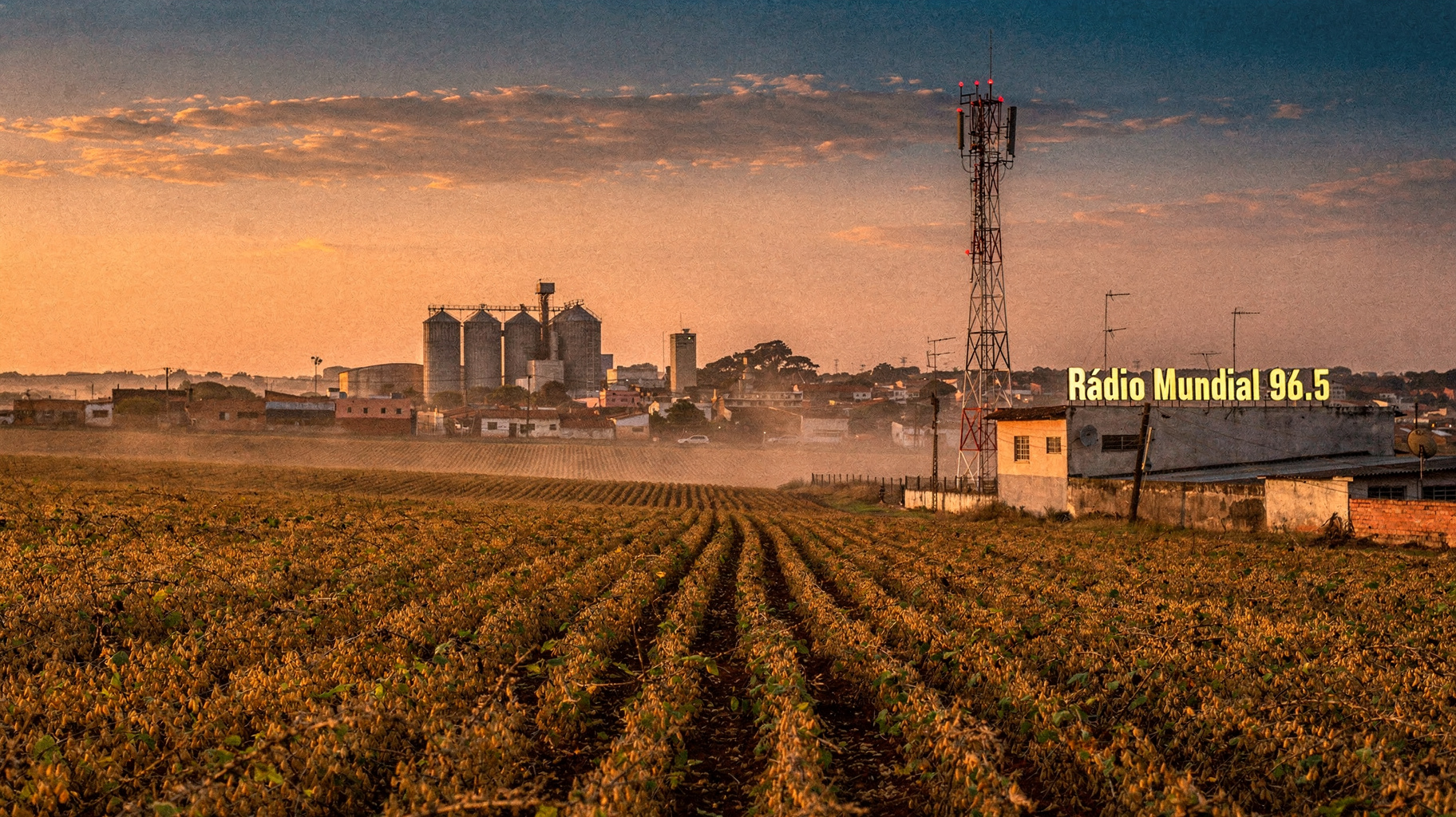
Rádio Mundial calls itself "Uma rádio fora de série," an unconventional radio, and broadcasts across a stretch of southern Brazil built almost entirely on farming. On 96.5 FM out of Ijuí, Rio Grande do Sul, the station mixes pop and rock through the day with MPB and 60s, 70s and 80s music at night, reaching a region defined less by any single city than by the agricultural cooperatives and colonist towns spread across it.
A City Named for Divine Water
Ijuí was officially founded on October 19, 1890, its name derived from the Guarani for "river of divine water." Settlement accelerated after 1899, when the region drew agricultural colonists from Rio Grande do Sul's older colonies, and the resulting ethnic mix and rapid growth earned Ijuí the nickname "Colmeia do Trabalho," the beehive of work, according to the city's own historical profile from IBGE. That agricultural identity still defines the city today, home to Cotrijuí, one of Rio Grande do Sul's largest farming cooperatives, spanning more than 38 municipalities.
Twenty-Six Years on Air
Rádio Mundial launched on February 26, 1998, and now operates as a Class A broadcaster with a signal radius exceeding 100 kilometers, reaching a potential audience of roughly 1.5 million people across cities including Cruz Alta, Santo Ângelo, Panambi, Giruá and Três de Maio, according to the station's own Quem Somos page. That reach turns a single Ijuí studio into a signal that covers a meaningful slice of Rio Grande do Sul's agricultural northwest rather than just one municipality.
Two Formats, One Signal
On top of its FM broadcast, Rádio Mundial runs a separate web radio brand called "Respire Música," breathe music, promising programming without commercial interruption for listeners who want the music without the on-air breaks the terrestrial signal carries. Programs like "Comadres - Lado C" round out a schedule that mixes that music-first web stream with more traditional talk and news coverage spanning agriculture, politics, education and health.
A University City's Second Voice
Ijuí is also home to UNIJUÍ, the Regional University of the Northwest of Rio Grande do Sul State, giving the city a second identity beyond agriculture as a regional education hub. Rádio Mundial's mixed programming, blending decades-spanning music with agricultural and community news, reflects that dual character, a station built to serve both the farming cooperatives around it and the university population inside the city itself.
A Regional Signal With a Local Backbone
Few stations describe themselves as "out of the ordinary" while running a genuinely conventional format of pop, rock and golden oldies, but Rádio Mundial's real distinction is geographic rather than musical. It is one signal covering a wide, agriculturally defined stretch of Rio Grande do Sul, a region that built its identity on farm cooperatives and colonist towns long before any radio tower went up in Ijuí.