
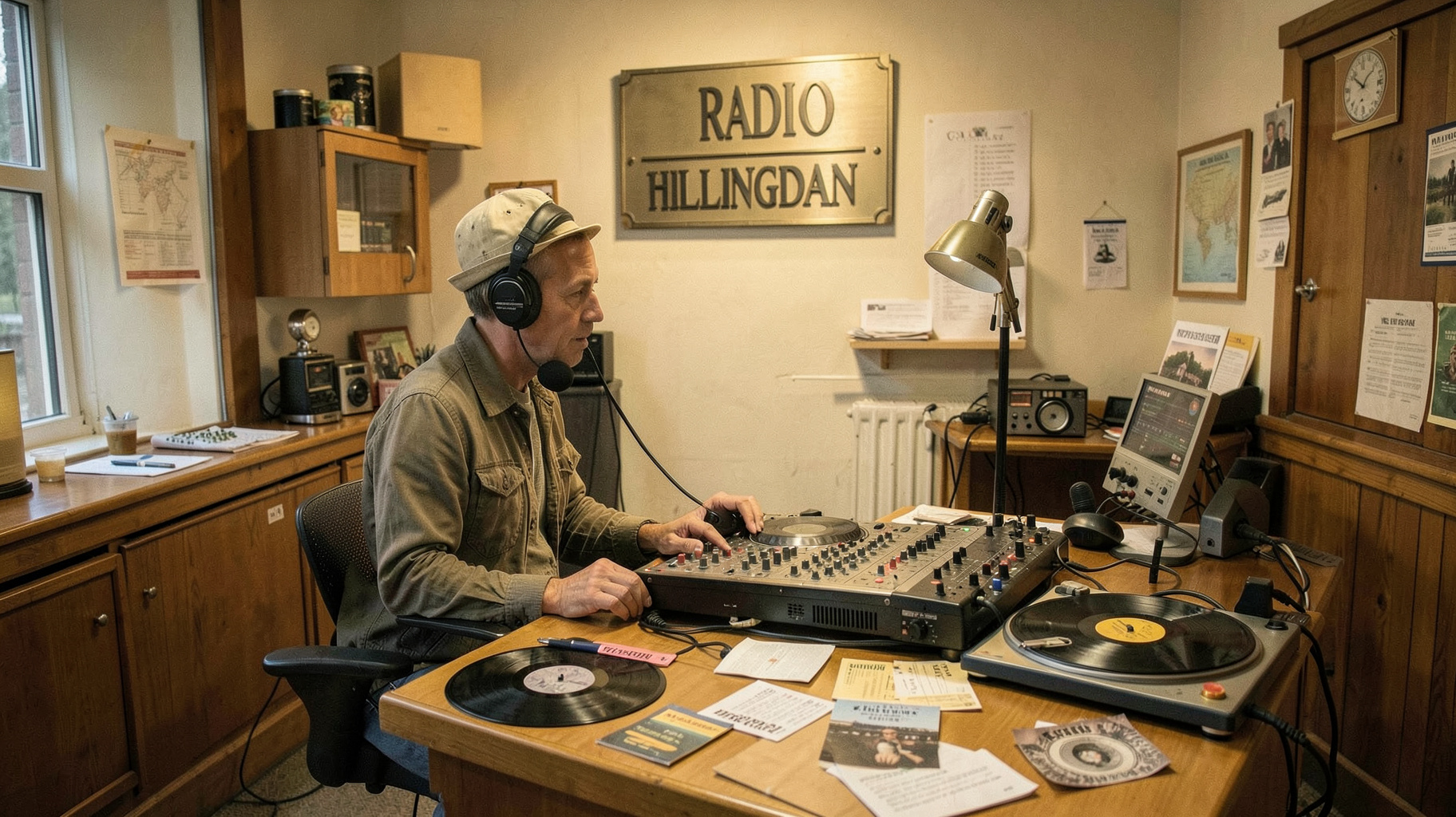
Radio Hillingdon did not start as a commercial venture chasing an audience. It started the week before Christmas in 1970, when a small group of apprentices from EMI put together a broadcast aimed at exactly one audience: the patients of Hillingdon Hospital who could not go anywhere to hear music, so the music came to them instead.
Built by Music Industry Apprentices, Not Broadcasters
According to the Charity Commission's record for Hospital Radio Hillingdon, the station was founded in 1970 by a small team of volunteers who were apprentices at EMI, the record label, rather than trained radio engineers. Their first broadcast went out to patients at Hillingdon Hospital in Uxbridge that same December, delivered through the hospital's own bedside listening system rather than a public FM signal.
Decades of Volunteers, Zero NHS Funding
Per Radio Hillingdon's own site, the station is now a registered charity that has operated for 55 years entirely on volunteer labor, and it receives no NHS funding despite broadcasting into an NHS hospital. Fundraising events, sponsorships, and community donations cover everything, which the station describes as an integral part of keeping it running rather than a side activity.
From Bedsides to a Borough, and Now DAB+
What began as a single-hospital service has expanded to serve care home residents and the wider London Borough of Hillingdon, with a Road-Show service that brings the station out to local schools and village fetes. As of 2026, Radio Hillingdon is expanding onto DAB+ broadcasting across West London, moving well beyond its original bedside-only reach. The station's current lineup includes long-running shows like The Late Show with Keith Hotston and The A to Z of Pop with Richard Smith, and it has hosted guests with genuine music industry pedigree, including an interview with Frank Allen, bass guitarist of The Searchers.
Why It's Worth Tuning In
Radio Hillingdon offers a rare kind of radio history, a station built by record label apprentices for hospital patients rather than ratings, still run entirely by volunteers 55 years later and now expanding onto DAB+ without ever losing sight of the bedside listeners it started with.