
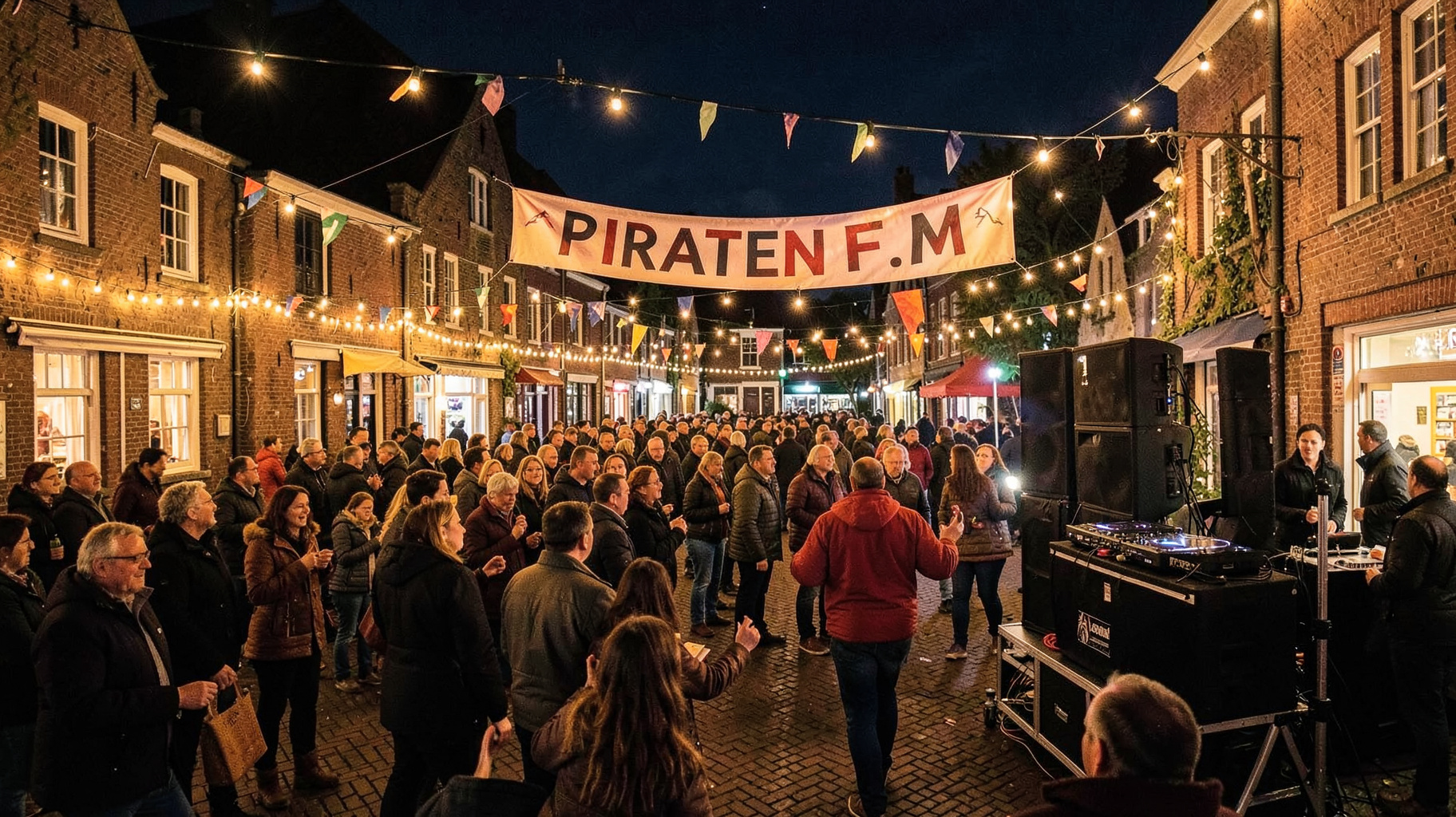
In July 2021, the Netherlands officially recognized something unusual as intangible cultural heritage: the culture surrounding illegal FM pirate radio, carefully worded to exclude the illegal broadcasting itself. Piraten.FM streams the legal, present-day version of exactly that culture.
A Genre Born From Illegal Transmitters
Dutch pirate radio, known locally as etherpiraterij, dates back to documented cases in the 1930s and surged again around 1980 with a wave of unlicensed FM city stations concentrated in Den Haag, Amsterdam and Nijmegen, according to a history of the phenomenon. What started as musical rebellion against established broadcasters, a way for enthusiasts to put Dutch-language music and other favored genres on the air without waiting for a license, gradually built its own distinct sound and community rather than staying a legal workaround.
Heritage Status, With One Careful Exclusion
That community's legal activities, internet broadcasting, listener call-ins and song requests, and live performances at village festivals reaching an estimated 100,000 listeners, were added to the Netherlands' intangible cultural heritage inventory in July 2021, according to the official heritage listing. The listing's title spells out its own boundary in parentheses, excluding illegal broadcasting, and organizers reportedly train board members specifically on how to field media questions about the illegal roots that are deliberately left outside the protected heritage.
Strongest in the Northeast
The heritage designation specifically calls out the northeastern Netherlands as the region where pirate music culture runs deepest, a regional concentration that traces back to the dense cluster of unlicensed local stations that operated there during the FM pirate wave. Piraten.FM's playlist of piratenhits draws directly from that regional tradition, built around the sound this specific corner of the country turned into a genre of its own.
A Playlist That Outlived the Transmitters
Piraten.FM streams what its own tag describes as geheimezender and piratenhits, secret transmitter and pirate hits, aggregating the sound of a scene that no longer needs an illegal antenna to survive. The music built its identity through decades of unlicensed broadcasting, but its actual survival today runs on the same legal internet streaming infrastructure as any other station, exactly the split the heritage listing was written to protect.
Piraten.FM is not asking anyone to break the law to keep a genre alive. The Netherlands already decided the culture was worth protecting, they just made sure the protection stopped exactly where the transmitter used to start.