
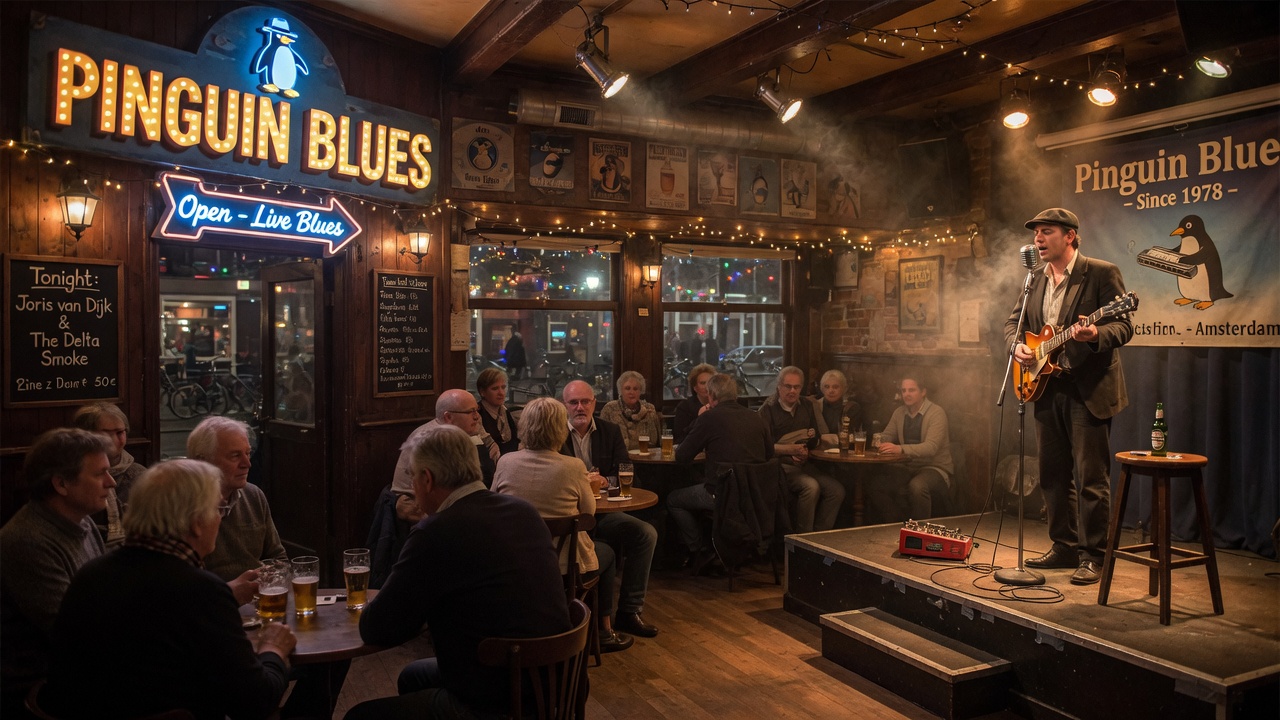
The Netherlands has built one of Europe's most committed communities of blues listeners, which might surprise people who associate the country more with house music and Amsterdam clubs than with the Delta tradition. But blues has deep roots in Dutch music culture, and Pinguin Radio — a long-running independent Dutch network dedicated to alternative and roots music — understood that early. Pinguin Blues is its dedicated channel for the genre, streaming 24 hours of blues and blues rock from classic to contemporary.
Pinguin Radio: A Dutch Institution for Independent Music
Pinguin Radio is one of the Netherlands' most respected independent music broadcasters, known for championing new and independent artists across blues, rock, folk, and world music. The network runs multiple specialized channels: Pinguin Blues, Pinguin on the Rocks, Pinguin Groove, Pinguin Classics, Pinguin World, and others. Each channel has its own editorial identity and listener community. Pinguin Blues, established in 2004, carved out its specific niche within this ecosystem: a focused, encyclopedic blues stream for listeners who take the genre seriously. The station broadcasts at 192kbps MP3, one of the higher quality streams in its category.
From Robert Johnson to Modern Blues Rock
Pinguin Blues doesn't define blues narrowly. The stream moves across the full history and evolution of the genre, from the foundational recordings that trace back to the American South, through Chicago electric blues, into the British blues explosion of the 1960s, and on to contemporary blues rock that continues to push the form forward. According to the station's programming, this includes:
- Classic blues, the foundational recordings from the 1950s and 1960s that established the genre's vocabulary — the songs and styles that everything since has responded to.
- Blues rock, the electric, amplified tradition that emerged from the British scene and American rock crossover — raw energy, extended guitar work, and the emotional core that links blues to rock.
- Special "Pinguin Radio" segments, curated deep dives into specific eras and artists, with a particular focus on the golden period of the 1950s and 1960s.
- Contemporary blues, newer artists continuing the tradition, representing blues as a living form rather than a museum piece.
The Dutch Blues Scene and Why It Matters
The Netherlands has been a genuinely important country for blues in Europe. Dutch promoters and record collectors were among the first to bring American blues artists to European stages in the 1960s, and the country's blues festival circuit remains active today. Stations like Pinguin Blues exist because there is an audience with real depth of knowledge and genuine passion for the form. The network also publishes its own "Pinguin Radio Snob 2000" chart — an annual listener-voted ranking of the 2000 best alternative songs — which reflects the kind of committed community that builds around stations that take music seriously.
Community and Discovery
Pinguin Radio has built an active community around its discovery mission. The network actively promotes new and independent artists, and listeners who tune into Pinguin Blues will find tracks alongside established names. The station's website also serves as a community hub for Dutch independent music, with artist pages, playlists, and editorial content. For blues listeners, it's a resource, not just a stream.
The Case for Adding Pinguin Blues to Your Rotation
If you've exhausted your usual blues playlists and want a station that approaches the genre as an ongoing story with real depth, Pinguin Blues is the answer. The 192kbps broadcast quality means the guitar tone comes through properly. The editorial range means you'll hear things you don't know yet. And the Dutch perspective brings a European sensibility to American music that produces genuinely interesting programming.
Stream Pinguin Blues Free on Radio Shuffle
Tune in to Pinguin Blues on Radio Shuffle — no account, no app, no fee. Press play and the Dutch take on the blues tradition is ready for you.