
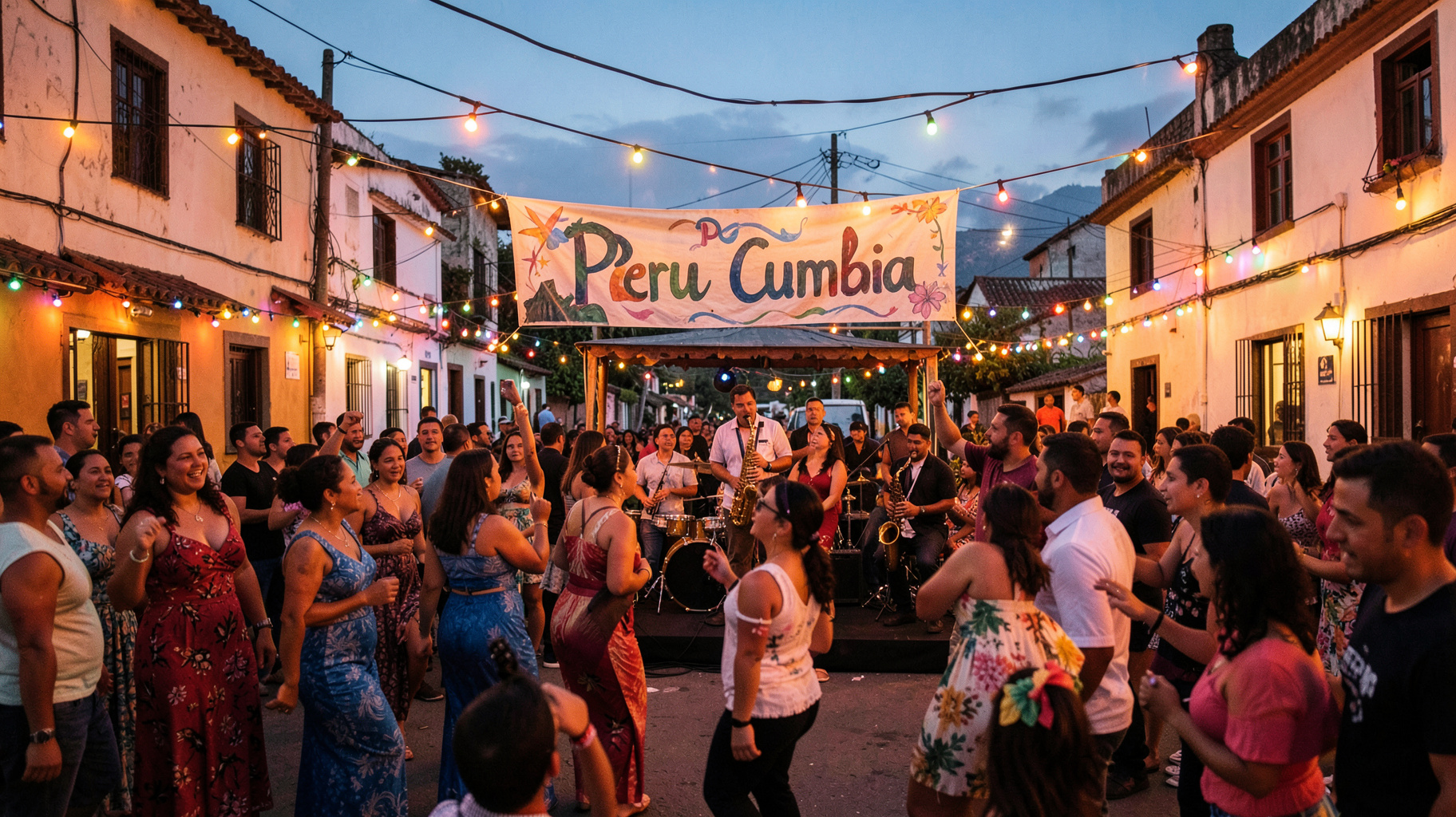
Peru Cumbia streams a genre that did not arrive in Peru fully formed. It was built, piece by piece, out of migration, a borrowed Colombian rhythm, and a mountain folk tradition, and the station keeps that entire lineage in rotation alongside the contemporary acts still recording in the style today.
A Sound Carried by Migration
Peruvian cumbia has its roots in a mid-century migration wave. Colombian cumbia arrived in Peru in the 1950s, and over the following two decades it fused with huayno, the mestizo folk music of the Andes, as rural highland families moved into Lima and other coastal cities in growing numbers. That collision of a coastal, imported rhythm with an inland, indigenous one is what eventually produced the genre most listeners now just call Peruvian cumbia.
The Song That Named a Movement
The subgenre that grew out of that fusion became known as chicha, and the name traces to one specific record. "La Chichera," recorded in 1965 by Los Demonios del Mantaro under bandleader Carlos Baquerizo Castro for the Sono Radio label, is widely cited as the first true Peruvian cumbia track and one of the likely origins of the "chicha" name itself, a song dedicated to a seller of the traditional Andean corn drink. The recording notably skipped guitars, bass, and drums entirely in favor of saxophone, clarinet, harmonica, and Caribbean percussion, an unusual instrumental choice that helped define the genre's early sound.
From a Slur to a Genre Name
The chicha label did not start as a compliment. Music writers in the 1960s and 70s used the word dismissively to describe Andean-inflected tropical music, treating it as a lesser, provincial cousin to more polished coastal styles. Decades later, that same dismissive term is simply the accepted name for one of Peru's most enduring popular music genres, a reversal that mirrors how the migrant communities who created the sound eventually became central to Lima's cultural identity rather than remaining on its margins.
The Genre's Present, Not Just Its Past
The style has kept moving well past its chicha-era origins. Groups like Grupo 5, one of the most prominent names in modern Peruvian cumbia, keep the genre commercially active today, carrying the same rhythmic backbone that Los Demonios del Mantaro first put on record six decades ago into arenas and festival stages across Peru and beyond. A station built entirely around this music is really tracing one continuous line, from a 1965 single about a chicha seller to whatever is currently filling dance floors in Lima.