
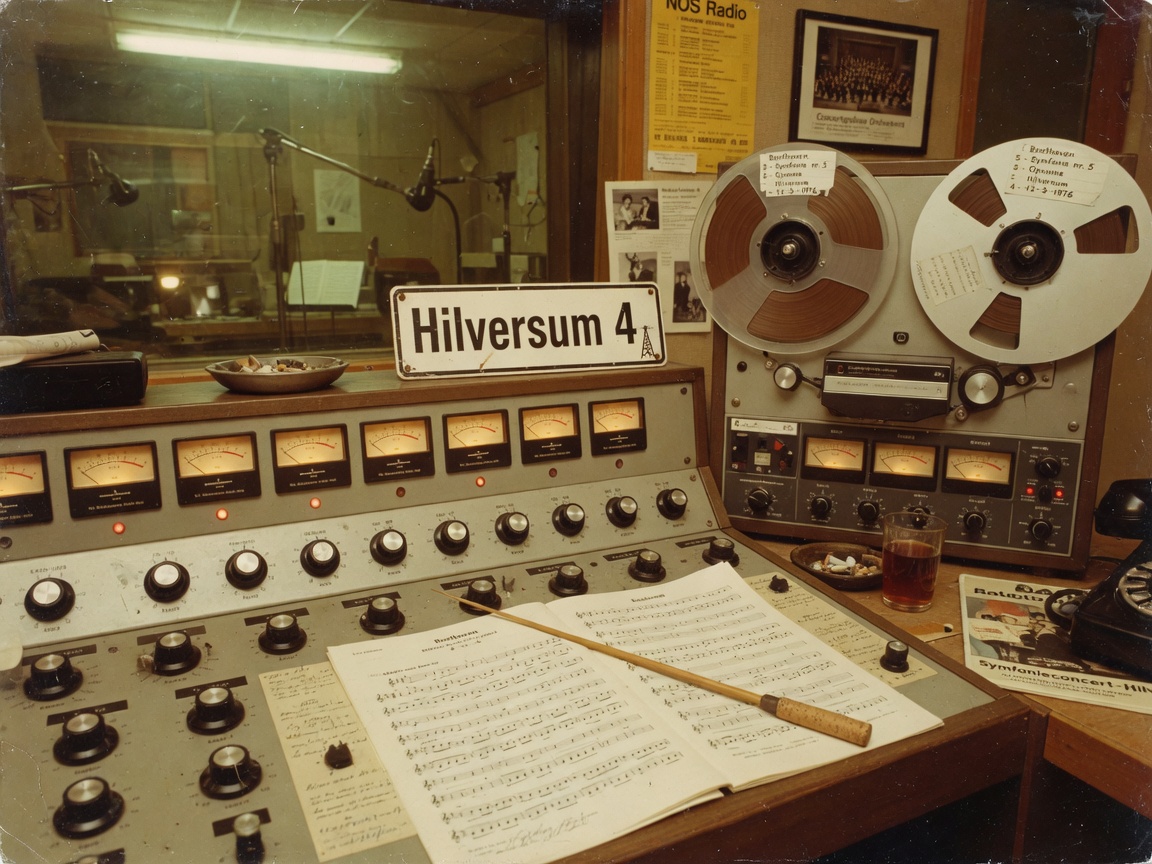
Before it became NPO Klassiek, the station launched on December 28, 1975 under the name Hilversum 4, with comedian André van Duin introducing the very first transmission and Beethoven's Fifth Symphony opening the broadcast. It existed at all because of years of lobbying by classical musicians, most notably violist Theo Olof, who spent the early 1970s gathering signatures and staging benefit concerts to convince Dutch broadcasters the country needed a dedicated classical channel.
Even the Prime Minister Had Opinions
The station's format proved contentious almost immediately. Mandatory spoken-word segments, required across Dutch public broadcasting, kept interrupting what listeners wanted to be an uninterrupted classical stream, a tension serious enough that Prime Minister Joop den Uyl publicly weighed in during 1976, wishing aloud for "a real classical station, completely." Fifty years on, that same push and pull between talk and music still shapes how public classical radio operates in the Netherlands.
Four Names, One Mission
The station has been renamed repeatedly without ever losing its classical focus: Hilversum 4 became Radio 4 in 1985, then NPO Radio 4 in 2014, before settling on NPO Klassiek on January 2, 2023. Each name change reflected a broader NPO rebrand rather than any shift in programming, and the station's core identity as the Netherlands' home for orchestras, ensembles and soloists never wavered.
From Evening Slot to Round-the-Clock Broadcaster
What began as an evening-only channel in the 1970s has grown into a full 24-hour operation broadcasting in surround sound over internet and satellite, with concerts, particularly opera and choral performances, still concentrated in the evening hours where the format first found its footing. Since 2015, listeners have even been able to watch the studio in action via webcam, a small but telling nod to how far the station has come from its single evening broadcast slot.
A Hub for Everything Classical
NPO Klassiek now functions as the umbrella for Dutch public classical music across every format, radio, podcasts, live concerts, video and curated playlists, built from a foundation that started with one persistent violist and a Prime Minister who, at least once, said the quiet part out loud.