
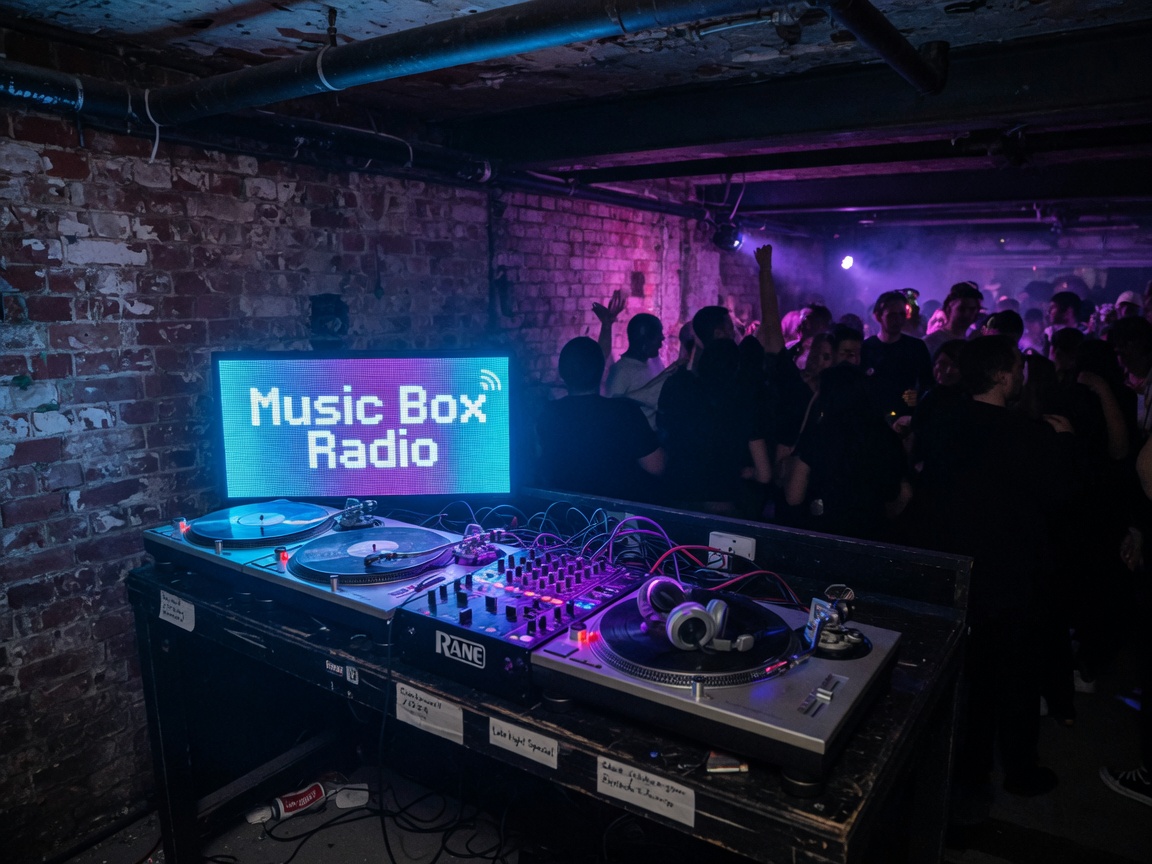
Music Box Radio broadcasts from Clerkenwell, a neighbourhood in central London that spent decades as an overlooked pocket of the city before becoming ground zero for one of Britain's most influential clubs. The station describes itself as "a collective of like minded souls with a unanimous love for all things music and entertainment," and its programming, built around house, disco, techno and deep electronic sounds, fits its postcode perfectly.
A Neighbourhood Built by One Club
Clerkenwell's modern identity as a nightlife destination traces largely to fabric, which opened in 1999 inside a 19th-century meat storage cellar across from Smithfield Market. Founder Keith Reilly spent almost a decade searching for the right space before settling on the underground warehouse, and the club went on to be named the world's best by DJ Magazine's global club poll in 2008. That reputation turned a once-overlooked corner of central London into a genuine electronic music postcode, the same postcode Music Box Radio broadcasts from today.
No Sponsors, No Ads, Just the Collective
Unlike commercial stations chasing advertising revenue, Music Box Radio runs on a community model, funded by listener donations rather than sponsors. That structure keeps the station's direction in the hands of its own DJ collective rather than an ad sales team, which shows in a schedule built around specialist genre knowledge, house, disco, electronica, techno and what the station itself calls an eclectic streak, rather than a chart-friendly playlist built to hold the widest possible audience.
A Roster That Includes a Genuine Techno Pioneer
Among the station's DJ lineup is Colin Dale, one of the original UK house and techno selectors, who started out warming up for Tim Westwood in central London clubs in 1982 before landing a slot on Kiss FM in 1986. His Abstrakt Dance show ran for sixteen years and is widely credited with introducing a generation of British listeners to Detroit and Chicago's early electronic sounds, at a time when London clubland was still dominated by rare groove and jazz funk. A station that can count a DJ with that history in its lineup is operating with real credibility in the genre, not just borrowed aesthetics.
Dance Music in a Gentrifying City
London's club scene has been shrinking for years, squeezed by rising property values that have closed roughly half the city's clubs and 40 percent of its live music venues. Against that backdrop, internet radio stations like Music Box Radio serve a role beyond entertainment, they keep a scene's sound circulating even as the physical venues that built it come under constant pressure. Clerkenwell itself is proof that the pressure runs both ways: the same gentrification eating into London's nightlife also transformed the neighbourhood the station broadcasts from into a destination in the first place.
The Sound of a Specific Postcode
Music Box Radio is not trying to be everything to everyone. It is a donation-funded collective built around house, disco and techno, run by DJs including one of the genre's genuine UK pioneers, broadcasting from the exact stretch of London that turned those sounds into an internationally recognised scene. For listeners who want London's underground dance history playing in the background rather than a generic electronic playlist, that specificity is the appeal.