
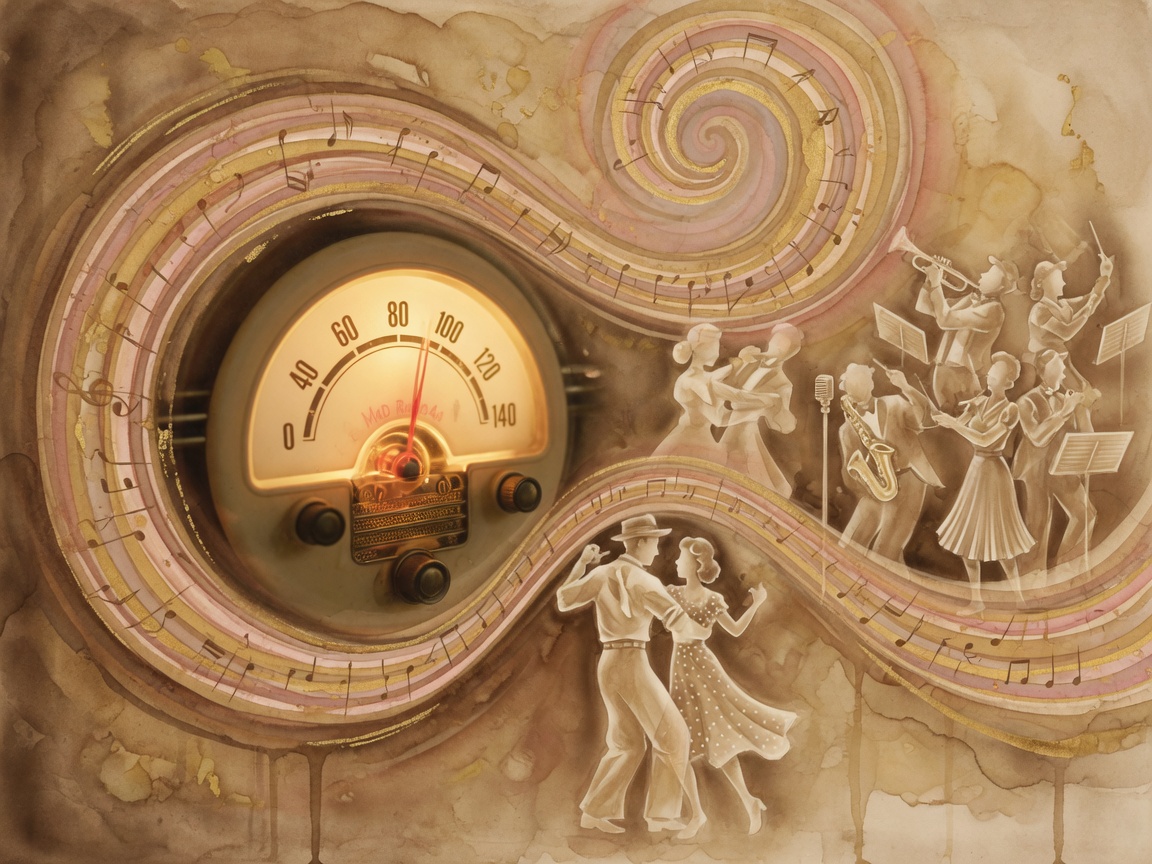
Most stations on this list exist to entertain. M4D Radio 40s exists to help. It is one channel within m4d Radio, a free, non-commercial internet radio service created by the UK charity initiative Music for Dementia, and its entire purpose is built around a simple, well-documented fact: music from a person's youth can reach them in ways that conversation sometimes cannot.
Music as a Tool, Not Just a Soundtrack
According to coverage from the Dementia Engagement and Empowerment Project, m4d Radio was developed as a direct response to the isolation of Covid-19 lockdowns, when people living with dementia and their carers were cut off from the group activities, choirs, and communal singing sessions that had previously given them structure and comfort. The service was built by Music for Dementia, a programme of the Utley Foundation, and launched as a free, advert-free station running 24 hours a day, seven days a week.
Rather than one general playlist, m4d Radio splits into six separate channels, each dedicated to a single decade of music running from the 1940s through the 1980s. M4D Radio 40s is the earliest of those channels, built around big band, swing, and wartime-era hits, the exact music many listeners with dementia would have grown up dancing to. The reasoning is rooted in how memory works: music encoded early in life, especially music tied to strong emotional moments, tends to remain accessible even when more recent memories have become difficult to reach.
A Station That Found Its Audience Fast
The response to the service was immediate. Per reporting from Home Care Insight, m4d Radio reached 30,000 listeners within its first month, a figure that reflects how badly this kind of resource was needed by families and care settings across the country. The station is also built to be genuinely accessible: it can be reached through a standard web player, and for households with an Alexa smart speaker, listeners can simply say "Alexa, enable m4d radio" to start a channel without needing to navigate a screen or an app.
Music for Dementia has continued to expand how the service reaches people who might struggle with traditional devices, including free m4dRADIO cards designed for screen-free audio players aimed at older adults, an approach built specifically around ease of use for a listener who may find phones and menus overwhelming.
Why the 1940s Channel Matters
For a listener who came of age during the swing era, hearing a big band number they danced to decades ago can do something remarkable: it can momentarily cut through confusion and bring a flicker of recognition, calm, or even joy. Carers and care home staff have used channels like M4D Radio 40s not just as background music but as a genuine tool, something to play during a difficult moment, a mealtime, or simply a quiet afternoon, because familiar music from exactly the right era tends to land when little else does.
Give M4D Radio 40s a listen on Radio Shuffle, whether you are drawn to the golden age of swing or want to understand why this particular channel means so much to the people who rely on it.