
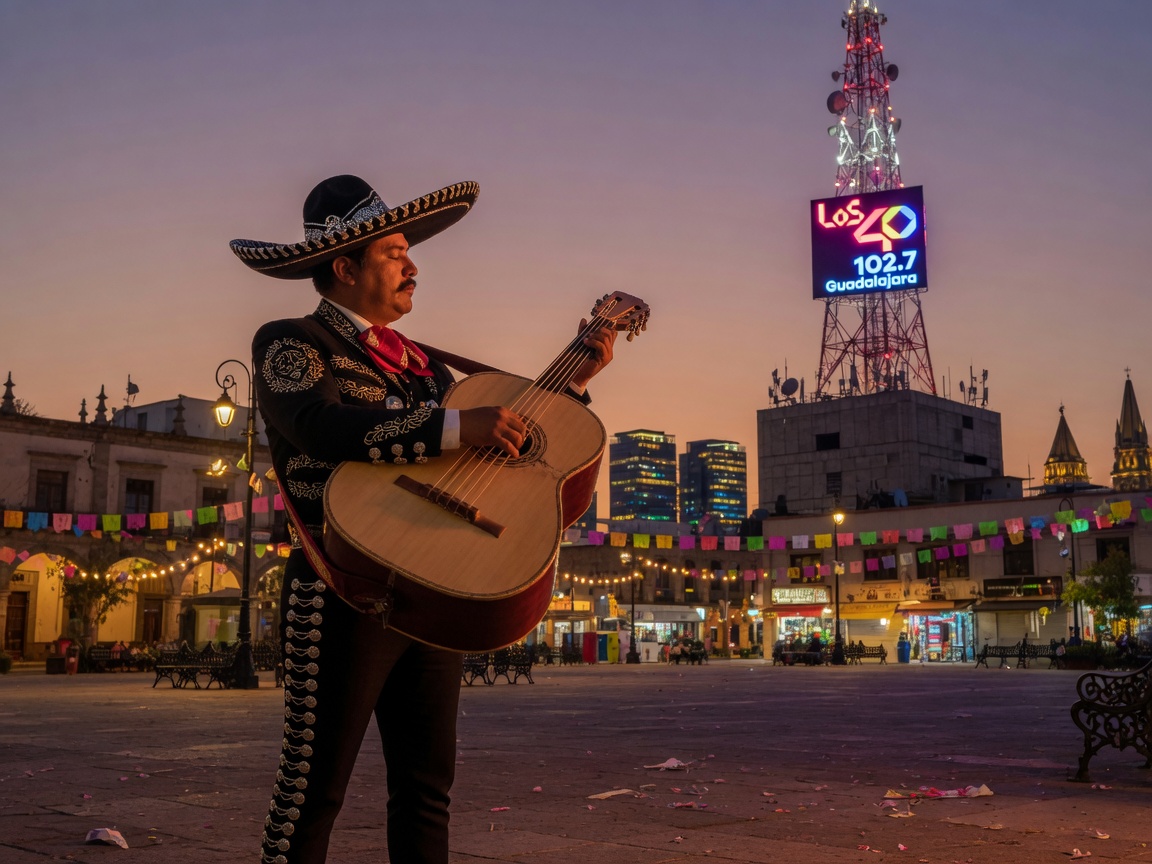
LOS40 Guadalajara broadcasts on 102.7 FM as XEHL-FM under the call sign license from Radiópolis, playing the youth-focused pop and Top 40 format that LOS40 runs across its Spanish-language network. The station targets listeners roughly 12 to 30 years old with contemporary hits, dance, and reggaeton, a format shared with LOS40 outlets throughout Latin America and Spain.
Five identities on one frequency
XEHL-FM received its first concession on April 2, 1969, launching as Sonido 103, the sister FM signal to XEHL-AM 1010 under original owner Radio Comerciales de Jalisco, according to a broadcast history compiled on Wikipedia. That name held through the 1990s, surviving the station's 1992 sale to Radiópolis. Then the changes came quickly: English-language alternative rock as Radical 102.7 in 1999, a pivot to English pop and rock as FrecuenciAdictiva 102.7 shortly after, a Spanish-language pop rebrand as Vox FM in 2003, and finally a conversion to the LOS40 network format in 2004, the identity the station has held for two decades since.
A Spanish pop format built for a Mexican youth audience
LOS40 itself traces back to a 1966 music program on Cadena SER's Radio Madrid, created by Rafael Revert under Spain's PRISA media group after government regulation opened the door to new FM stations, according to background on the network's Wikipedia page. It grew into an independent network by the late 1980s and became Spain's most-listened-to station with roughly 5 million listeners by 1988, before expanding into Latin America in the 2000s. Guadalajara's XEHL-FM adopted that imported Spanish pop format in 2004, plugging a decades-old European radio brand into a Mexican FM dial that had already cycled through rock, English alternative, and generic pop identities in the years before.
A pop station in the cradle of mariachi
That format lands in a city whose own musical identity runs in the opposite direction. Guadalajara sits near Cocula, Jalisco, widely regarded as the birthplace of mariachi music, a genre UNESCO declared an Intangible Cultural Heritage of Humanity in 2011. The city still hosts an annual International Mariachi and Charrería Festival, and its Plaza de los Mariachis remains a working gathering point for musicians in full charro dress. LOS40's youth pop format has nothing to do with that tradition, and it was never meant to, it exists to give Guadalajara's under-30 listeners the same reggaeton and pop hits their counterparts hear in Madrid or Buenos Aires, running on a frequency that has changed its own identity five times just to keep finding that audience.