
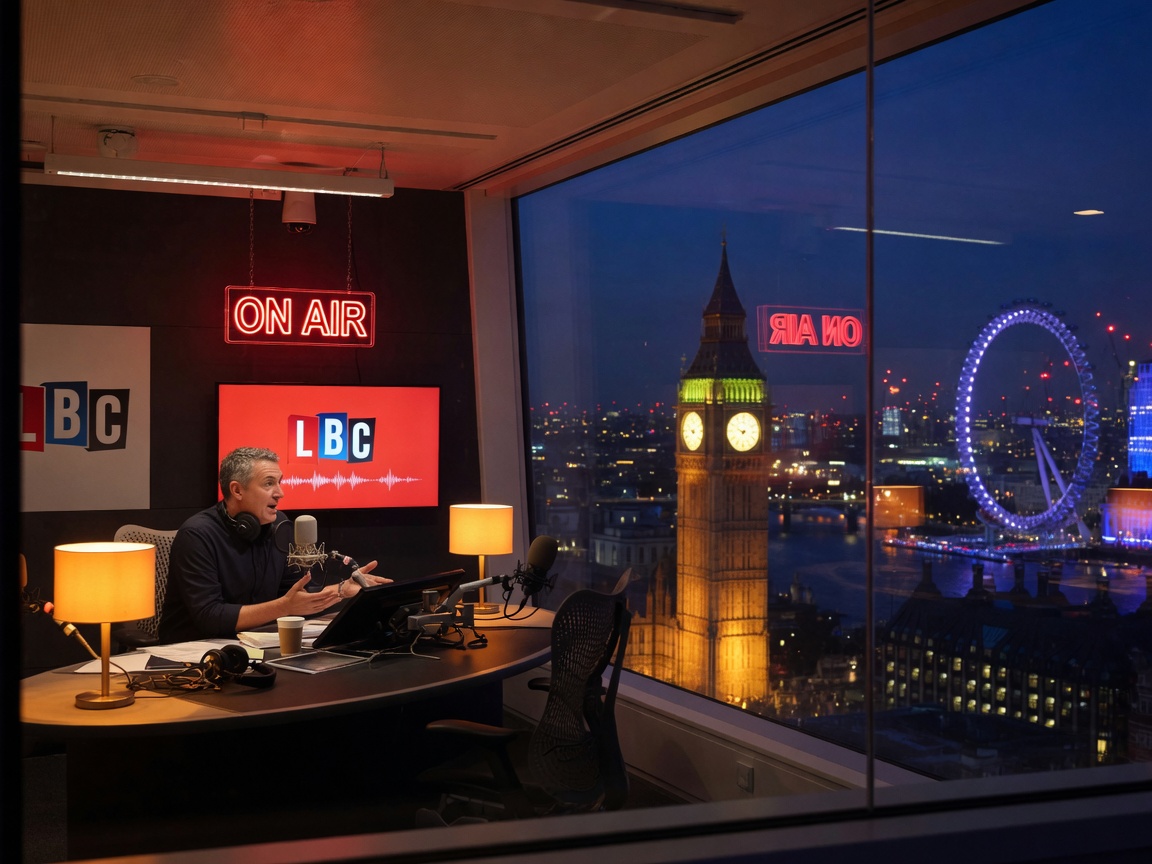
Long before rolling news channels existed on British television, one London radio signal was already handling breaking crises live, phone lines open, reporters on the scene, no script to fall back on. That station was LBC, and it holds a distinction no other commercial broadcaster in the country can claim: it was there first.
A Newspaperman's Eight-Year Fight for a License
LBC exists because one newspaper publisher refused to give up. Sir Geoffrey Cox first applied for a commercial radio license in 1965 and was turned down, according to the station's own 50th anniversary retrospective on LBC.co.uk. He kept pushing, helping establish the London Broadcasting Company in 1970, and finally got his chance when the Sound Broadcasting Act of 1972 created a legal framework for commercial radio in Britain for the first time. LBC signed on at 6am on October 8, 1973, with presenter David Jessel hosting the breakfast show, beating its rival Capital Radio to air by two weeks and becoming the UK's very first licensed commercial station.
The Station That Covered Crises Before Television Could
LBC built its early reputation on live event coverage at a time when British television had no equivalent rolling news format. In 1974, a young Jon Snow reported for the station from the Balcombe Street siege in Marylebone, where armed IRA gunmen held two hostages for six days, and in 1980 reporter Malcolm Brabant covered the SAS storming of the Iranian Embassy in South Kensington as it happened, according to the same LBC retrospective. That pattern continued for decades, with the station providing live reporting and phone-in reaction to moments including the fall of the Berlin Wall in 1989 and the September 11 attacks in 2001, long before any British broadcaster carried dedicated 24-hour news on television.
From London Broadcasting Company to Leading Britain's Conversation
The station's format shifted over time from straight news bulletins toward the phone-in talk format it is best known for today, and the LBC initials were eventually reinterpreted to stand for "Leading Britain's Conversation." It went national for the first time in 2014, expanding well beyond its original London signal, and is now owned by the media group Global. According to the same retrospective, LBC reaches more than 3.1 million listeners a week, carried by presenters such as Clive Bull, known for his long-running late-night show, alongside the daytime phone-in hosts who built the station's modern identity around live political debate and listener calls.
Why Live Talk Still Fits
Fifty years after its first broadcast, LBC's core format has barely changed: put a presenter, a phone line and a breaking story in the same room and let the conversation run. That approach was unusual enough to need an Act of Parliament to make it legal in 1973. Today it is simply what the station does best, a direct line from a newspaperman's rejected license application to one of the most listened-to talk formats in the country.