
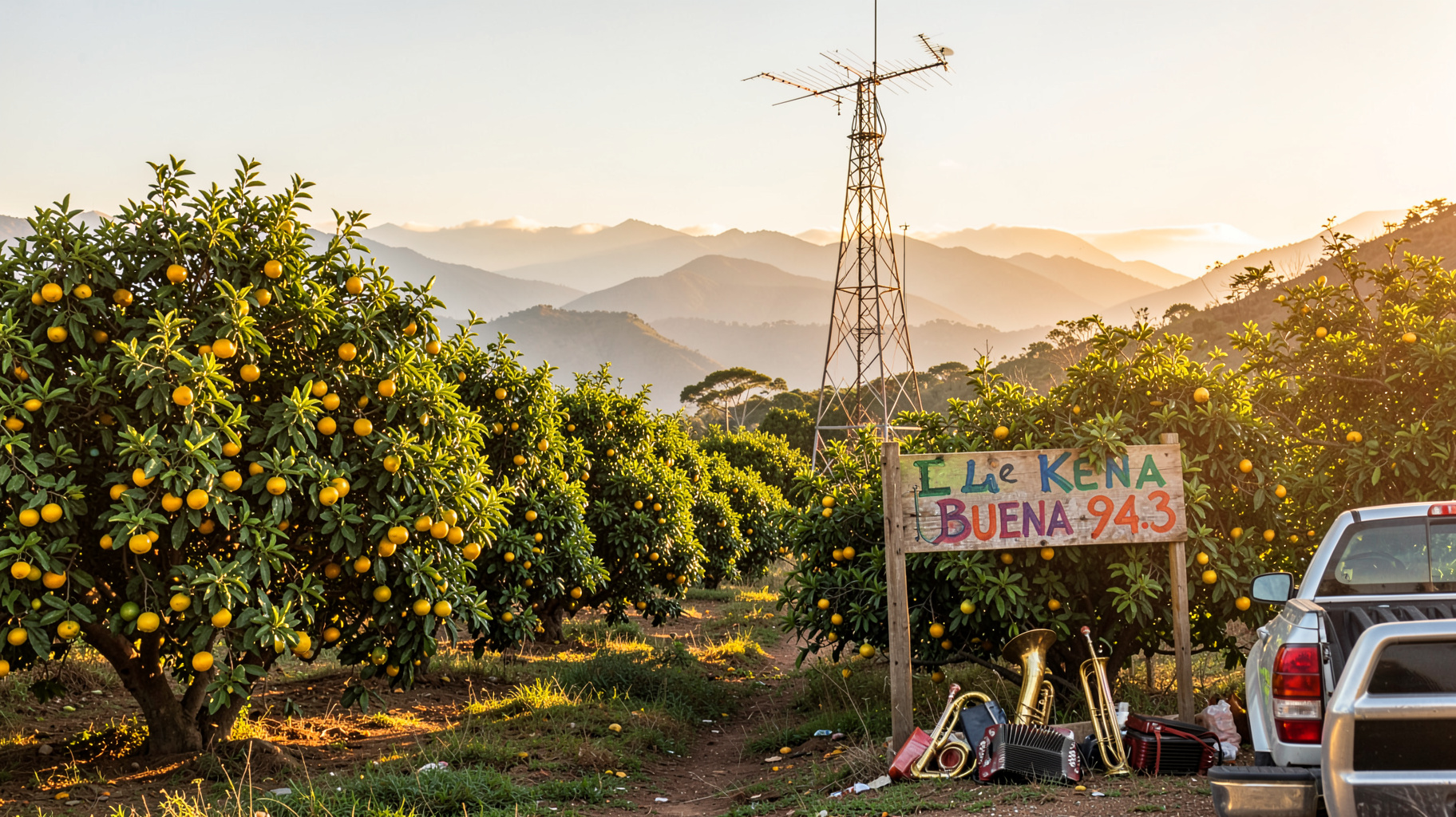
Most Regional Mexican stations on the air today are a handful of years old, riding a franchise format licensed from a national network. XHCJ-FM has been broadcasting from the same concessionaire since before that franchise, or its parent networks, even existed, making La Ke Buena Apatzingán one of the older continuously operating stations in Michoacán.
Seven Decades on the Same Signal
The station received its broadcast concession on July 21, 1952, and signed on that October 18 as XECJ-AM, initially transmitting on 1340 kHz before relocating to 970, according to the station's Wikipedia entry. What stands out in that history is continuity: the station has been held by the same concessionaire, Grupo Radio Apatzingán, since it first signed on more than 70 years ago. It became an AM-FM combo in 1994 with the addition of its 94.3 FM signal, and stayed that way for nearly three decades before finally dropping AM altogether on February 23, 2022, going FM-only under the XHCJ-FM designation it carries today.
A Fast Run Through Formats Before Settling on La Ke Buena
The years just before that AM shutdown were unusually turbulent for a station with such a long history. On January 1, 2021, the station dropped its Los 40 pop format for an adult hits identity branded "La CJ," only to switch again on May 1 of that year to simulcast Cadena RASA's "2021 FM" pop format. The station finally settled into its current identity in February 2022, adopting the Radiópolis-licensed "Ke Buena" Regional Mexican franchise, a format built around banda and grupera music that has stuck ever since.
Broadcasting From the Heart of Lime Country
Apatzingán sits at the center of Michoacán's Tierra Caliente valley, a region responsible for a striking share of Mexico's lime supply, with the Tierra Caliente farms collectively producing around 80 percent of the country's total output. Citrus, especially lime, dominates the local economy alongside corn, sesame and cotton, and the valley's fertile alluvial soil and tropical climate have made Apatzingán one of the country's most productive agricultural zones. A Regional Mexican station built around banda and grupera fits naturally into a place where the rhythm of daily life still runs on harvest seasons and highway routes lined with citrus groves.
An Old Signal, a Young Format
What makes La Ke Buena Apatzingán worth noting isn't just its current playlist, it's the gap between the station's age and its format's age. Ke Buena as a national franchise is a relatively recent addition to Radiópolis's lineup, while XHCJ-FM's concession predates nearly every regional network currently operating in Mexico. That combination, a franchise sound running on a signal old enough to have broadcast under three different call signs and frequencies since 1952, gives the station a foundation most of its Regional Mexican peers simply don't have.