
Every NOAA Weather Radio station broadcasting across the United States today, all seven VHF channels of it, traces back to a single transmitter that went on air in New York City on November 1, 1951. That station, callsign KWO35, began broadcasting aviation weather information on 162.550 MHz out of what was then called LaGuardia Field in Queens. It was a modest start: a 2-watt transmitter feeding a rooftop antenna on the Whitehall Building in Lower Manhattan, reaching an audience of harbor pilots, tugboat operators and a handful of farmers who happened to own VHF receivers capable of tuning that frequency.
That tiny experiment became the seed of an entire national system. A second station, KWO39 in Chicago, followed in the 1950s, and the network grew steadily from there. New frequencies were added over the following decades, 162.400 MHz in 1970, 162.475 MHz in 1975, and the remaining four channels by 1981, until all seven VHF channels that make up today's NOAA Weather Radio All Hazards network were in place. In 2002 the system was officially rebranded to reflect what it had already become, a warning service that went well beyond weather, carrying AMBER alerts, hazardous material warnings, nuclear plant alerts and other emergency messages using digital coding technology first tested in the 1980s.
From a Rooftop in Manhattan to the Empire State Building
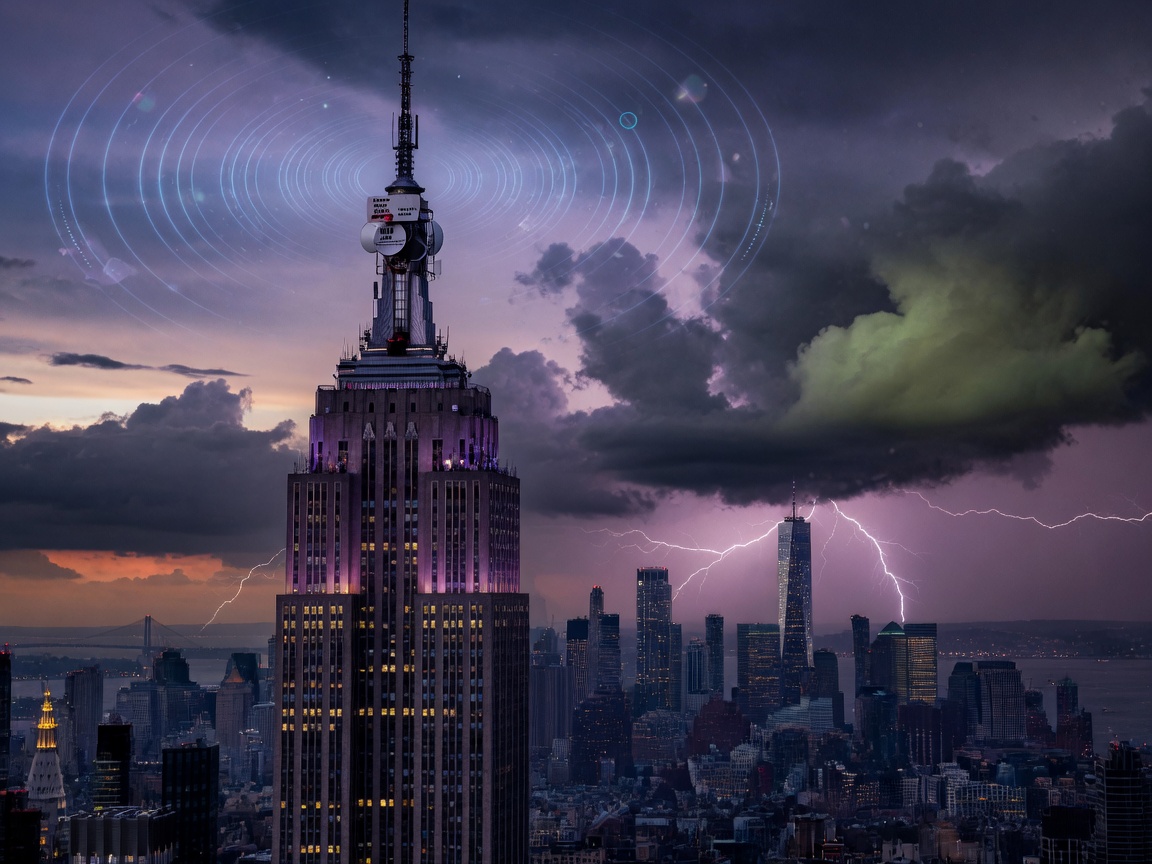
KWO35 itself never stopped broadcasting. Today the station transmits from the 81st floor of the Empire State Building, running at 1,000 watts on the same 162.550 MHz frequency it launched with in 1951, and reaching an estimated 15 million people across the New York metro area on land and water. It remains operated by the National Weather Service's New York, NY forecast office, delivering continuous weather conditions, forecasts and emergency alerts to anyone within range of a weather band receiver.
The Original Station, Still On the Air
Most infrastructure this old gets replaced, rebranded or quietly retired. KWO35 is the rare exception, the actual first station of a system that now covers the entire country, still broadcasting from the same city where it started, just from a considerably more famous building. For a service built entirely around reliability rather than reinvention, that continuity is the whole point.