
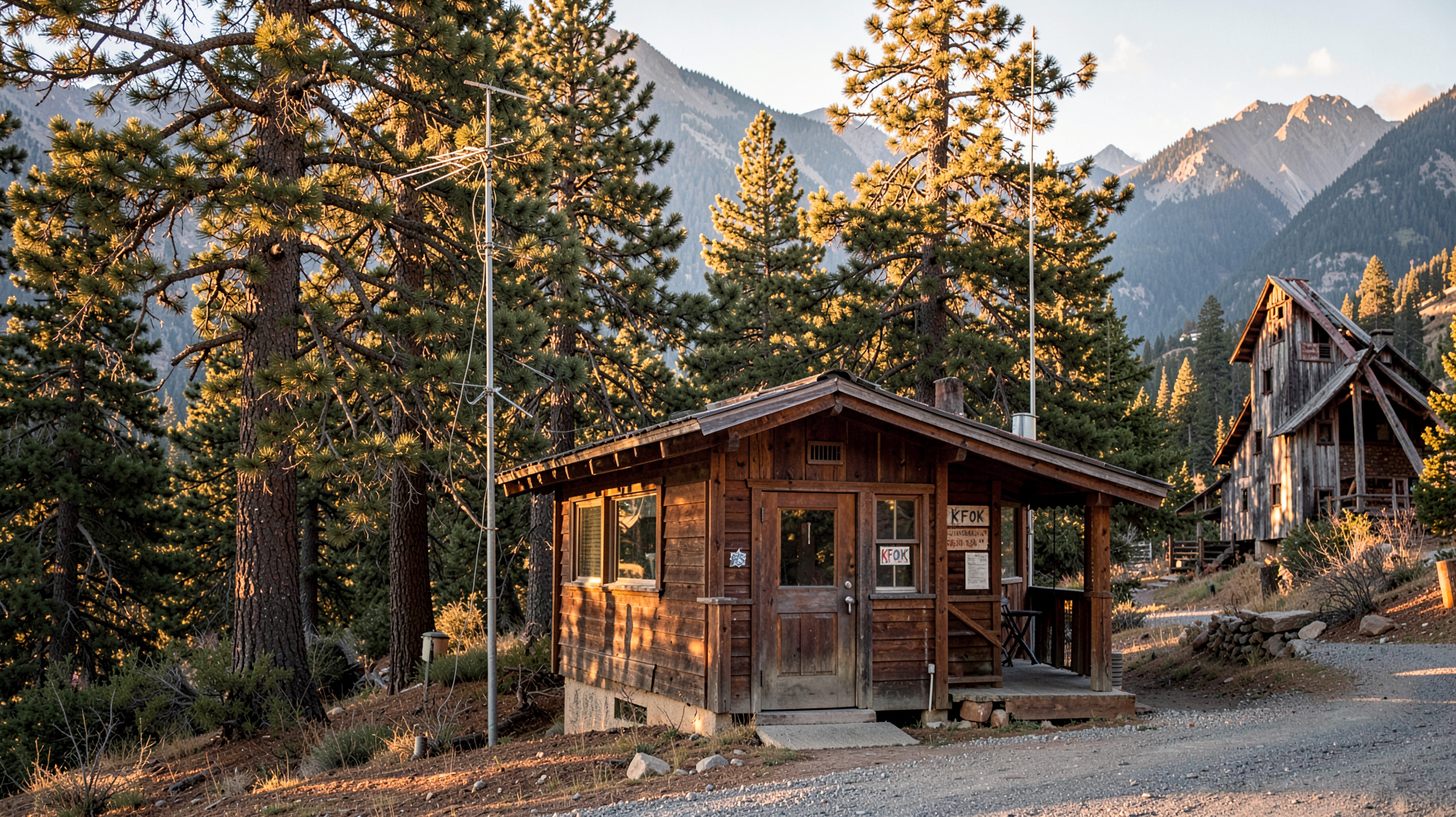
KFOK calls itself "The Voice of The Divide," and the name is literal. The station broadcasts from Georgetown, California, into the Georgetown Divide, a cluster of Sierra Nevada foothill communities that trace their origins back to one of the richest stretches of the California Gold Rush, and it runs almost entirely on volunteer labor rather than paid staff.
A Permit Granted in 2000, a Station Built by 2002
KFOK exists because the American River Folk Society applied for a construction permit to build a community broadcast station in the Georgetown area, and the FCC granted that Low Power FM permit on December 4, 2000, according to the station's own account of its history. Rather than run the buildout itself, the Folk Society created the Georgetown Divide Community Broadcast Committee, a group of local residents who met regularly to handle policy, setup and operations until the station actually reached the air in 2002.
Broadcasting Into Gold Country
The ground KFOK's 95.1 FM signal covers has a history that predates the station by a century and a half. Georgetown grew out of a gold discovery at Growlersberg in 1849, and within a few years the town's population had swelled to roughly three thousand people at the heart of a mining district tied directly into California's Mother Lode, a gold-bearing belt that ran roughly 120 miles from Georgetown south through Amador, Calaveras and Tuolumne counties. Smaller settlements across the Divide, places like Coloma, Cool, Garden Valley, Kelsey and Volcanoville, all trace back to that same Gold Rush-era boom, and most are still small enough today that a single community station can meaningfully cover all of them.
Volunteers, Not a Staff Roster
KFOK runs as a genuinely all-volunteer operation, with community members hosting their own shows rather than a hired lineup filling the schedule. The program calendar reflects that range: a music show called "Night School," "Tool Shed with Dave," dedicated reggae and blues programming, a history-focused show called "Grizzly Nixon's History Hour," and airtime specifically set aside for younger broadcasters through "KFOK KIDS." That structure, local underwriters like Georgetown Self-Storage and the American River Conservancy covering costs instead of national advertisers, keeps the station's programming decisions in the hands of the people actually living on the Divide.
Small Signal, Specific Purpose
KFOK was never built to compete with a commercial station's reach, and it doesn't try to. It exists specifically to serve a scattering of former mining towns spread across the Sierra foothills, run by the same kind of community organizing that got mining camps like Georgetown built in the first place, just aimed at keeping a radio signal on instead of a gold claim staked.