
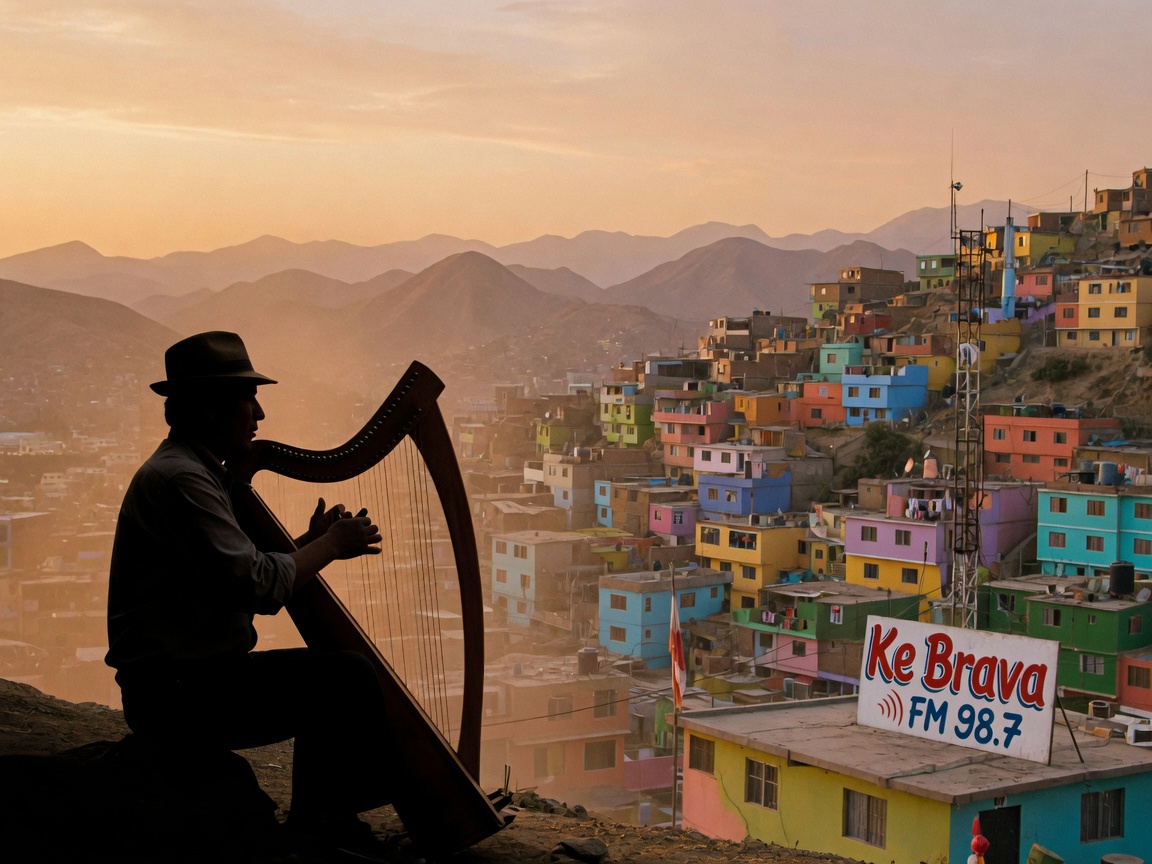
San Juan de Lurigancho is a place most tourist guides skip and most Lima locals underestimate. It is also the largest district in Peru by population, and Ke Brava broadcasts the music its residents actually grew up with.
Broadcasting From Peru's Largest District
Ke Brava streams out of San Juan de Lurigancho, a sprawling district on Lima's eastern edge that, according to background on the area, holds more than 10 percent of the capital's entire population, making it Peru's single most populous district. That scale did not happen by accident. From the 1950s onward, waves of rural-to-urban migration, intensified by economic hardship and conflict-related displacement from the 1980s and 90s, pushed families from Andean departments like Ayacucho, Huancavelica, and Junín into Lima's expanding periphery, and San Juan de Lurigancho absorbed a huge share of them.
Huayno Music Followed the Migrants to the City
Huayno, the traditional Andean genre built around harp, charango, and violin, used to belong almost entirely to the highlands. As migration reshaped Lima's demographics across the second half of the twentieth century, huayno and related Andean styles moved with the people who grew up on them, taking root in exactly the kind of neighborhood Ke Brava now broadcasts from. A station built around that sound is not a novelty act in San Juan de Lurigancho, it is programming for the audience already living there.
A Blog-Turned-Radio for Andean Artists
Ke Brava runs its own companion blog covering the musicians it plays, from a virtual concert by singer Flor Javier to a feature on harpist Gualberto Apaza performing live in Lima, along with tribute posts marking the passing of local performers like Jorge Chambergo of Los Ovnis. That mix of current concert news, artist profiles, and memorials functions as a running archive of the Andean folk scene in and around the capital, treating musicians most national outlets never cover as worth writing about in their own right.
Authentic Peruvian, By Design
The station brands itself online as "Auténtica Peruana," and that framing lines up with what it actually plays: Andean folk, huayno, and the broader música andina tradition rather than the cumbia or chicha hybrids that dominate much of Lima's dial. For a district built by generations of highland migrants, that specificity matters, giving listeners a station that reflects where their families came from rather than a generic regional mix.
Tune in to Ke Brava on Radio Shuffle for Andean folk and huayno music broadcasting from the heart of Lima's largest district.