
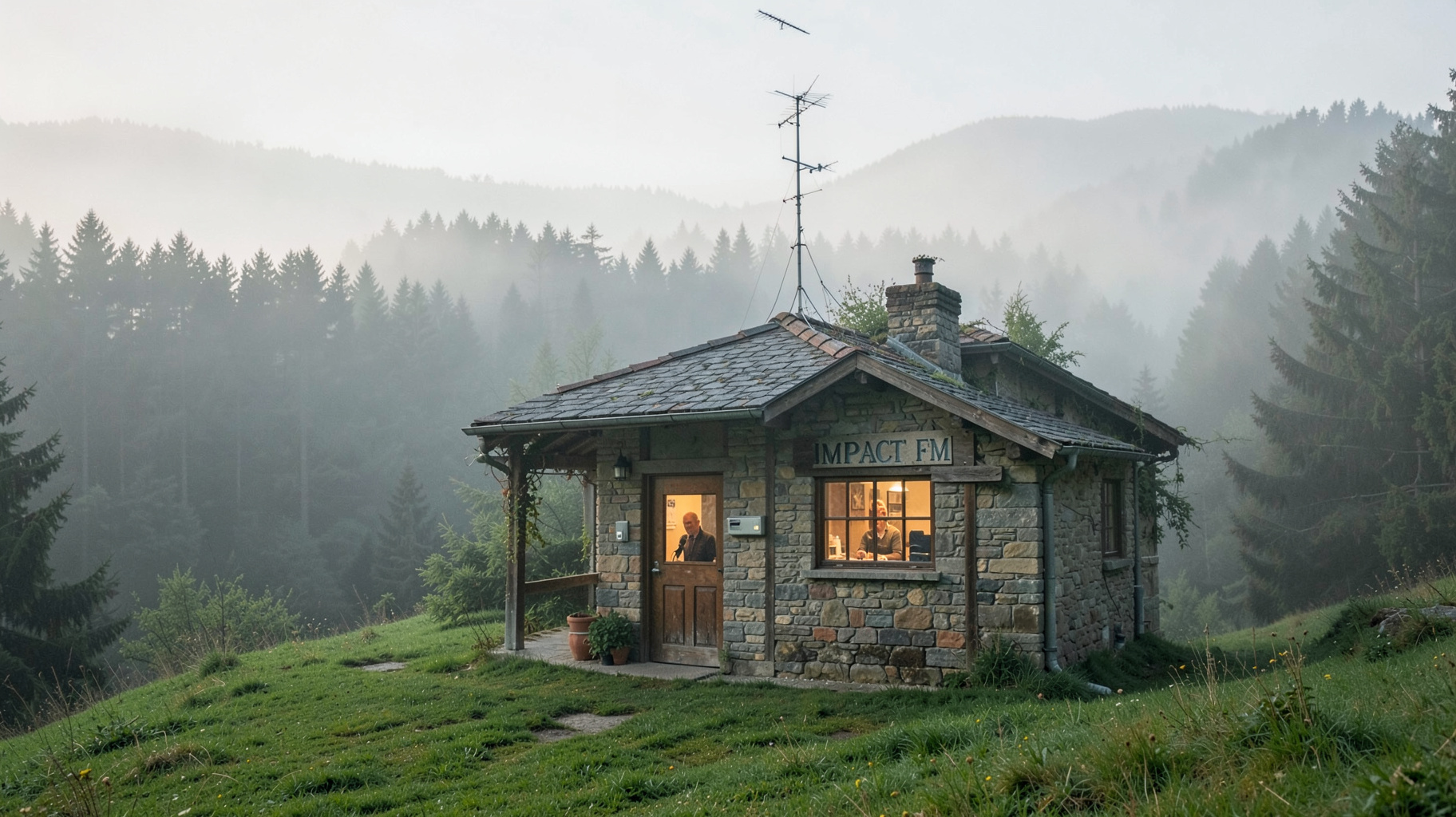
Impact FM broadcasts across a stretch of the Belgian Ardennes that a national network would never bother covering in this much detail, and that is exactly the point. Malmedy, Waimes, Stavelot, Trois-Ponts and Spa get their weather, their local news and their gardening tips from a station that describes itself as one of the last true proximity radios still built around live presenters.
Renamed From Est FM in 2012
The station operates on 106.9 FM under the name Radio Fagnes Ardennes ASBL, a nonprofit run by a small board including president Jean Steffens, according to its official broadcasting license. It started life under the name Est FM before rebranding as Impact FM in 2012, and it has held a Belgian broadcasting authorization since July 22, 2008, renewed through 2028 by the country's audiovisual regulator.
A License That Requires Staying Local
Impact FM's license comes with specific commitments most stations never have to think about: at least 90 percent in-house production, 30 percent French-language music, and 6 percent music from the Walloon-Brussels region, all thresholds the station reportedly exceeds. That regulatory structure is part of why the station's schedule leans so heavily on regional voices, including the weekday morning show Impact et vous hosted by Patrick Desart and a regional news segment presented by Olivier Tomezzoli, rather than syndicated national programming filling the hours.
Vinyl Nights and Garden Segments
Weekend programming includes Génération Vinyle, a show built around vinyl records, alongside gardening segments and coverage of regional traditions like the Francofolies festival, a lineup that treats the Ardennes' own cultural calendar as worth its own dedicated airtime. That local focus extends past the FM signal too, with the station running its own video coverage of community events across its social channels rather than treating them as an afterthought.
Impact FM survives by doing the opposite of what most modern radio has drifted toward, staying small, staying local, and keeping actual people on the microphone across a corner of Belgium a bigger network would flatten into a single regional feed.