
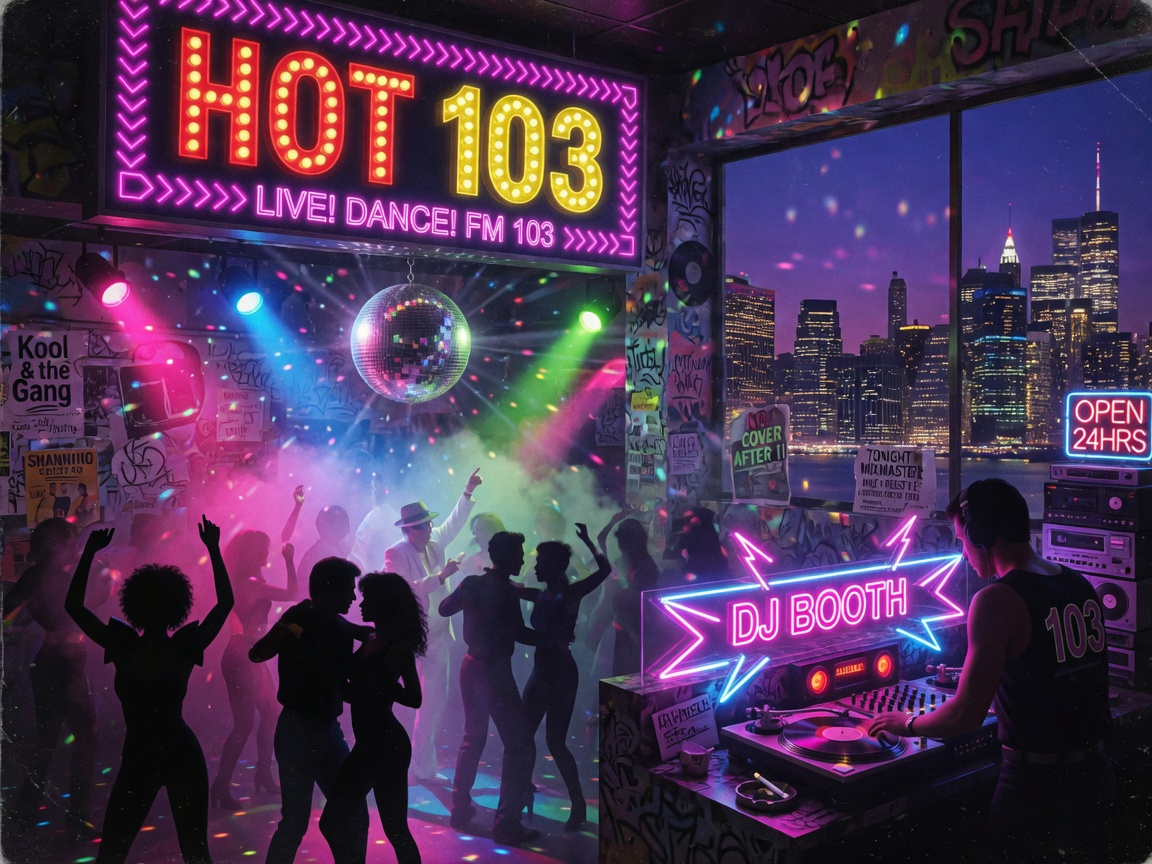
On August 15, 1986, a New York frequency called WQHT signed on as "Hot 103.5" with a format nobody else on the dial was running, a hybrid of Top 40 and club music built specifically for dancers rather than casual listeners. That station stopped existing decades ago in anything but memory, which is exactly why a team of volunteers built NY's Original Hot 103/97 WQHT-DB to bring it back, note for note (Wikipedia).
A Tribute Station, Not the Corporate One
The team behind the stream is upfront about what this is and isn't. As they put it themselves: "We are not employees of, or affiliated with, the company that owns/operates Hot 97 in New York. We are just dedicated fans of the original format." Since going live on March 6, 2021, the volunteer-run operation has focused entirely on preserving programming and music from the station's original 1986 to 1993 run, funded by listener contributions rather than corporate ad sales (Hot 103/97 Online).
The Sound That Defined Late-80s New York
Hot 103 built its identity on freestyle, the syncopated, Latin-influenced dance genre that exploded out of New York's clubs in the mid-80s. By 1987 the station had become one of the format's biggest champions, putting artists like Noel, Safire, The Cover Girls, and TKA into heavy rotation right alongside Top 40 names like Exposé, Debbie Gibson, and Taylor Dayne (Medium).
- Freestyle classics, the genre's biggest names from the station's original 1986-1993 rotation.
- Hotmixes, extended, club-ready remixes created specifically for the station by local DJs.
- Late-80s Top 40, pop hits played alongside the dance tracks rather than kept in a separate lane.
- Original HOT Air Talent, archival programming featuring the actual on-air voices from the era, including recurring blocks like Friday Night HOTMIX.
The DJ Who Made "Hotmix" a Household Word
No name is more tied to the station's signature sound than Little Louie Vega, a local club DJ who built specially crafted extended mixes exclusively for Hot 103's airwaves. Those hotmixes turned radio into something closer to a live club set, and recordings of Vega's original broadcasts, including a New Year's Eve 1987 set from Heartthrob nightclub, still circulate among collectors decades later (YouTube).
The Frequency Moved On, the Format Didn't
The original Hot 103 signal only lasted until September 22, 1988, when Emmis moved the WQHT call letters and format from 103.5 to 97.1 FM, rebranding as Hot 97. The last song ever played on 103.5 as Hot 103 was Debbie Gibson's "Stayin' Together," immediately followed on the new frequency by MARRS' "Pump Up the Volume" (Wikipedia). Hot 97 kept the CHR/dance sound going through the early 90s before gradually shifting toward the hip-hop format the call letters are known for today, which is precisely the earlier chapter this tribute stream chooses to preserve.
Why It's Worth a Spot in Your Rotation
If you remember freestyle blasting out of a boombox on a New York stoop, or you just want to hear what club radio sounded like before algorithms existed, this is a station built by people who cared enough to rebuild it from scratch, with no corporate owner telling them what to play.
Stream NY's Original Hot 103/97 Free on Radio Shuffle
Tune in to NY's Original Hot 103/97 WQHT-DB on Radio Shuffle, no account, no app, no fee. Press play and hear 1986 New York exactly as it sounded the first time around.