
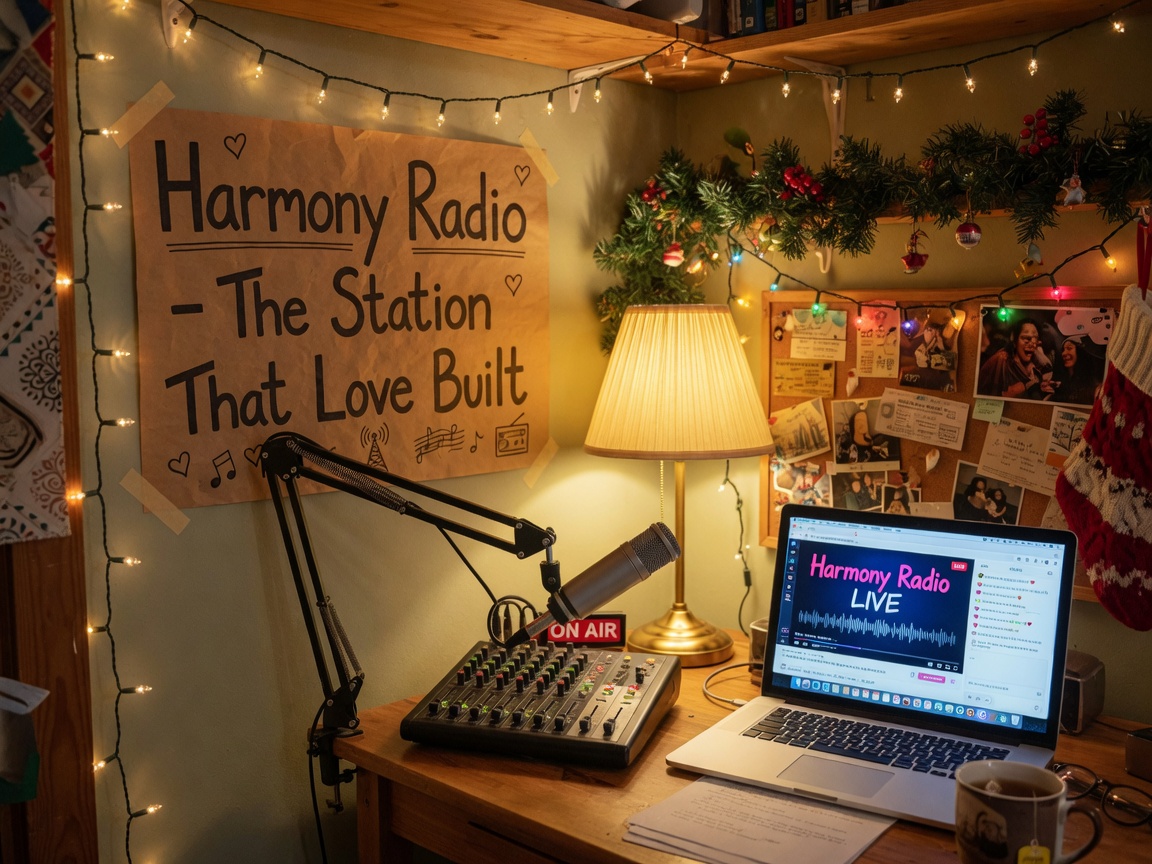
Not every radio station starts with a business plan. Harmony Radio started with four friends, a shared faith and a dream of running their own station, launched as a modest Shoutcast stream just days before Christmas in 2012. More than a decade later, that hobby project is still on the air, still living up to its tagline: "the station that love built."
Born as Serendipity, Reborn as Harmony
According to the station's own account on in-harmony.us, the project began life under a different name entirely, Serendipity Radio, before rebranding to Harmony Radio as the operation grew. The founding team describes itself simply as four Christians who set out to bring "good friends and great music" together in what they call a comfortable, light and friendly atmosphere, a description that still shapes the station's identity today far more than any corporate mission statement would.
A Deliberately Gentle Format
Harmony Radio has built its programming around keeping things family- and Christian-friendly, mixing live DJ-hosted shows with a large rotation of hand-picked automated music whenever no one is live behind the mic. The station is explicit about what it avoids as much as what it plays, steering clear of harshness and shock value in favor of a warmer listening experience. That translates into a playlist spanning Christian and praise and worship music alongside classic hits and soft rock, pulling in everything from Shenandoah and Neil Diamond to ABBA, a mix built for comfort rather than edge.
More Than Just a Stream
The station has grown a small ecosystem around itself rather than staying a single audio feed. Alongside Harmony Radio itself, the operation runs Harmony Corner, a voice and text chat space for listeners to connect directly, and Corinna's Corner, a companion blog, extending the station's community focus beyond just what plays over the speakers. It is a structure that treats listening less as a passive activity and more as an invitation to actually stick around and talk to people.
A Reminder That Small Radio Still Matters
Harmony Radio will never compete with a major commercial network on scale, and it clearly is not trying to. What it offers instead is something harder to manufacture at scale: a station that still feels handmade, run by people who built it because they wanted it to exist, for listeners who want music and community wrapped into the same half hour of their day.