
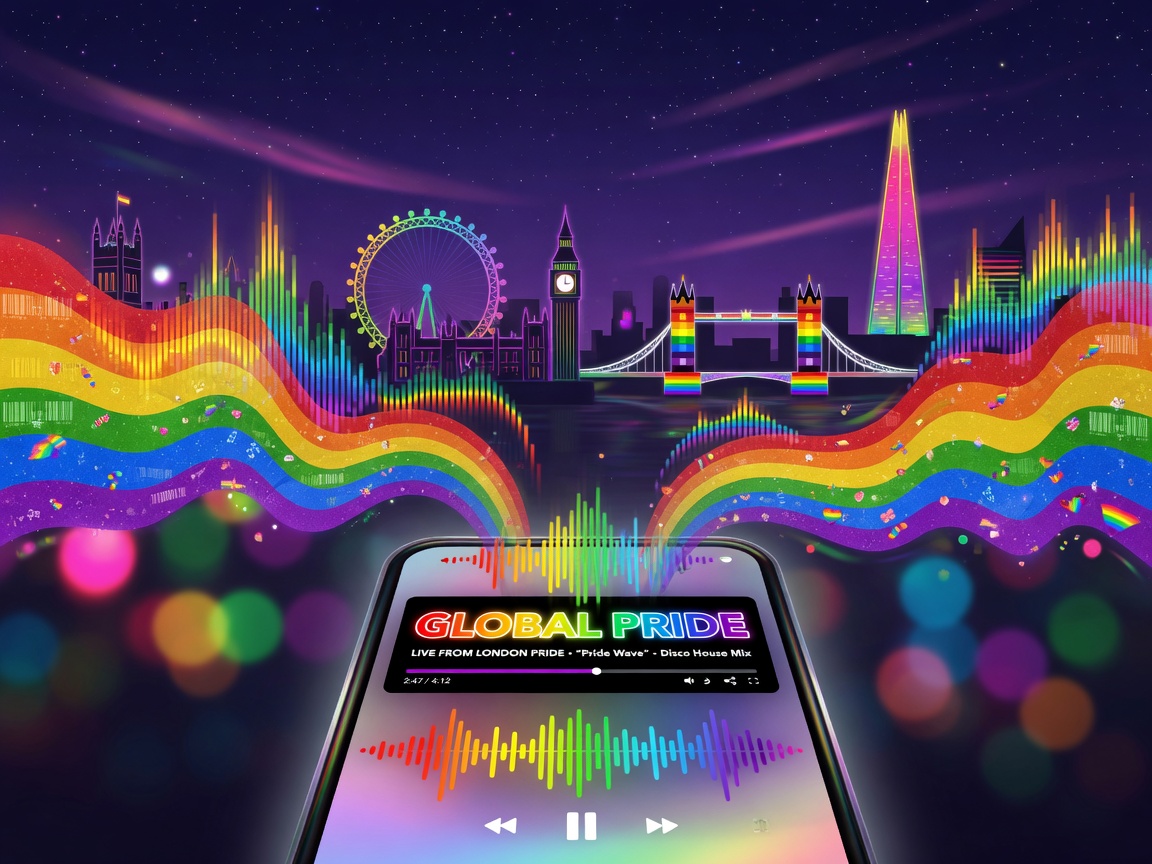
Global Pride streams a rotating mix of LGBTQ+ artists and allies spanning the 80s through today, pulling in names like George Michael, Pet Shop Boys, Kylie, Sam Smith, Lizzo, and Kim Petras. It runs on Global Player, the streaming platform operated by Global, the UK media company behind Heart, Capital, Classic FM, Smooth Radio, and Radio X, and it exists specifically as a curated home for queer pop culture rather than a spinoff of any single station's regular format.
A corporate playlist with roots in a much older protest
The event that Global Pride and its sister playlist Heart Pride now soundtrack traces back to a single Saturday in London decades before either existed. On July 1, 1972, the Gay Liberation Front and the Campaign for Homosexual Equality organized Britain's first march billed as "Gay Pride," timed to the nearest Saturday to the anniversary of the Stonewall uprising. An estimated 2,000 people took part in what organizers called a "carnival parade," instructed to "bring banners, tambourines, balloons, whistles, music, voices, and of course your best frocks" as they moved from Trafalgar Square to Hyde Park, according to an account from the London Museum. Attendance stayed modest through the 1970s and 80s before growing into the event now known as Pride in London.
How a national radio group ended up here
Global, the company behind Global Pride, now brands itself as an official national partner of Pride events in London, Brighton and Hove, and other UK cities, with its Heart stations sending presenters to march and broadcast live from the parades each year. That sponsorship runs alongside pride@global, the company's internal network of LGBTQ+ staff and allies, giving the corporate partnership a foothold inside the organization rather than treating it purely as external marketing. Global Pride grew out of that same infrastructure, a Global Player playlist built to give queer pop history a permanent, year-round outlet rather than a once-a-year parade tie-in.
Decades of queer pop compressed into one stream
What that produces in practice is a station built less around a single genre than a single lens: a run of chart pop, dance, and mainstream hits connected by the artists who made them, from George Michael's decades-old catalogue through Lizzo and Kim Petras' current output. It is a format only a company with Global's scale of licensing and playlist infrastructure could realistically maintain, turning a march that once numbered in the low thousands into a stream anyone can put on any day of the year.