
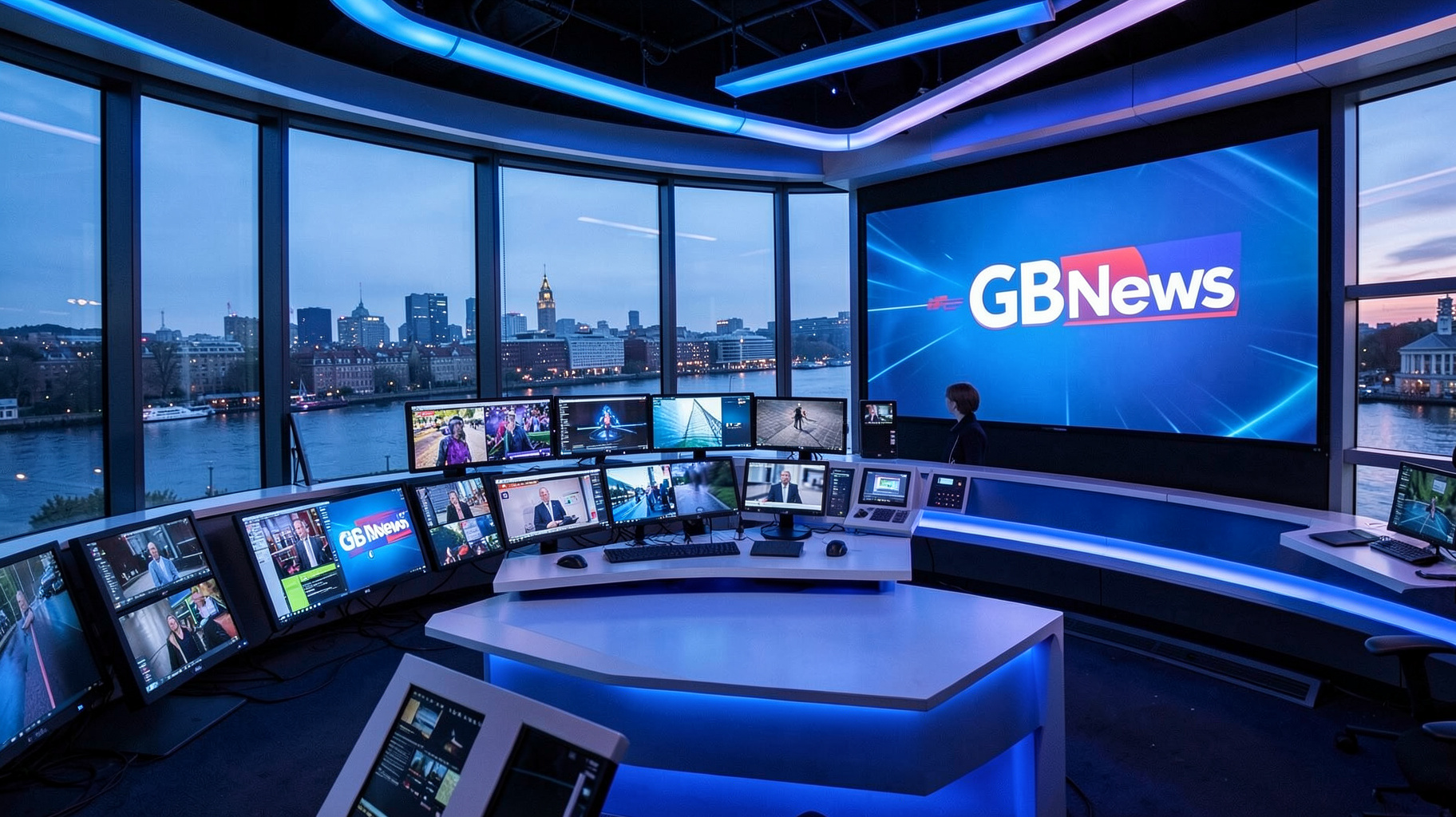
When it launched on June 13, 2021, GB News became the first new television news operation to enter the British market since Sky News arrived in 1989, broadcasting from studios at Paddington Basin in London. It took a little longer for the audio side to catch up, but since 2022 the same rolling mix of news, interviews, and debate has been available around the clock as a full national radio simulcast, giving listeners a way to follow the channel without a screen in front of them.
Britain's First News Startup in Three Decades
GB News was first announced in September 2020 and spent the better part of a year building out a newsroom, studio infrastructure, and on-air lineup before going live the following June. Backed in part by the American media company Discovery, the channel positioned itself from the outset as a fresh entrant into a British TV news market that had not seen a genuinely new competitor since Sky News debuted more than three decades earlier. That novelty, an entirely new national news operation built from scratch in the streaming era, is a rare thing in British broadcasting, where most channels trace their roots back decades.
A Full Simulcast, Not a Companion Feed
What makes GB News Radio distinct among UK radio-television pairings is how literal the simulcast is. Rather than producing separate radio-only programming, GB News became the UK's only broadcaster to carry its entire television output live on national radio as well, meaning the same presenters, segments, and running order play out identically across both platforms via DAB+. For listeners, that means tuning into the audio feed delivers exactly the discussion and interviews airing on screen at that moment, not a scaled-down or repackaged version built separately for radio.
Who You'll Hear
The on-air lineup blends veteran broadcasters with newer faces built specifically around the channel, including names like Eamonn Holmes, Isabel Webster, Stephen Dixon, Camilla Tominey, and Patrick Christys, spread across a schedule that runs from weekday breakfast programs through weekend politics shows. It is a format built around live discussion and interviews more than scripted bulletins, closer in feel to the talk radio tradition than to a conventional rolling news wire.
Radio as a Second Screen, Reversed
GB News Radio flips the usual second-screen relationship between TV and audio. Instead of radio being a smaller, separate product, it functions as a direct extension of the television channel for anyone who wants the same programming while driving, working, or otherwise away from a screen. For a station built around live conversation and breaking news, that consistency between platforms is the whole point.