
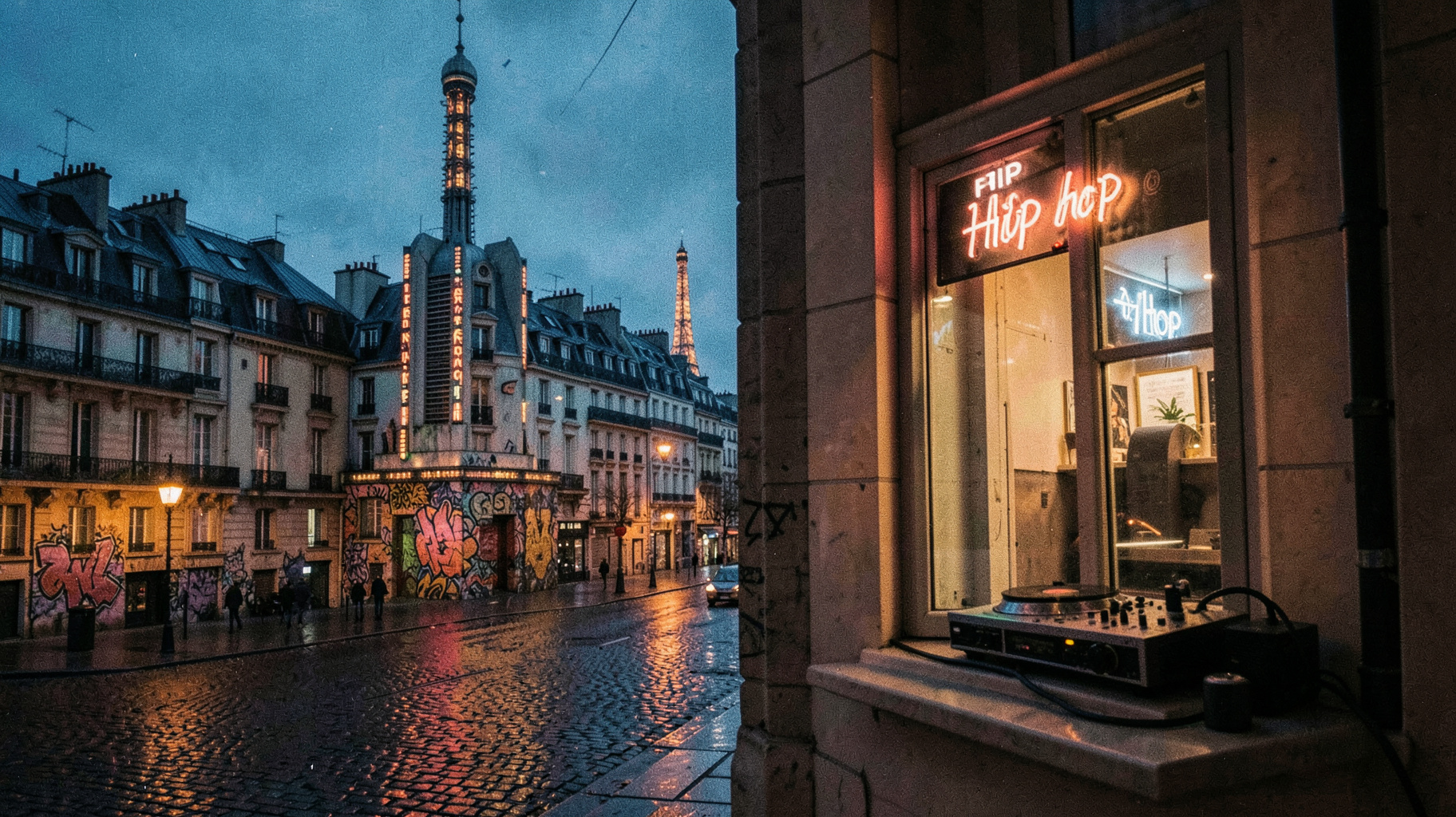
FIP Hip Hop streams as one of nine thematic web channels run by FIP, the Radio France network built more than fifty years ago around a simple, stubborn idea: commercial-free music, chosen by hand, never left to an algorithm. Applied here to a single genre, that philosophy turns a public broadcaster known for genre-hopping into a station that plays nothing but hip hop, from the foundational American records to the French rap scene that grew up right alongside it.
A Public Broadcaster Built Around Refusing the Playlist
FIP launched on January 5, 1971 from Paris as France Inter Paris, broadcasting on medium wave under Roland Dhordain alongside France Inter producers Jean Garretto and Pierre Codou, according to its documented history. The station's defining rule has barely changed since: expert programmers build the sequence track by track, no song repeats within 48 hours, and the result is meant to feel less like a format than a person's record collection played out loud. That approach carried FIP through five decades of French public radio without ever adopting the automated rotation systems most commercial stations rely on.
One Channel Among Nine, With Hip Hop Added Late
FIP now runs nine dedicated web radios alongside its national broadcast, covering Rock, Jazz, Groove, World, Electro, Reggae, Pop, Metal and Hip-Hop, according to a breakdown of Radio France's web radio strategy. Hip-Hop and Metal arrived among the newest additions to that lineup, extending FIP's hand-curated model into genres the flagship antenna had only ever touched in passing. Every one of those channels is staffed by the same in-house programmers who built FIP's reputation, working genre by genre instead of trying to cram everything into one signal.
Landing In a Country That Turned Rap Into Its Own Language
Hip hop reached France in the early 1980s and took hold fast, and by the time groups like NTM, MC Solaar and IAM were recording, French rappers had already split into two camps, one leaning toward Solaar's mellow wordplay, the other toward the harder aesthetic of acts like Assassin and Suprême NTM. That split grew out of Public Enemy's early influence crossing the Atlantic, but it kept developing along lines that were distinctly French, shaped by the country's literary tradition and by the North and West African diaspora communities who brought their own rhythms into the mix. FIP Hip Hop inherits that entire lineage in one channel, French and American tracks sitting in the same rotation the way FIP has always mixed genres that other stations keep separate.
FIP Hip Hop only works because the network around it spent fifty years proving that hand-picked music could outlast automated playlists, then pointed that same method at a genre France had already made its own. A station built on refusing to repeat itself, playing a form of music built on refusing to sound like anyone else.