
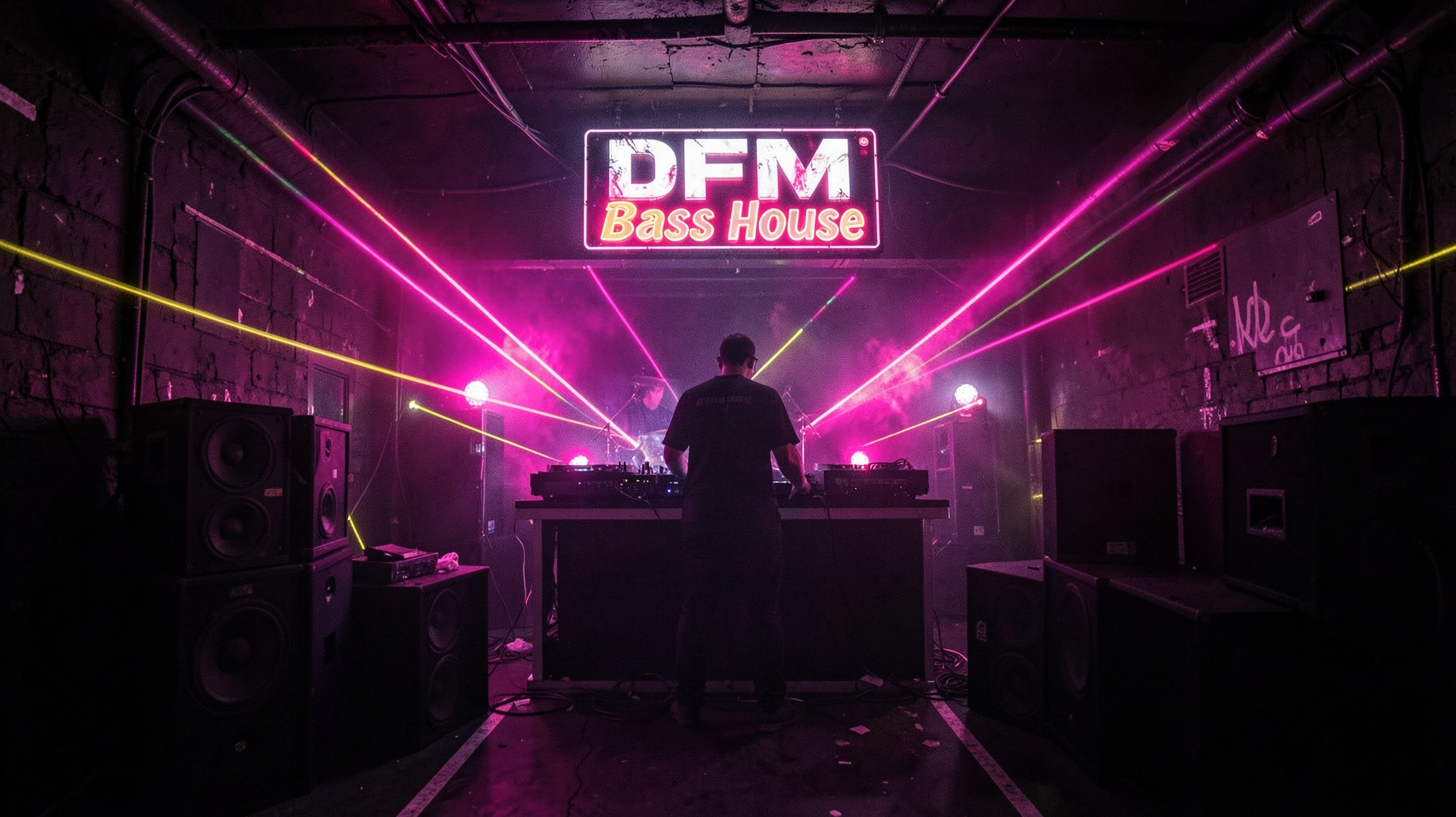
DFM Bass House exists because its parent network needed somewhere to put the music too underground for national FM, and because that parent network once had to change its name for reasons that had nothing to do with radio at all. The story of how a Moscow dance station called Dinamit became DFM says a lot about why this bass-heavy digital offshoot sounds the way it does today.
A Name That Became a Liability
The station launched in Moscow on July 1, 2000, on 101.2 FM, a frequency bought from the defunct Radio 101, broadcasting under the name Radio Dinamit, later Dinamit FM. It built a following through the early 2000s with dance remixes and even ran its own festival series, Bomb of the Year, from 2001 to 2005. Then, in August 2004, two Russian passenger planes were brought down by suicide bombers in coordinated attacks, and a station branded around the word "dynamite" suddenly had a serious image problem. Within a year, jingles started layering in the abbreviation "DFM" alongside the old branding, and by March 2006 the station had dropped Dinamit entirely, becoming simply DFM.
From One Frequency to a National Network
DFM did not stay a Moscow station for long. It expanded to Yekaterinburg just over a week after its 2000 launch and reached St. Petersburg by 2002, eventually building out a presence across multiple Russian cities under the Russian Media Group. The flagship station today reaches roughly three million listeners daily, mostly between the ages of 16 and 35, built around the tagline "Включи тусовку," turn on the party, a fitting successor to a brand that once tried to sound explosive for entirely different reasons.
Where Bass House Fits
As DFM's core playlist shifted toward mainstream electronic and pop hits with exclusive remixes, closing in on nearly all-foreign content by the early 2020s, the network built out a family of genre-specific digital sub-brands, DFM Bass House among them, to hold onto the harder, more specialized sounds that did not fit the national FM format anymore. Bass house itself emerged in the UK in the early 2010s at the intersection of dubstep, UK garage and house, pairing house music's steady kicks and builds with the distorted, wobbling low end more associated with bass music, typically running between 110 and 130 BPM. It is a genre built for clubs rather than drive-time radio, which is exactly the kind of programming a national broadcaster's digital offshoot is designed to carry.
A Digital Escape Valve for a Mainstream Brand
What DFM Bass House represents is a common move for a station that grew as big as DFM has: once your main signal has to serve three million listeners across dozens of cities, you cannot also be the place for genre specialists chasing the newest bass-heavy club tracks. The digital sub-brand exists to do that job instead, carrying forward the underground dance instincts that built the original station in 2000, just without needing to fit inside FM's broader, safer format.
Still Turning On the Party
From a name that had to be quietly retired after a national tragedy to a genre-specific stream serving bass music fans today, DFM's history is a reminder that even the biggest commercial stations carry odd, specific chapters most listeners never hear about. DFM Bass House is the current, underground-facing branch of that same story, still built around the same instinct that launched Radio Dinamit in 2000: keep the dance music loud and keep people listening.