
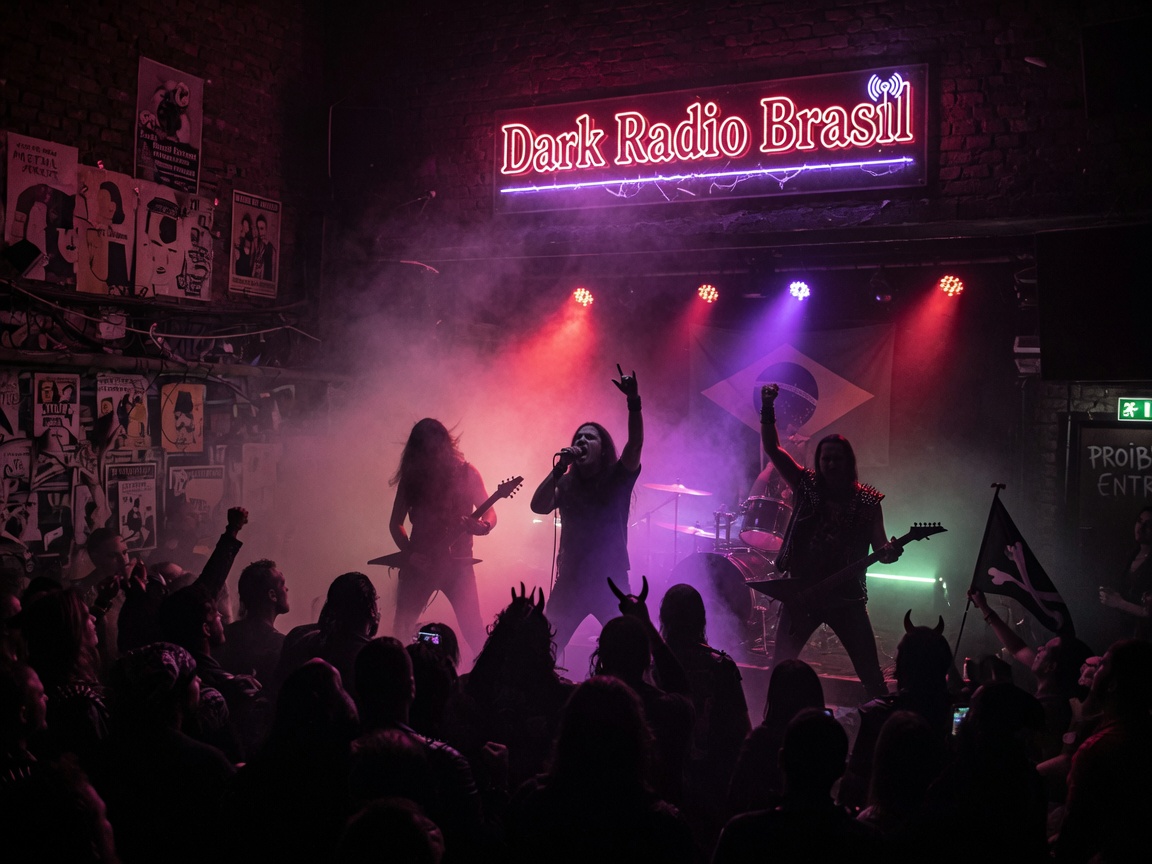
Brazil built one of the most extreme metal scenes on the planet out of poverty, censorship, and sheer defiance. Darkradio Brasil exists to give that scene, and everything gothic and underground that grew alongside it, a permanent home on the dial.
A Scene Forged Under Dictatorship
Brazil's underground metal and dark music culture did not emerge in comfort. Much of it took shape during and after the military dictatorship that ruled the country from 1964 to 1985, a period of extreme poverty and repression that, as coverage of the scene's origins has noted, primed cities like São Paulo and Belo Horizonte for raw, confrontational music. One of the most infamous products of that environment was Mystifier, a Salvador black metal band so uncompromising that, according to the same account, it reportedly made genre pioneers Sepultura look tame by comparison. That is the lineage Darkradio Brasil sits inside, a national scene that treated extremity as a form of expression when little else was available.
"A Casa do Underground na Internet"
Darkradio Brasil's own tagline, visible on its homepage, translates to "the house of underground on the internet," and the station backs the claim with a genuinely deep schedule. Programs like Greek Metal Attack, Power Thrashing Death, Vozes do Underground, and Radioactivity carve the day into specific subgenre slots rather than blending everything into one generic heavy rotation, while a segment called Primeiras Impressões runs album reviews for listeners tracking new releases in the scene. The station reports more than 6.3 million visitors, a sizable number for a format this specific, and it is punchy enough that it distributes its own Android app to keep that audience close.
A Wider Gothic Current in Brazilian Music
Metal is only part of what Darkradio Brasil sits within. Brazil has also nurtured its own strand of gothic and darkwave music generally referred to as Gótico Brasileiro, a homegrown blend of gothic rock, metal, and alternative sounds built on melancholic lyrics and heavy guitar work that traces back to the early 2000s and has seen renewed interest in recent years. Contemporary acts like Plastique Noir, a São Paulo post-punk outfit drawing on second-wave gothic rock bands like Brotherhood of Pagans, show that the country's dark music identity extends well past metal into post-punk and darkwave territory, all of it fair game for a station built to cover the underground broadly rather than a single genre narrowly.
Community Radio for a Scene That Rarely Gets Mainstream Airplay
Genres this extreme almost never get real estate on commercial Brazilian radio, which is exactly the gap Darkradio Brasil fills. By running dedicated shows, hosting listener message boards, and taking song requests directly from its audience, the station behaves less like a passive stream and more like a community hub for a scene that has always had to build its own infrastructure to survive.
Tune in to Darkradio Brasil on Radio Shuffle for metal, gothic rock, and underground sounds from one of the most distinctive dark music scenes on the planet.