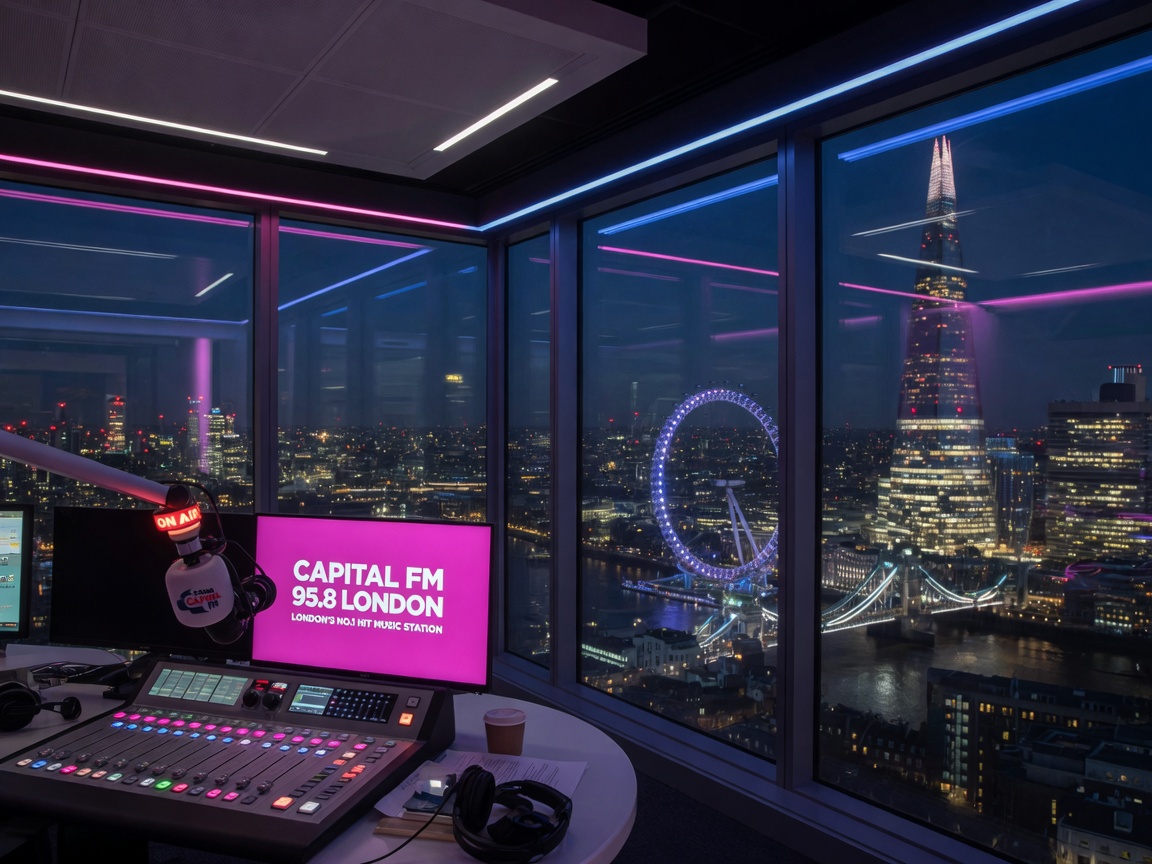
Capital London signed on the air on October 16, 1973, as one of Britain's first two commercial radio stations, ending the BBC's decades-long monopoly on the airwaves. The station's chairman was actor and director Richard Attenborough, and its opening board included Beatles producer George Martin, according to Wikipedia's history of the station. Attenborough himself read the very first words on air: "Good morning, this, for the very first time, is Capital Radio." The first legal commercial in British radio history followed immediately after, an ad for Birds Eye fish fingers.
Capital did not start out as the pop-driven station Londoners know today. It launched as a general entertainment service, mixing drama, documentaries, and light music, before pivoting hard toward a pop format in 1974 once it became clear that hits, not radio plays, were what would build an audience against the BBC's established stations.
From a single London frequency to a national network
For its first three decades, Capital was a local London station competing for a local audience. That changed after ownership passed to Global Media & Entertainment, which completed a £375 million takeover of Capital's parent company in 2008. On January 3, 2011, Capital London became the founding member of a new nine-station national Capital network, formed by merging Global's Hit Music and Galaxy station groups, according to the same Wikipedia history. London kept its own breakfast and drive-time shows, while much of the rest of the schedule went national, a structural shift that turned a single-city brand into the backbone of a nationwide network.
Today Capital London broadcasts on 95.8 FM across Greater London under the banner "the UK's No.1 hit music station," with weekday breakfast hosted by Jordan North, Chris Stark, and Sian Welby, part of a presenter lineup built specifically around chart-driven contemporary hit radio.
Two arena-filling nights a year
What sets Capital apart from most hit music stations is the scale of the live events built around its brand. The Jingle Bell Ball has run every December at London's O2 Arena since 2008, with proceeds supporting Global's Make Some Noise charity, according to a rundown of the event from Wikipedia. Its summer counterpart, the Summertime Ball, started in 2009 at Arsenal's Emirates Stadium and has since become a Wembley Stadium fixture, drawing crowds of up to 80,000 for an afternoon-to-night lineup of the year's biggest pop acts.
Few commercial radio brands anywhere fill an 80,000-seat stadium twice a year on their own name. That Capital London can trace both of those events, plus the national network built on top of it, back to a single Richard Attenborough broadcast in 1973 is a reminder of how far Britain's first commercial pop station has traveled since the moment the fish fingers ad first aired.