
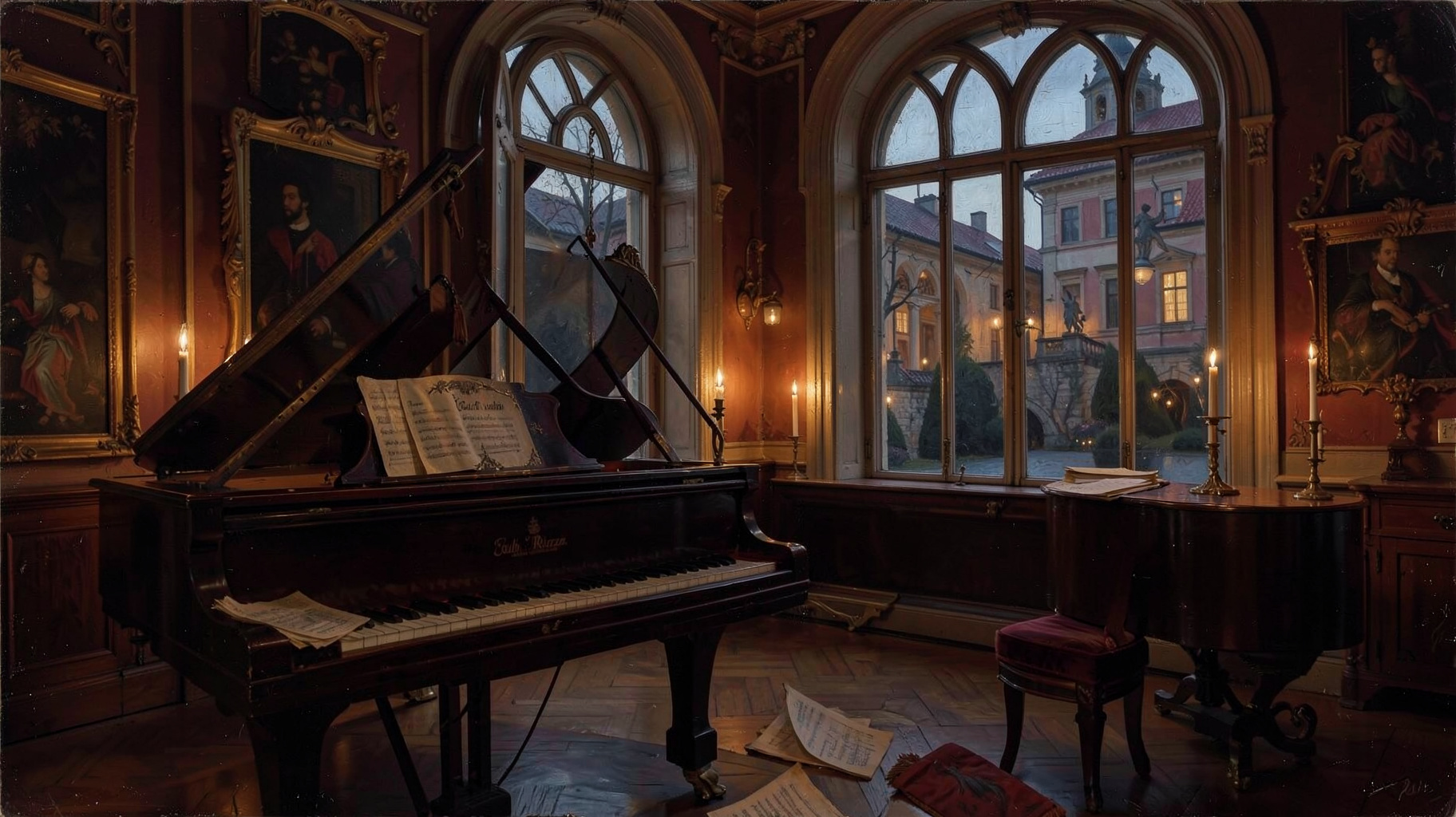
Calm Radio's Mozart channel sits inside a network whose entire premise, that the right music can calm you down, focus you up, or help you sleep, owes an unacknowledged debt to a piece of 1990s pop science that the researcher behind it eventually walked back herself.
A Composer's Side Project That Became a Network
According to a 2009 MainlyPiano interview with founder Eric Harry, Calm Radio began as what Harry called an "innocent" internet station on Live365, started so the Toronto composer would have somewhere to sell his own CDs once he decided to put his music out into the world. That modest starting point grew into a service now offering hundreds of curated channels, and per Made in CA's profile of the company, Calm Radio was acquired by the Canadian media company Stingray in July 2021, folding a composer's personal project into a major streaming portfolio.
The Study Behind the Word "Calm"
Per Wikipedia's entry on the Mozart effect, the idea that Mozart's music has special calming or cognitive benefits traces back to a 1993 University of California, Irvine study, where researcher Frances Rauscher found college students briefly scored higher on spatial reasoning tests after listening to ten minutes of Mozart rather than silence or a relaxation tape. The effect lasted about fifteen minutes and applied to adults' short-term test performance, not the lasting childhood intelligence boost the idea became famous for.
From Genuine Finding to Debunked Myth to Marketing Shorthand
By the late 1990s, that narrow finding had snowballed into a global parenting trend, complete with Mozart CDs marketed to expecting parents. Later meta-analyses found the effect was negligible or nonexistent for cognitive development, and Rauscher herself eventually called it a myth. What survived wasn't the science, it was the association: Mozart as shorthand for calm, ordered, soothing listening, which is exactly the branding a dedicated Mozart channel on a service called Calm Radio still trades on today, whether or not the original claim holds up.
Why It's Worth Tuning In
Calm Radio Mozart offers a way to test that association for yourself, an entire channel built around the composer whose name became synonymous with calm through a study that did not actually say what everyone remembers it saying, streamed from a network that started as one composer's way of sharing his own records.