
Most radio stations take months to plan a launch. BFBS Radio Germany traces its roots to a broadcast that went out just two days after the country it serves had surrendered, built for an audience that had nowhere else to hear a familiar voice from home.
On Air 48 Hours After Victory in Europe
On May 10, 1945, just two days after Germany's surrender, the words "The British Forces Network" were heard for the first time, with a studio quickly set up inside Hamburg's Musikhalle concert hall, according to background compiled by Wikipedia. The service itself traces back further, to the British Forces' Experimental Service which began broadcasting from Algiers on New Year's Day 1944, but Germany quickly became its largest and longest-running overseas operation as the British Army of the Rhine settled into the country's northwest occupation zone.
Gladys and the Cactus Needles
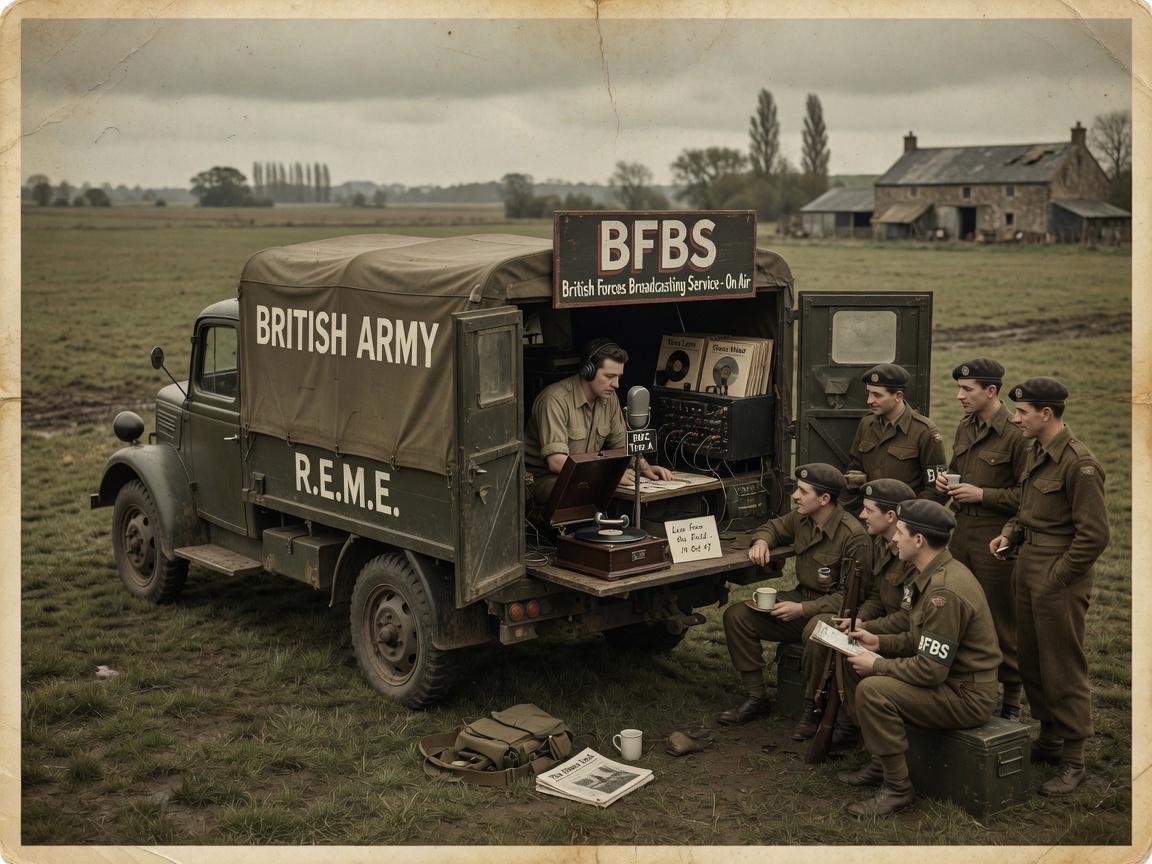
As British troops fanned out across postwar Europe, a fixed studio wasn't always enough to reach them. In 1947, BFBS built a mobile solution nicknamed "Gladys": three converted trucks, each fitted with a studio, a gramophone record library, office space and its own transmitter, according to BFBS's own history page. The units followed troops stationed as close as three miles from active fighting, and when a shortage of steel gramophone needles hit in Benghazi that same year, one resourceful Royal Engineer solved the problem by cutting needles from cactus thorns to keep the 78 rpm records spinning. By the 1950s, that mobile broadcasting model had grown into more than 30 local stations supporting British forces worldwide.
A Signal German Civilians Tuned Into as Well
BFBS in Germany was never only a forces broadcaster in practice. The same Wikipedia history notes that the service drew a large civilian German audience over the decades, many of whom used its English-language programming as an informal way to pick up the language. That crossover turned a station built strictly for troop morale into something closer to a shared fixture of postwar German life, running alongside official state broadcasting rather than in competition with it.
From Postwar Signal to Streaming Pop
The organization was restructured in 1982 into the Services Sound and Vision Corporation, and its German operations later consolidated studios from Cologne to Herford as troop numbers shifted with the end of the Cold War. What survives today as BFBS Radio Germany carries that same original mission forward in a completely different format: a pop-focused English-language stream built to give British service personnel still stationed in the country a direct, familiar link to home, the same job Gladys's cactus-thorn needles were doing more than seventy years earlier.