
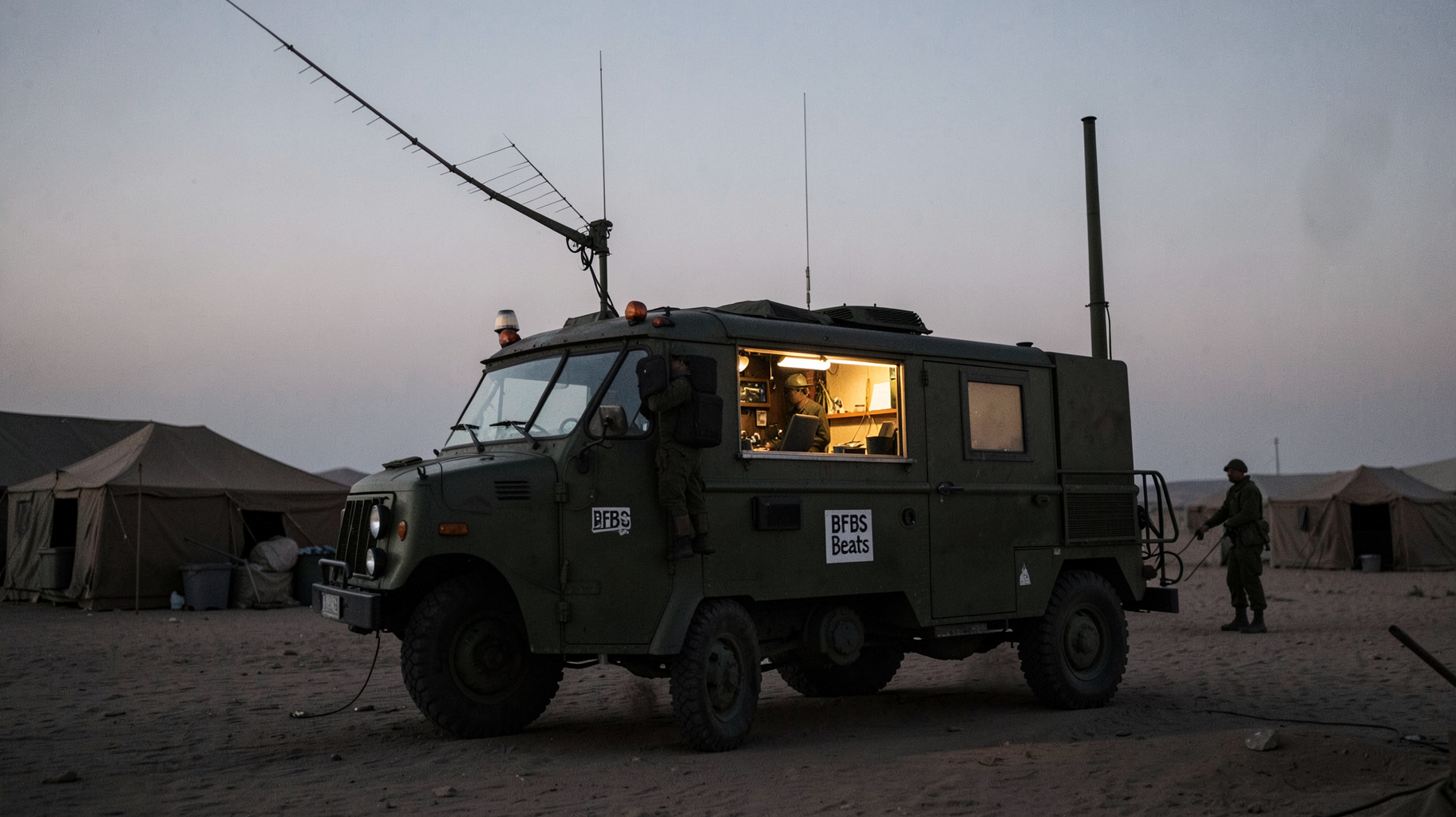
BFBS Beats plays the same chart-topping pop and electro you'd find on any commercial hits station, but it streams from an organization that once broadcast three miles from active fighting lines. That history shapes what the network is even when a single channel is just playing the Top 40.
Founded in Algiers in the Middle of a War
British Forces Broadcasting Service traces its first broadcast to Algiers in 1943, established by the British War Office as the Forces Broadcasting Service, initially run under Army Welfare Service control from a Middle East Broadcasting Unit based in Cairo, according to BFBS's own documented history. The stations scattered under FBS and British Forces Network branding through the 1940s and 50s only consolidated under the single BFBS name by the early 1960s.
Gladys, the Truck That Broadcast Near the Front Line
One of the network's more memorable early tools was Gladys, a mobile broadcasting unit built from three British military trucks carrying studios, gramophone libraries, offices and transmitters, deployed to Northern Italy and other parts of postwar Europe in 1947. Soldiers gave the unit its affectionate name themselves, and it operated at times just three miles from fighting lines, delivering music and messages from home to troops during the tense transition out of World War II and into the Cold War.
From Camp Bastion to a Streaming App
That same instinct, follow the troops wherever they're actually deployed, carried BFBS through the decades that followed. The network opened a studio at Camp Bastion in Afghanistan in 2011, the same year it began broadcasting to the British Army Training Unit in Kenya, and by 2019 it maintained permanent stations across seven countries. BFBS made the jump to digital broadcasting in 2009 and has since built MiPlayer, a mobile platform specifically designed to reach personnel in disconnected overseas locations where a conventional signal wouldn't reach.
One Themed Channel Among Several
BFBS Beats is one of a handful of digital-only themed stations the network runs alongside its flagship broadcasts, sitting next to BFBS Edge for rock and indie, BFBS Rewind for classic hits, and BFBS Samishran for Nepali and Hindi music aimed at Gurkha units. Splitting the audience into genre-specific channels lets a broadcaster built to serve every branch and background across the armed forces offer something closer to a personal station rather than one single feed trying to cover every taste at once.
Editorially Independent, Institutionally Embedded
Despite its origins inside the War Office and its current connection to the Ministry of Defence, BFBS maintains editorial independence from the armed forces it serves, a distinction the organization treats as core to its mission rather than a technicality. That independence, kept in place since 1943, is part of what let a station built to boost troop morale evolve into something closer to an ordinary broadcaster running an ordinary chart music channel.
BFBS Beats plays pop and electro like any hits station would, but it does it inside a broadcasting network that has followed British forces from Algiers to Camp Bastion for more than eighty years, and that history is still the reason the station exists at all.