
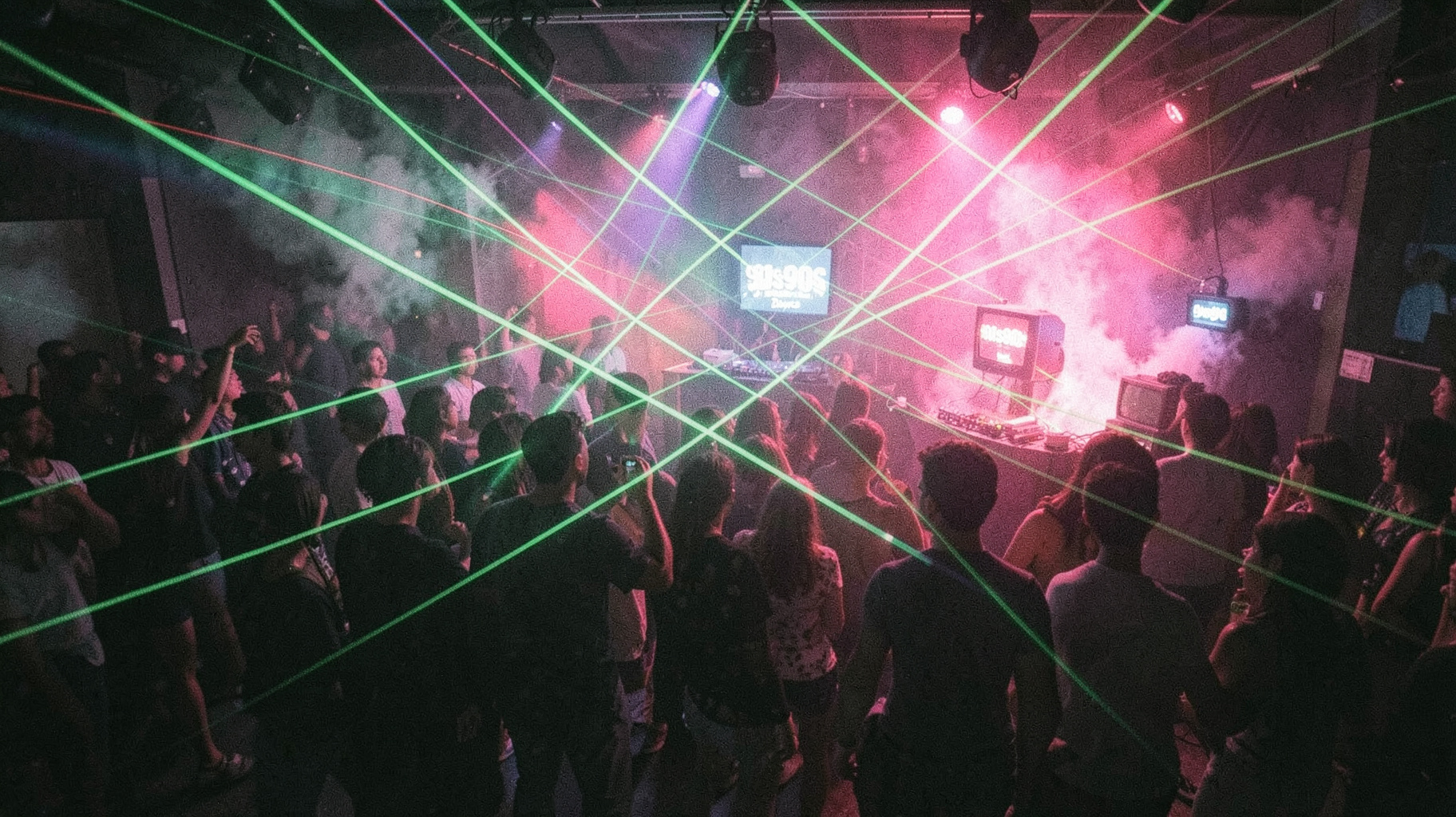
90s90s Dance streams a nonstop mix of Eurodance and techno from the decade that gave the genre its name, and the genre itself has a surprisingly specific German fingerprint on it. This station exists because a country that helped invent Eurodance never really stopped wanting to hear it.
A Genre Built From Reunification-Era Europe
Eurodance emerged in the late 1980s and crystallized in the early 1990s as a fusion of Italo disco, hi-NRG, house, techno, and hip hop, with its strongest early roots in Germany, Belgium, and the Netherlands. The timing wasn't incidental: the genre took shape as a newly unified Germany sat alongside an innovative Italian dance scene and pioneering Benelux producers, turning what had been underground rave culture into a genuinely international pop phenomenon built on driving 130-150 BPM tempos, bright synths, and the signature pairing of female vocal hooks with male rap verses.
From Underground Clubs to Global Charts
The genre's commercial peak ran from 1992 to 1998, a stretch that produced international stars like 2 Unlimited, Ace of Base, and La Bouche and put Eurodance records at the top of charts across dozens of countries simultaneously, a level of pan-European crossover pop rarely matched before or since. Germany wasn't just a market for the sound, it was one of the countries actively producing it, which is part of why a German broadcaster eventually built an entire digital station around preserving it.
Born as a Sister Station to 80s80s
90s90s Dance belongs to the 90s90s network, launched by German radio holding company RegioCast in November and December of 2016 as a follow-up to the company's earlier success with 80s80s, its digital-only station built around 1980s music. The 90s90s platform launched with specialty stations built around specific niches within the decade rather than one broad playlist, developed and produced out of RegioCast's digital content unit in Berlin, with dance and Eurodance carved out as their own dedicated channel rather than folded into a general hits format.
Keeping a Reunification-Era Sound on the Air
What 90s90s Dance offers isn't nostalgia for its own sake, it's continuity for a sound that Germany helped build during one of its own most transformative decades. Streaming Eurodance and 90s techno today means preserving a genre whose commercial explosion happened to run almost exactly parallel to German reunification, a coincidence of timing that shaped the music as much as any single producer or label did.