
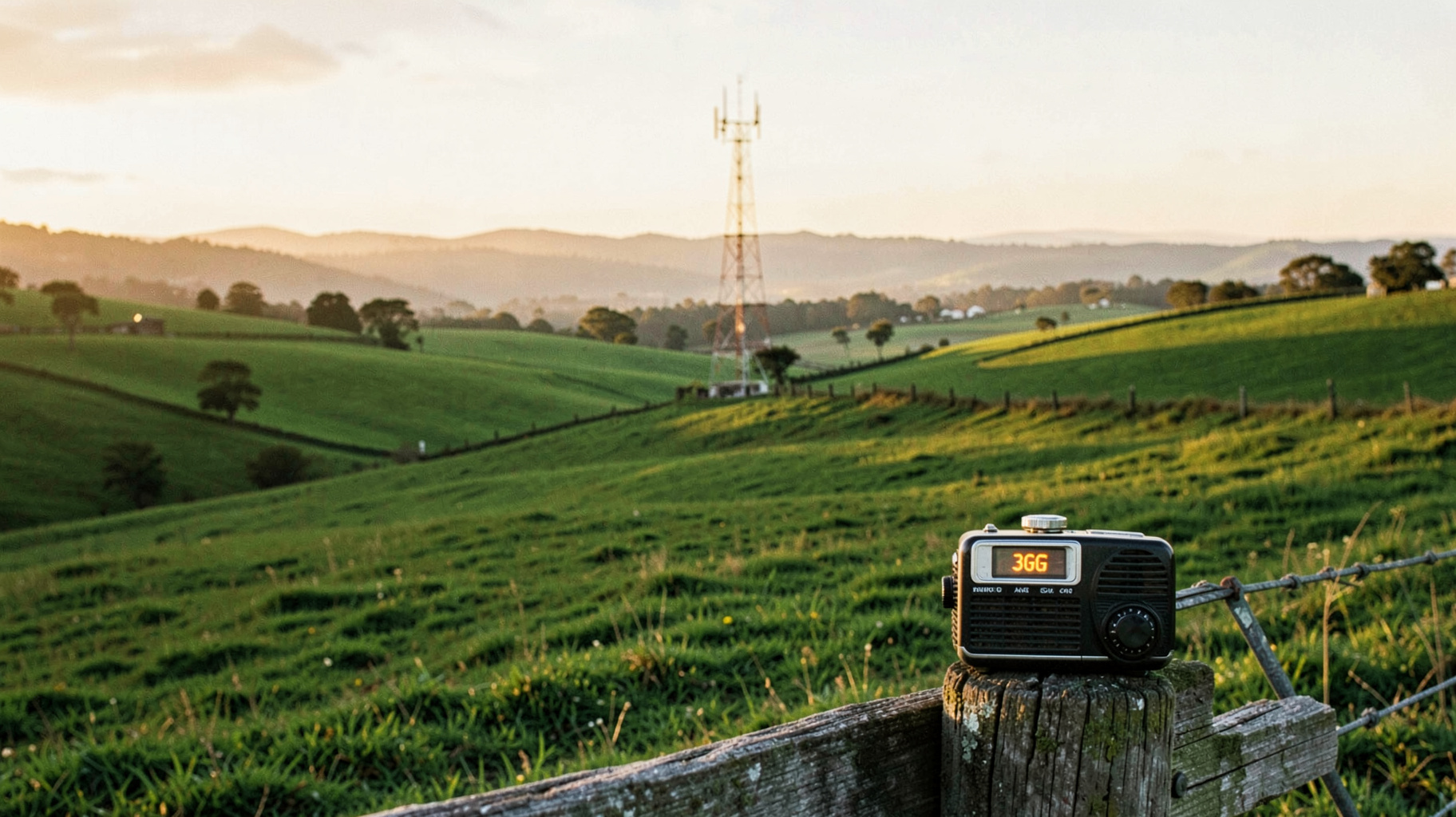
3GG has broadcast to West Gippsland's dairy farms and timber towns since 1937, long enough to have outlived the newspaper company that founded it, survived a decade-long relocation to a different city, and made it through a broadcast automation experiment that famously left a record skipping on air during peak hours.
Founded by a Newspaper, Not a Broadcaster
The station signed on in 1937 as 3UL, named for its home town of Warragul, founded by Vic Dinenny and operated by The Argus, then a major Melbourne daily newspaper running a network of rural Victorian stations, according to the station's broadcast history. That newspaper-radio arrangement was common in regional Australia at the time, print outlets treating radio licenses as an extension of their existing local news operations rather than a separate business.
Surviving The Argus's Collapse
When The Argus folded in January 1957, its radio network didn't disappear with it, restructuring into the Associated Broadcasting Company, which kept 3UL running until selling it to Regional Communications Pty Ltd in 1982. Shepparton Broadcasting bought the station in August 1988, and just over a year later, in November 1989, the station relocated from Warragul to Traralgon in the Latrobe Valley and changed its call sign to 3GG, the letters standing for Greater Gippsland. It stayed in Traralgon for roughly a decade before moving back home to Warragul.
An Automation Experiment That Didn't Quite Work
Not every chapter of the station's history was smooth. In the late 1970s, 3UL experimented with broadcast automation, technology meant to reduce the need for live staff, according to a retrospective published by the Bawbaw Citizen. The experiment produced its share of on-air mishaps, including a record getting stuck and repeating during peak listening hours, the kind of story that becomes local legend precisely because everyone in a small town heard it happen live.
Familiar Voices in a Small Town
Long-serving on-air personalities including Vern Haycroft, Max Taylor and sports commentator Alf Walton became fixtures of the station over the decades, alongside enduring programs like the Saturday morning "Radio Market" and the Sunday request show "Popular Choice." In a region built around dairy farming, those kinds of community-facing formats, market reports and listener requests, mattered as much to daily life as any hit song rotation.
A Region Built on Dairy, Timber and One Famous Boxer
Warragul itself has long served as the economic hub of West Gippsland, a region of rich pasture that supplies much of Melbourne's milk and once supported a thriving 19th-century timber industry. It is also the birthplace of Lionel Rose, the Aboriginal boxer who became a national sporting figure, born in Warragul in 1948. A station broadcasting classic hits and local news into that kind of agricultural, working-class town has a different job than an urban commercial station, less about chasing trends and more about staying a fixture.
Under New Ownership, Same Job to Do
Capital Radio Network, led by Kevin Blyton, purchased 3GG in February 2015. Station manager Greg Spencer said at the time that the new owners were positioned to "enhance 3GG's ability to entertain and inform" its audience going forward, a fairly modest goal for a station that had already survived a newspaper collapse, two relocations and a malfunctioning automation system. Nearly nine decades after Vic Dinenny signed it on as 3UL, 3GG is still doing the same basic job: keeping West Gippsland's dairy country company on the AM dial.